
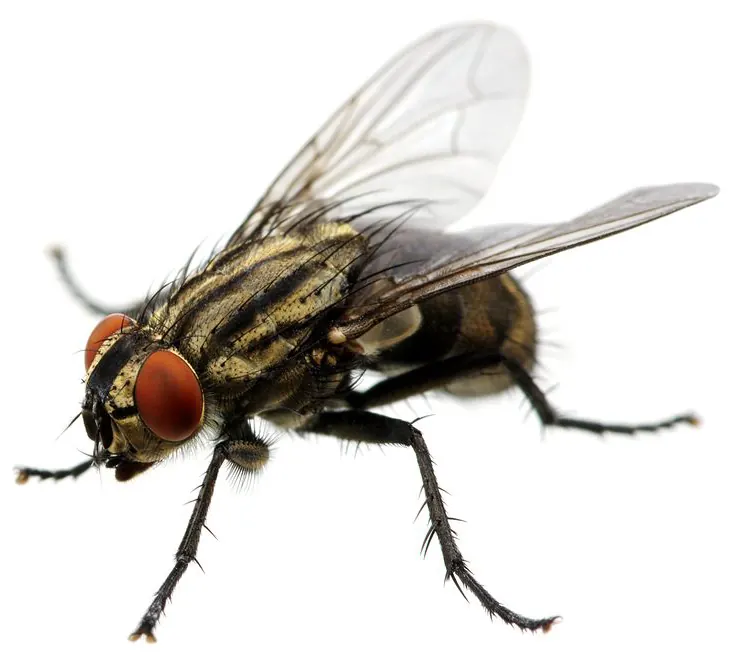
Flies are almost always a breeding-site problem. A spray kills the adults buzzing around today, but if there's a bin, a compost heap, a pile of dog mess or a blocked drain producing new ones, they'll be back by the weekend. So we start by finding where the flies are breeding, and then treat the surfaces where they rest with an odourless, non-staining residual product.
Why flies peak in Moreleta Park in summer
Hot Highveld summers speed up the fly life cycle dramatically. Eggs laid in a warm wheelie bin can become adult flies in a little over a week. Add afternoon storms that leave organic waste wet and rotting, and fly numbers can climb quickly from November through to March.
Across the suburb, the usual sources are domestic: wheelie bins standing in the sun for a week between collections, dog droppings left on the lawn, compost heaps with kitchen scraps on top, chicken runs and fallen fruit. Homes near shopping centres and restaurants can also see more flies from commercial waste areas. Properties close to the open land by the Moreleta Spruit sometimes get flies from decaying vegetation or illegal dumping in the area, although that varies.
Pets and livestock add to it. A good number of properties on the quieter, larger stands keep chickens or rabbits at the bottom of the garden, and manure and bedding that sit for a few days in the heat are an ideal fly nursery. Even a single neglected corner of a dog run can supply the flies that end up on your kitchen counter.
The flies you're most likely to see
- Houseflies breed in rotting food, manure and bins, and hang around kitchens and patios.
- Blowflies are the big, metallic green or blue ones. They breed in meat scraps, dead animals and bones, and a sudden swarm indoors can mean a dead rodent or bird in the roof or wall.
- Fruit flies are tiny and gather around ripe fruit, wine glasses and the kitchen bin.
- Drain flies are small and moth-like, rising from bathroom and kitchen drains where slime builds up.
How we deal with flies
- Source survey. We look at bins, compost, drains, animal enclosures, the garden and the roof void for breeding sites.
- Source advice. We tell you exactly what to clean, move, cover or remove, which is the part that solves most fly problems.
- Residual treatment. We treat the outside walls, window frames, eaves, bin areas and patio ceilings where flies land and rest.
- For businesses. Restaurants, takeaways and food shops can have scheduled monitoring and treatment, with records for inspections.
The products are odourless and won't stain. Wait for treated surfaces to dry before children and pets go near them.
Where people go wrong
The usual approach is to buy a fly spray, kill the flies in the kitchen and repeat every afternoon. It never ends, because the bin outside is producing new flies daily. The other common mistake is ignoring a sudden blowfly swarm. If big metallic flies are appearing indoors out of nowhere, there's often something dead in the roof, a wall cavity or under the floor, and it needs to be found.
Prevention that actually helps
- Bag kitchen waste securely and keep the bin lid closed.
- Rinse the wheelie bin every couple of weeks in summer and keep it in the shade if you can.
- Pick up dog droppings daily in hot weather.
- Bury kitchen scraps in the compost rather than leaving them on top.
- Clean drains with a brush and boiling water to remove slime.
- Fit fly screens on kitchen windows.
Local tip: many homes here keep the wheelie bin against a sunny garage wall right next to the kitchen door. Moving it a few metres away, ideally into shade, and rinsing it after collection day in summer makes a bigger difference than any spray.
What does it cost?
It depends on the size of the property, what we find at the source and whether you need a single treatment or regular visits. A house with a bin and compost problem is often solved with advice and one treatment. A restaurant or food business usually needs scheduled monitoring. If you're dealing with a few houseflies on a hot day, a fly screen, a clean bin and a swatter might be all you need.
Flies are one part of the summer insect picture here. See flying insect control in Moreleta Park for mosquitoes, moths and others, or the main Moreleta Park pest control page for everything else. City-wide, there's fly control in Pretoria, and nearby we handle flies in Garsfontein.
We're SAPCA registered with 25 years in the trade, and our fly treatments carry a 3-month guarantee. Ring 012 012 5526, or send a WhatsApp photo of the flies and tell us where they gather.
Questions we get asked
Why do I suddenly have big green flies in the house?
That usually means something has died nearby, often a rodent or bird in the roof or wall, and blowflies are breeding on it.
Why do flies keep coming back after I spray?
Spraying kills adults, but a nearby breeding site keeps producing new ones. Finding and removing the source is the key.
Where do the tiny flies over my sink come from?
Those are usually drain flies breeding in the slime inside the drain, or fruit flies around ripe fruit and the kitchen bin.
Can you treat a restaurant for flies?
Yes. We service food businesses on scheduled visits, combining source control, treatment and records.
Are flies a health risk?
Yes. Flies land on rubbish, faeces and rotting food, then on your food and surfaces, carrying bacteria with them.
Do fly zappers work?
They kill some flies in an enclosed room, but they don't deal with the source. They work best alongside good hygiene and treatment.