
The fastest way to clear cockroaches is to put gel bait where they live, not to spray where you saw them. Most of a cockroach population hides in warm, tight gaps close to food and water, and only comes out in the dark. That's why a can of spray seems to work for a few days and then the kitchen is busy again. We've treated cockroaches in Pretoria homes, flats, complexes, restaurants and offices for 25 years, and we've found that most jobs come down to two species and a lot of careful bait placement.
Which cockroach do you have?
German cockroach: the kitchen breeder
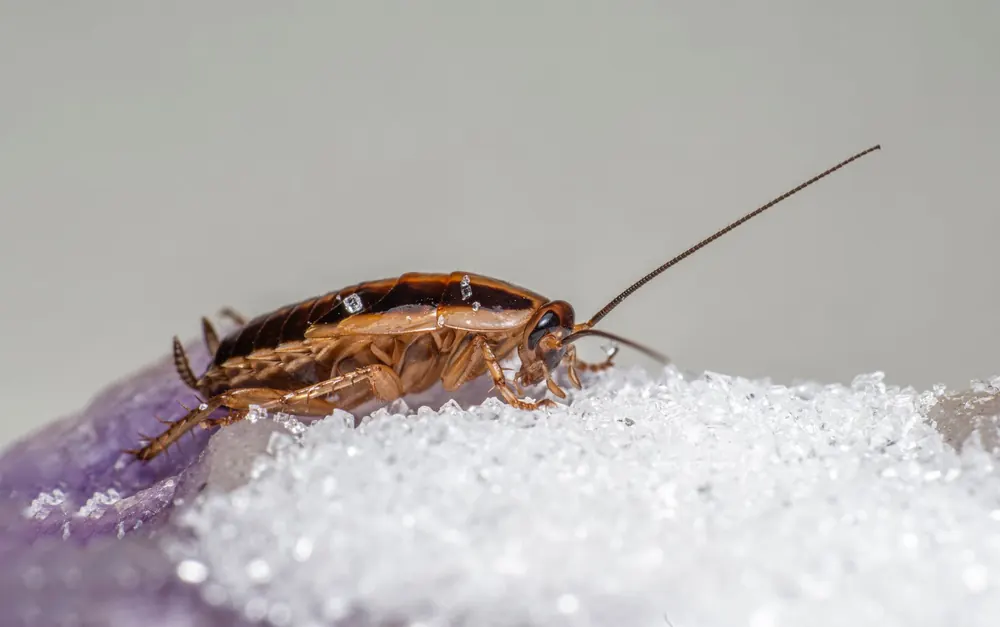
Small, light brown, with two dark stripes behind the head, and rarely longer than a fingernail. German cockroaches live entirely indoors. They breed very fast, the female carries her egg case until it's about to hatch, and they love the warmth inside appliances: fridge motors, dishwashers, microwaves, coffee machines, the back of the stove. If you're seeing small cockroaches in the kitchen, especially in daylight, this is almost certainly it, and the infestation is already well established.
American cockroach: the big one from the drains
Large, reddish-brown and able to fly short distances on warm nights. American cockroaches live in sewers, manholes, stormwater drains and damp outbuildings, and wander into houses through floor drains, gaps around pipes and open doors. They're alarming to see but usually not breeding inside the house. Sealing drains and gaps and treating the outside entry points tends to solve it.
Where we see the most cockroach work in Pretoria
Cockroaches are a city-wide problem, but they're most persistent where buildings are shared and food is constant. High-density flats in areas like Sunnyside and the student blocks around Hatfield have shared service ducts, walls and refuse rooms, so cockroaches move freely between units. Restaurants and takeaways deal with them constantly, because a busy kitchen has everything they need. And older homes with original kitchen units have decades of gaps behind the cupboards.
Pretoria's hot summers speed everything up. German cockroaches breed faster in the heat, and American cockroaches are more active and more likely to fly on warm, humid evenings after a storm.
Signs of a cockroach problem
- Small black specks, like ground pepper, in cupboard corners, hinges and drawer runners
- Empty brown egg cases behind appliances or in cupboards
- A musty, oily smell in a cupboard or behind the fridge
- Cockroaches out in the daytime, which usually means hiding places are full
- Shed skins near the sink, the stove or the dishwasher
How we treat cockroaches
- Find the harbourage. We pull out what can be moved, open the appliance kick-plates and check hinges, sink cupboards, the backs of drawers and any warm motor housings.
- Gel bait in the right places. Small dots of gel bait go into cracks, hinges and gaps where cockroaches shelter. They eat it, return to hiding, and the bait spreads through the population as others feed on their droppings and remains.
- Targeted residual treatment. Where it suits, we apply an odourless, non-staining residual treatment to entry points, drains and outside areas, away from food surfaces.
- Follow-up visit. Egg cases can survive the first treatment, so for German cockroaches a follow-up visit is usually part of the job.
You don't need to leave the house, and the gel baits are placed out of reach in cracks rather than on open surfaces. Keep children and pets away from any sprayed areas until they're dry.
The mistake that makes it worse
Spraying over gel bait, or setting off a bug bomb after we've baited. The spray contaminates the bait so cockroaches won't eat it, and foggers drive them deeper into walls and into neighbouring units, where they keep breeding. If you've had a gel treatment, resist the can. Clean the kitchen normally, but leave the small bait spots in the hinges and cracks alone.
A tip for Pretoria flats and complexes
In a block of flats, the refuse room and the sewer stack are often the real source. If you're in a complex, ask the managing agent or body corporate when the common areas and drains were last treated. Treating one flat while the refuse room is crawling with cockroaches gives short-lived results, and we can quote for the block as a whole.
Restaurants and food businesses
Kitchens need a scheduled service, not a once-off treatment. Deliveries arrive in cardboard boxes that can carry cockroaches and egg cases in, and a busy kitchen is never fully empty of crumbs and grease. We work to your trading hours, use gel baiting and monitoring around food areas, and keep a written record of every visit for inspections. If you also have flies around the bins or the back door, our fly control for Pretoria businesses can be added to the same service.
What does cockroach control cost?
The main factors are the species, the size of the area, how heavy the infestation is, and how many units or rooms need treating. A few American cockroaches coming in from a drain is a small job, and sometimes a new drain cover and a bit of sealant is all you need. An established German cockroach infestation in a kitchen needs a proper gel treatment and a follow-up. A restaurant or a block of flats is quoted on the size of the site and how often it's serviced.
We do a lot of cockroach work in the older eastern suburbs, including cockroach treatments in Brooklyn, where offices run out of converted homes, and in the homes and complexes covered by our Lynnwood cockroach service. Students and landlords near the university can also see pest control in Hatfield.
Every cockroach treatment is backed by our 3-month guarantee, and we're registered with SAPCA. If they come back within three months, we return. Call 012 012 5526, or send us a photo on WhatsApp and we'll tell you which cockroach it is.
Questions we get asked
Why do I see cockroaches in the daytime?
It usually means the infestation is large. Cockroaches prefer to hide during the day, so when hiding places get crowded, some are forced out into the open.
Are gel baits safe around children and pets?
Yes, when placed properly. We put tiny amounts of gel deep in cracks, hinges and gaps where children and pets can't reach, rather than on open surfaces.
Why do cockroaches come back after I spray?
Spray only kills the cockroaches it touches, and it doesn't reach eggs or the ones hiding inside walls and appliances. The survivors breed and the numbers recover.
Do big cockroaches mean my house is dirty?
No. The large American cockroaches usually come in from drains and sewers, and can turn up in very clean homes. Sealing drains and gaps is the main fix.
Can cockroaches live inside my appliances?
Yes. German cockroaches like the warmth of fridge motors, dishwashers, microwaves and coffee machines, which is why we check inside the kick-plates and housings.
Can you treat a whole block of flats?
Yes. In flats and complexes we recommend treating units together with the refuse room and drains, because cockroaches move through shared ducts and walls.