
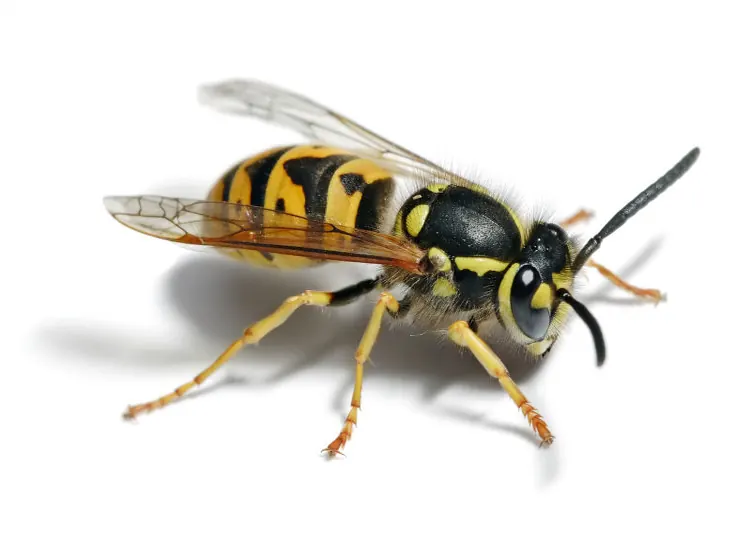
If wasps are building near a doorway, a window, a pool or a play area, the answer is to treat the nest itself, carefully, and then remove it. Knocking it down or hosing it rarely ends well. We handle wasp nests at homes, schools, offices and estates across Pretoria and Centurion, and it's one of the most common summer calls we get.
The wasps you'll meet in Pretoria
Paper wasps
These are the long-legged wasps that build open, umbrella-shaped grey nests, with the cells visible from underneath, hanging from a single short stalk. They love sheltered, dry spots: under eaves and roof overhangs, beneath patio roofs and carports, inside gate motor covers, behind shutters, under the lip of a wendy house and in the frame of a washing line. Paper wasps will defend a nest firmly if you get too close, and a sting is painful.
Mud daubers
Mud daubers build small tubes or lumps of hardened mud on walls, ceilings and inside garages and outbuildings. They're solitary, hunt spiders to stock their cells and very rarely sting people. Most of the time they're more of a mess than a threat, and we'll tell you if that's what you've got.
Other wasps and bees
Occasionally we see wasps nesting inside wall cavities, roof voids or the ground, where you only notice a steady stream flying in and out of one hole. Those need a different approach because the nest is hidden. And if what you're seeing is actually honeybees, it's worth having them removed alive by a beekeeper where possible. Send us a photo on WhatsApp and we'll help you work out which it is.
Why summer is wasp season here
On the Highveld, nests are started in spring, as soon as the weather warms up. A single founding wasp builds a small nest, raises the first workers, and from there the nest grows steadily through the hot, wet months, when insects to feed the young are plentiful. By late summer a nest that was easy to deal with in October can be large, busy and much more defensive. That's why we always encourage people to check the eaves and patio in spring.
How we deal with a wasp nest
- Locate and assess. We find every nest, not just the one you noticed. Where there's one paper wasp nest under the eaves, there are often a few more along the same wall or around the back.
- Targeted nest treatment. We treat the nest directly with a registered product, applied in a controlled way so the wasps on and in the nest are dealt with, rather than stirring them up and sending them flying.
- Removal. Once the nest is no longer active, we remove it so it doesn't attract another queen to the same spot.
- Treating the site. Where wasps keep returning to the same eaves or patio roof, we can apply a residual treatment to the area to discourage rebuilding.
For hidden nests in cavities, we treat the entry point so the wasps carry the product inside. Everyone can stay at home during a normal nest treatment, but keep kids and pets indoors and away from the area while we work.
What people get wrong
The two classic mistakes are hitting the nest with a broom and spraying it with a garden hose. Both disturb the wasps, who then defend the nest, and both usually leave enough of the colony alive to rebuild nearby. Spraying a can of household insecticide from a short distance in the middle of the day is almost as risky, because that's when most of the wasps are out foraging and will come back to find you there. If you're allergic to stings, don't attempt it at all.
Prevention: what actually helps
- Walk around the house once a week from September to November, looking up under the eaves, patio roofs, carports and gate motor housings. A small new nest is easy to deal with.
- Seal gaps in fascia boards and soffits where wasps can reach the roof void.
- Keep bins closed and clean up fallen fruit, especially in late summer when wasps look for sugar.
- Check the wendy house, pool pump cover and unused braai before the kids start using them.
What does wasp nest removal cost?
It depends on how many nests there are, how high and hard to reach they are, and whether the nest is out in the open or hidden in a wall or roof. A single low paper wasp nest is a small job. Several nests on a double-storey, or a nest in a roof void, take longer. Schools, offices and estates can include wasp checks in a regular service so nests are caught early.
Homes, schools and businesses
For homes we focus on doors, windows, pool areas and anywhere children play. Schools and crèches need nests around classrooms, playgrounds and walkways dealt with promptly. Restaurants with outdoor seating often find that wasps around the tables in late summer are coming from a nest close by, and finding that nest solves the problem. Office parks and estates benefit from scheduled checks along walkways and covered parking.
We treat wasps all over the city, including wasp nests in Lynnwood's mature gardens and wasp removal in Centurion. If flies and mosquitoes are bothering you as well, our flying insect control covers those. And if you've just had birds nesting in the same eaves, keep an eye out for bird mites once the chicks leave.
We're SAPCA registered with 25 years of experience, and our treatments carry a 3-month guarantee: if the treated nest becomes active again within three months, we come back. Call 012 012 5526, or WhatsApp us a photo of the nest and where it is.
Questions we get asked
Can I remove a wasp nest myself?
A very small, newly started paper wasp nest can sometimes be dealt with carefully at dusk, but larger or hard-to-reach nests should be left to a professional. Never attempt it if anyone in the house is allergic to stings.
What's the best time of year to deal with wasps?
Spring. Nests are small and new in September and October, and much easier to treat than the large nests of late summer.
Will the wasps come back to the same spot?
They often choose the same sheltered places year after year. Removing the old nest and treating the area helps, and checking those spots each spring catches new ones early.
Are mud daubers dangerous?
Rarely. They're solitary wasps that hunt spiders and seldom sting people. Their mud nests are mainly a cleaning nuisance.
Do you treat bees?
If it turns out to be honeybees, the better option is usually a beekeeper who can remove them alive. Send us a photo and we'll help you work out what you've got.
Do I need to leave the house during wasp treatment?
No. Keep children and pets indoors and away from the nest while we work, and stay clear of the area until we've finished.