
Rodent control that lasts has three parts: reduce the rodents already living on the property, take away what's keeping them there, and close the routes they use to get in. Poison on its own covers only the first part, which is why so many Pretoria homes and businesses have the same problem every winter. We've been doing rodent work across Pretoria and Centurion for 25 years, from single houses with something in the roof to warehouses, restaurants and schools on monthly service.
Rats or mice: why it matters
The first question on any rodent job is what species we're dealing with, because it decides where we put stations and traps and which gaps we look for.
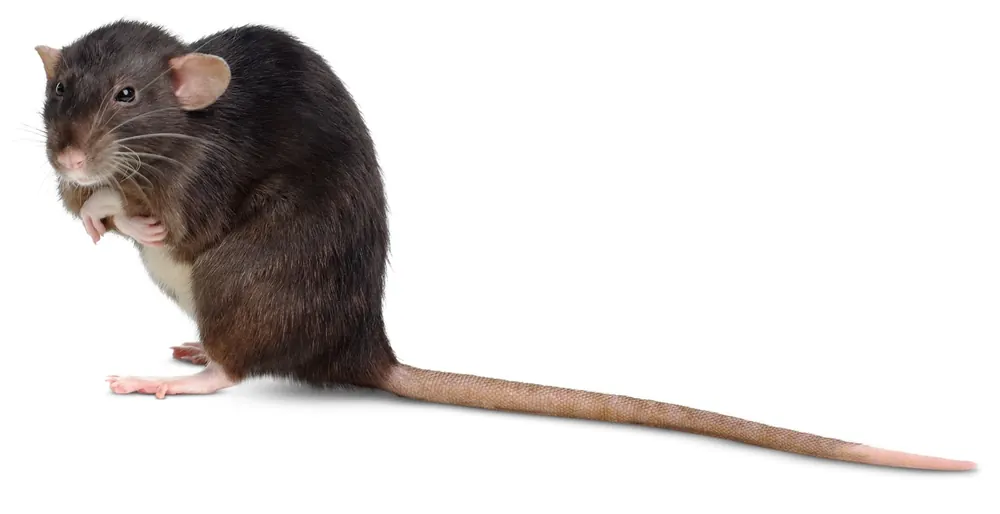
- Roof rats climb. They use trees, creepers, walls and cables to reach the roof, and live in the ceiling space.
- Brown rats dig. They burrow under paving, sheds and compost, and come in at ground level through drains and gaps around pipes.
- House mice live inside: behind kitchen units, in wall cavities, inside stored boxes. They need surprisingly small gaps and very little food.
- Veld mice move in from open ground on the edges of suburbs and estates, often into garages and outbuildings first.
Droppings are the quickest clue. Rat droppings are roughly raisin-sized; mouse droppings are closer to grains of rice. If you're fairly sure which you have, our pages on getting rid of rats in Pretoria and mouse control in Pretoria homes go into more detail on each.
Why rodents are a year-round Pretoria problem
Winter gets the attention. When Highveld nights drop towards freezing, rodents that spent the summer in gardens, stormwater channels and open veld look for warmth, and roofs and garages are the obvious choice. But summer brings its own rodent pressure: fruit trees dropping fruit, full bird feeders, grain and pet food stored in garages, and thick growth that gives cover. Our article on preparing for rats and mice in summer covers that side of the year.
The city's layout adds to it. Older suburbs have big trees touching roofs and decades-old roof gaps. Newer complexes and estates share roof voids and boundary walls. Commercial areas produce food waste. Each gives rodents something different, and each needs a slightly different approach.
How we handle a rodent job
- Survey. We look inside and out for droppings, gnawing, grease marks, burrows and runways, and check the roof space where we can get into it.
- Secure baiting. Bait goes into lockable, tamper-resistant bait stations placed along the routes the rodents actually use, and out of reach of children, pets and wildlife.
- Trapping and tracking. Inside living areas and roof voids we often trap rather than bait, so rodents aren't left to die in a ceiling. Tracking powder helps us confirm routes in places like wall voids and service ducts.
- Proofing advice. We show you the gaps: broken air bricks, holes where pipes and cables enter, gaps under garage and kitchen doors, missing roof tiles or fascia boards, and branches touching the roof.
- Follow-up. We check stations and traps until activity stops, and adjust if the rodents have shifted.
Rodent control for businesses
For food premises, warehouses, factories, schools and office buildings, a scheduled monitoring contract is the standard approach. Stations are numbered and placed around the perimeter and inside where needed, each visit is recorded, and any change in activity is followed up. That gives you a paper trail if a health inspector, auditor or client asks how pests are controlled on site.
Restaurants and food businesses need particular care, because bait can't go anywhere near food preparation. Inside those areas we rely on traps and monitoring, and keep baiting to the outside perimeter.
Estates and complexes
A rodent problem in one townhouse is usually a problem in the whole block. Rats and mice travel along shared roof spaces, walls and gardens, so treating one unit tends to push them into the next. Where we can, we work with the body corporate or estate manager on a site-wide plan with stations along boundary walls, especially where the estate borders veld, a river or a stormwater channel. We do a lot of this kind of work in Centurion's estates and complexes and in the newer developments covered by rodent control in Montana, where homes back onto open ground.
The most common mistake
Scattering loose poison in the roof or behind the stove. The rodents carry it off, often die in a wall or ceiling where the smell lingers for weeks, and the bait itself becomes a risk to pets and to owls and other birds that eat poisoned rodents. Worst of all, the hole they came in through is still open, so a new group moves in within months.
One habit that makes a difference
Store pet food, bird seed, chicken feed and anything else edible in the garage in sealed metal or thick plastic containers, not in the bag it came in. In Pretoria homes the garage is very often where a rodent problem starts, and a torn bag of dog pellets is the reason.
What does rodent control cost?
For a home, the cost depends on the size of the property, the number of stations or traps needed, whether we're working in the roof, and how many follow-up visits it takes. For a business or estate, it depends on the size of the site, the number of monitoring points and how often they're serviced. We'll give you a clear quote after the survey. If you've seen a single mouse once, a couple of good snap traps may well be enough, and we'll say so.
Rodent work is covered by our 3-month guarantee, and we're registered with SAPCA, so if the rats or mice return within three months, we return as well. Call 012 012 5526 to arrange a survey, or WhatsApp us a photo of the droppings or damage and we'll tell you whether it's rats or mice.
Questions we get asked
How can I tell if I have rats or mice?
Look at the droppings. Rat droppings are about the size of a raisin, while mouse droppings are smaller, about the size of a grain of rice. Rats also tend to be louder in the roof.
Do you offer monthly rodent monitoring for businesses?
Yes. We set up numbered bait stations and traps around the site, service them on a regular schedule and record every visit, which suits food businesses, warehouses and schools.
Is rodent bait dangerous to my pets?
Loose bait can be. That's why we use lockable, tamper-resistant stations that pets and children can't open, and trap rather than bait in places where that's safer.
Can rodents damage electrical wiring?
Yes. Rats and mice gnaw constantly to keep their teeth worn down, and wiring, irrigation pipes and plastic fittings in roofs and garages are common targets.
Why do rodents keep coming back every winter?
Usually because the entry points were never closed. Baiting removes the rodents that are there, but the same gaps let a new group move in when the cold returns.
Do you treat whole complexes for rodents?
Yes, and it's the approach we recommend. Rodents move freely through shared roofs and walls, so a site-wide plan with the body corporate works far better than one unit at a time.