
Most spiders in and around Pretoria homes do no harm and eat other insects, so you don't need to wage war on all of them. A treatment makes sense when there are a lot of them, when webs are taking over the eaves and outbuildings, or when you're seeing one of the few species with a medically significant bite, such as button spiders or violin spiders. We've been treating spiders across Pretoria and Centurion for 25 years, and a big part of the job is helping people work out which spiders they actually have.
The spiders worth knowing about
Button spiders
The black button spider and the brown button spider are South Africa's widow spiders. Black button spiders are glossy black, sometimes with a red mark, and live low down in rockeries, wood piles, under garden furniture and in long grass. Brown button spiders are lighter and mottled, often with an orange hourglass underneath, and are common around houses: under window sills, in the corners of outdoor furniture, in letterboxes and pot plant rims. Their egg sacs, spiky and cream-coloured for the brown species, are a giveaway. A black button spider bite needs medical attention; brown button bites are usually milder.
Violin spiders
Brownish, with a darker violin-shaped marking on the front of the body and long legs. They hide in dark, undisturbed spaces such as cupboards, behind pictures, in cardboard boxes and in rocky areas outside. Bites are uncommon but can cause a slow-healing wound, so see a doctor if a bite blisters or spreads.
Sac spiders
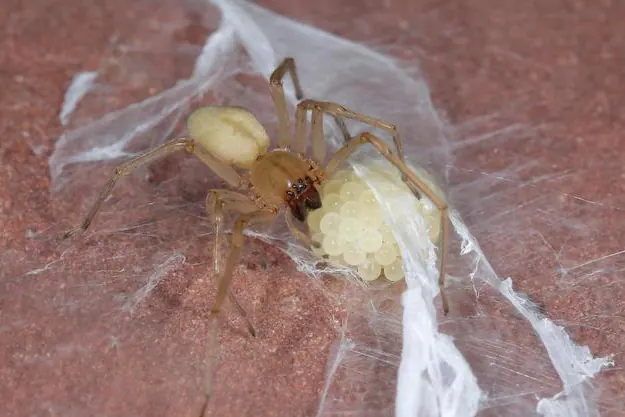
Small, pale yellow or greenish spiders that make silk sacs in the corners of ceilings, behind curtains and in folded clothing. They wander at night and are a common cause of bites in Pretoria homes, usually a painful, red mark that heals on its own.
Rain spiders: big but harmless
The large, flat, brownish huntsman spiders that appear on walls and ceilings before a storm are rain spiders. They're frightening because of their size, but they're shy and not dangerous. Females build a large papery nest for their eggs in shrubs or under eaves. You can usually leave them alone, or catch one under a container and move it outside.
Why some Pretoria properties have more spiders
Spiders follow food and shelter. Homes near koppies, rocky ridges and nature reserves, or with large rockeries, retaining walls, stone cladding and wood piles, see more spiders, especially button spiders and violin spiders. Outdoor lights that draw insects at night create a buffet for web-building spiders under the eaves. In summer, when insect numbers peak, spider numbers follow. The rocky ground around Erasmuskloof and the koppies in the north are good examples, and we do regular spider work in Montana's newer complexes near the veld.
Signs you need more than a broom
- Spiders or egg sacs regularly found indoors, especially in children's rooms or cupboards
- Button spiders under outdoor furniture, in toys or in the garage
- Webs covering eaves, carports and outbuildings again within days of being cleared
- Repeated bites in the house, often in the morning
How we treat spiders
We look at where the spiders are living and what's feeding them. Then we apply an odourless, non-staining residual treatment to the places they hide and travel: eaves, window frames, door frames, the base of walls, garages, outbuildings, rockeries and around outdoor lights. Inside, we treat corners, behind furniture and the gaps where they shelter. We remove webs and egg sacs we can reach, because egg sacs are often protected from treatments. You can stay at home; keep children and pets away from treated surfaces until they're dry.
Because spiders feed on other insects, treating spiders alone sometimes isn't enough. If there's a lot of insect activity around the house, it's worth looking at that too.
What people get wrong
Spraying spiders directly with household insecticide. It may kill the one you see, but it doesn't touch the egg sacs, and spiders aren't easily affected by many general sprays because they don't groom themselves like insects do. The other mistake is killing every rain spider on sight while ignoring the small brown button spiders under the patio chairs, which matter more.
A local tip: rockeries and garden furniture
If you have small children, check outdoor play equipment, sandpit covers and the underside of garden chairs once a week in summer. Brown button spiders love these spots. Shake out gardening gloves and boots that have been left outside. And when you move rocks or wood piles, wear gloves, because that's also where scorpions hide. Our page on scorpion control in Pretoria explains how to deal with them.
What does spider control cost?
It depends on the size of the house and garden, how many outbuildings need treating, how heavy the activity is, and whether we're also dealing with other insects. A house with a few spiders under the eaves can be handled with a broom, a web brush and changing the outdoor bulbs to a warmer colour that attracts fewer insects. A property next to a koppie with button spiders in the garden and violin spiders in the storeroom needs a proper treatment. If you're also seeing centipedes around the house, we can treat for both at once.
We've been SAPCA registered throughout our 25 years, and our 3-month guarantee means that if the spiders come back in that time, we come back too. Call 012 012 5526, or WhatsApp us a photo of the spider and we'll tell you whether it's one to worry about.
Questions we get asked
Which spiders in Pretoria are dangerous?
The black button spider is the one to take most seriously. Brown button spiders, violin spiders and sac spiders can also give painful bites, so see a doctor if a bite is severe or spreading.
Are rain spiders dangerous?
No. Rain spiders are large and alarming but shy, and their bite is not considered dangerous. They come indoors before storms and can be moved outside under a container.
Why do spiders keep coming back after I clear the webs?
Because food is still there. Outdoor lights draw insects at night, and web-building spiders rebuild quickly where food is plentiful. Egg sacs left behind also hatch.
Do you treat spiders inside the house?
Yes. We treat corners, cupboards, behind furniture and the gaps where spiders hide indoors, as well as eaves, window frames and outbuildings outside.
How do I recognise a button spider egg sac?
Brown button spider egg sacs are cream to pale yellow, round and covered in small spikes. Black button spider sacs are smoother and paler. Both are usually found close to the spider.
Are spiders good to have in the garden?
Mostly, yes. Spiders eat flies, mosquitoes and other insects. Treatment makes sense when numbers are high or medically significant species are close to where people live and play.