
Most spiders in Centurion homes are harmless and actually useful, because they eat flies, mosquitoes and other insects. The ones worth dealing with are the few that can give a medically significant bite, and the large numbers that build up where insects are plentiful. We focus on both: targeted treatment of the problem areas, and fewer insects to attract spiders in the first place.
The spiders that matter
Button spiders
The brown button spider is very common around Highveld homes. It's small, with an orange hourglass under the abdomen and spiky round egg sacs. It hides under garden furniture, in pot plant rims, behind outdoor taps, in meter boxes and under the lip of the braai. The black button spider is less common around houses and prefers rough, undisturbed spots like rock piles and old wood. Bites from black button spiders need medical attention.
Sac spiders
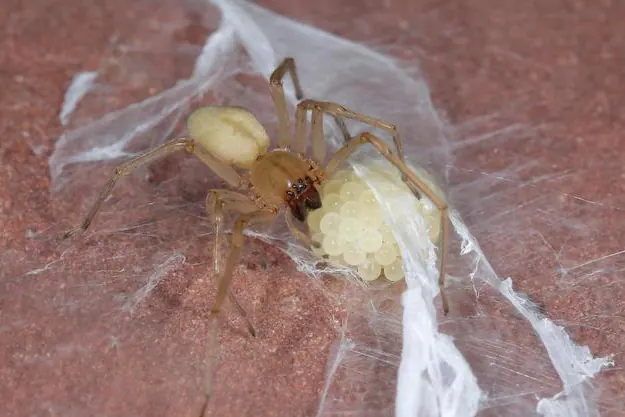
Pale, yellowish spiders that hunt at night and shelter in small silk sacs in curtain folds, behind picture frames and in the corners of ceilings. Their bites can cause a slow-healing wound. They're one of the most common spiders indoors.
Violin spiders
Brownish, with a darker violin-shaped mark on the front of the body and long legs. They're found on the Highveld, often in quiet corners of garages, storerooms and under furniture. A bite can cause tissue damage and should be seen by a doctor.
Rain spiders and others
The big, fast, flat huntsman spiders that come indoors before summer storms look alarming but are not dangerous. Orb weavers in the garden and daddy long-legs in corners are harmless too.
Why Centurion homes get spiders
Spiders follow food. Estate homes with large windows, outdoor lights burning all night and lawns that back onto grassland or green belts attract a lot of insects in summer, and the spiders come for them. Patio furniture, outdoor cushions, pool pump boxes and stacked building materials in newer estates give button spiders plenty of sheltered places to nest.
How we treat spiders
We inspect where spiders are nesting and hunting: eaves, window frames, patios, garden furniture, garages, meter boxes and storerooms. We then use an odourless residual treatment on those surfaces and hiding spots, and remove webs and egg sacs where we can reach them. Where there's a lot of insect activity drawing the spiders in, we deal with that too. Indoors we treat the corners, skirting and voids where hunting spiders shelter. Nothing is sprayed over open lawn or plants for the sake of it.
Garages, storerooms and outbuildings
The spiders that worry people most, violin and button spiders, are the ones that like being left alone. Garages packed with boxes, wendy houses, staff rooms and pool pump housings in Centurion gardens give them exactly that. Before we treat, it helps to clear the floor, move boxes onto shelves and take out anything that hasn't been touched in years. Wear gloves when you move stored items or reach into meter and pump boxes, and shake out shoes, gardening gloves and overalls that have been hanging in the garage before putting them on.
What people get wrong
Spraying every spider web with a can of insecticide every week. The webs come back because the insects that feed the spiders are still there, and the button spider under the chair, which builds an untidy, low web, often gets missed entirely. Treat the hiding places and reduce the insects, and you'll see a real difference.
A tip for estate living
Turn the patio lights off when you're not using them, or swap to warmer, yellowish bulbs, which attract fewer flying insects. Fewer moths and flies around the lights means fewer spiders on your eaves and windows. And before you sit down on garden furniture that's been standing all winter, turn the chairs over and check underneath.
What does it cost?
Spider work is priced mainly on the size of the house, how much of the outside needs treating and how much insect activity is drawing them in. Treating the eaves and patio of a townhouse is a modest job. A large estate home with outbuildings and a long perimeter takes longer. If you only see the odd harmless spider, a broom and a torch might be all you need.
The same rockeries and stored materials that shelter spiders also hide scorpions; see scorpion control in Centurion. Spiders also fall under our wider Centurion insect treatments. There's more on spider control in Pretoria, our service for spiders in Garsfontein, and the main Centurion pest page.
We're SAPCA registered, and our 3-month guarantee covers the areas we treat. Phone 012 012 5526, or WhatsApp us a clear photo of the spider and we'll tell you what it is.
Questions we get asked
Which spiders in Centurion are dangerous?
Button spiders, sac spiders and violin spiders can give bites that need medical attention. Most other spiders around homes are harmless.
What should I do if I'm bitten by a spider?
Clean the bite, keep the spider or a photo of it for identification if you can do so safely, and see a doctor, especially if pain spreads or a wound develops.
Are rain spiders dangerous?
No. They're large and fast, which is frightening, but they're not considered dangerous to people. They often come indoors before summer storms.
Will you spray my whole garden?
No. We treat the specific places spiders shelter, such as eaves, window frames, garden furniture and storerooms, not open lawns and beds.
Why do spider webs keep coming back on my patio?
Because insects keep coming to the patio lights, and spiders follow the food. Reducing lighting and insects is part of the answer.
Is the spider treatment safe for children?
Yes, once dry. Once the treated surfaces have dried, children and pets can use the area normally.