
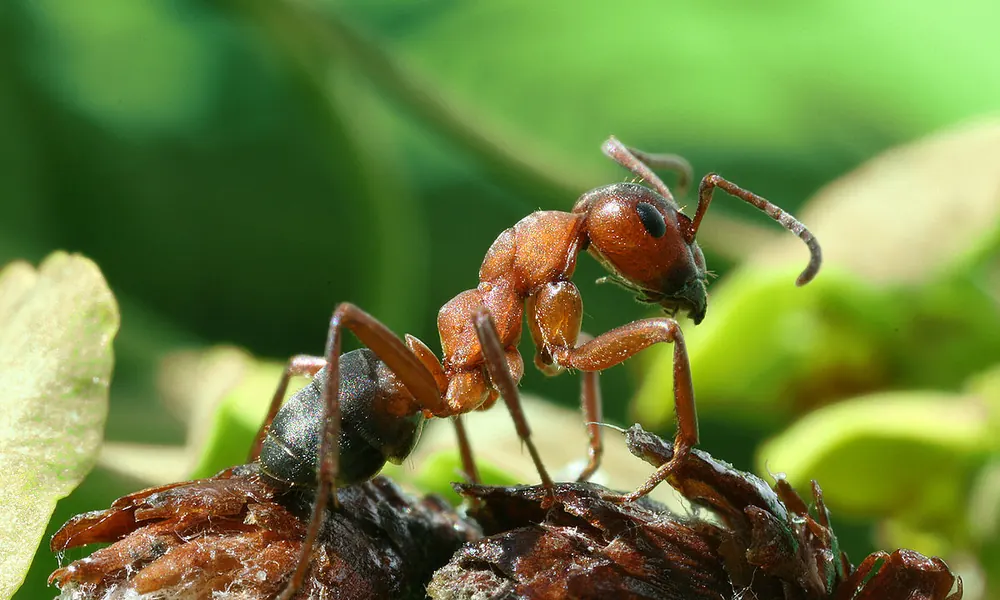
To get rid of ants properly you have to reach the nest, and in most Centurion homes the nest isn't in the house at all. It's under the paving, in the lawn, inside a wall cavity or below a pot plant on the patio. The ants you see on the counter are foragers. Spray them and the colony sends more. Feed them a bait they carry home, and the colony shrinks from the inside.
Why ants come in when they do
Centurion residents notice the pattern quickly: ants arrive in force in spring and early summer, often a day or two before a thunderstorm. Rising humidity and soaked soil push colonies to move, forage harder or shift their nests to higher, drier spots, and a kitchen or a wall cavity is perfect. In the dry winter months, ants follow irrigation lines and dripping taps in search of water instead.
The way much of Centurion is built plays into this. Estates and complexes have large paved areas laid on sand, with irrigated beds right against the walls. Ants nest in the sand under the pavers and walk straight up the wall into the house along the gap at the window frame or the cable entry for the DStv dish.
Ants you'll meet in Centurion
Small brown house ants
Tiny ants that form long, busy trails to sugar, pet food and crumbs. Colonies often have many queens and multiple nests, which is why one sprayed trail is quickly replaced by another.
Pugnacious ants
Larger, fast-moving ants common in Highveld lawns and gardens. They bite, nest in open soil and lawns, and farm sap-sucking insects on shrubs. They're mostly an outdoor nuisance, but they will come indoors.
Ants in the paving
Fine sand pushed up between pavers and along the edges of the driveway is a sure sign of a nest below. Over time it can undermine the paving and lift bricks.
How we treat ants
First, we follow the trails back. That usually tells us where the colony is, and whether we're dealing with one nest or several. Then we place ant baits along the trails and near nest entrances. Workers take the bait back to the colony and share it, including with the queens. For heavy activity outdoors, we add a non-staining residual barrier around the foundations and the base of walls, and treat nests in paving and lawns directly.
Expect activity to rise briefly as ants find the bait. That's what we want. Within days the trails thin out, and a follow-up visit deals with anything left.
The common mistake
Wiping the trail with bleach and spraying the counter as soon as ants appear. It feels like progress, but it kills a handful of foragers and teaches the colony to find another route. If you've got bait down, leave the ants alone for a few days. Wipe up the sugar, not the ants.
A tip for Centurion gardens
Look at where your irrigation drips. Ants love the constantly damp soil at the base of walls where sprinklers hit the brickwork, and they use the gap behind the plaster or cladding as a highway indoors. Angle sprinklers away from the walls, keep beds a little lower than the damp-proof course, and trim shrubs back so they don't touch the house. Branches that touch gutters and window frames are ant bridges.
Flying ants: ants or termites?
After the first summer rains, winged insects swarm out of the ground and around lights. Many are termite swarmers rather than ants. Ants have a narrow waist and bent antennae; termite swarmers have a thick waist, straight antennae and four wings of equal length. If they're emerging from inside a wall or floor, read about termite control in Centurion.
What does it cost?
A single kitchen trail with an outdoor nest is a small job. Several nests in paving, lawns and walls, or a whole complex where ants move between gardens, takes more bait, more time and usually a follow-up. If you have a small seasonal trail that disappears once the rain settles, a shop-bought bait station placed on the trail may be all you need. We'll tell you honestly.
Ants are part of the wider group we deal with under crawling insect control in Centurion. For the full guide to ant species, see ant control in Pretoria, our work on ants in Garsfontein homes, or the Centurion pest control page.
All our treatments come with a 3-month guarantee, and we're SAPCA registered. Give us a ring on 012 012 5526, or WhatsApp a close-up of the ants and we'll identify them before we visit.
Questions we get asked
Why do ants appear just before it rains?
Rising humidity and wet soil push colonies to forage harder or move their nests to drier places, and a house is often the nearest dry spot.
Should I spray the ant trail in my kitchen?
No. Spraying kills only the foragers and pushes the colony to find a new route. Bait taken back to the nest is far more effective.
Why is sand coming up between my paving bricks?
Ants are nesting in the sand bed beneath the pavers and carrying soil to the surface. Treating the nest stops it and protects the paving.
How quickly does ant bait work?
You'll usually see more ants for a day or two as they collect the bait, then a clear drop within a few days as the colony is affected.
Are the ants in my lawn harmful?
Most are a nuisance rather than a danger, though some species bite. They can also protect sap-sucking insects on shrubs, which harms the plants.
Can you treat ants for a whole complex?
Yes. Ants move freely between gardens and units, so treating the shared gardens and perimeter together gives a longer result.