
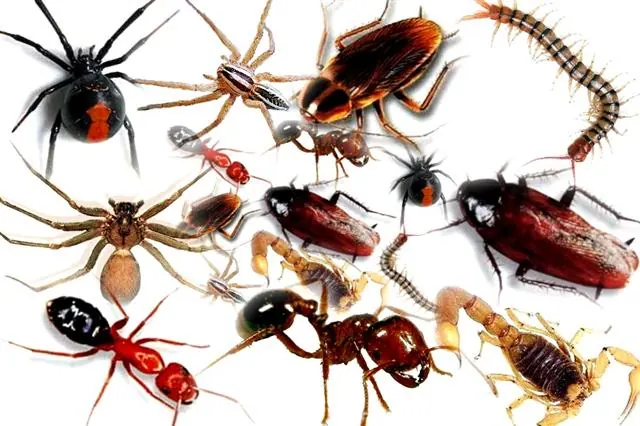
Not every insect problem needs the same treatment, and quite a few don't need a treatment at all. Our insect control starts with working out exactly what you have, why it's on your property and where it's coming from. Then we treat in the most targeted way that will work: gel baits for cockroaches, baits the workers carry back to an ant nest, residual treatment where insects crawl or rest, nest treatment for wasps, and in rare cases fumigation. We've been doing this in Pretoria and Centurion for 25 years.
Start here: what kind of insect is it?
Broadly, the insects we treat fall into four groups, and each one points to a different solution.
Crawling insects
Cockroaches, ants, fishmoths, crickets, millipedes and other insects that walk in. Some, like German cockroaches, live and breed inside the house. Others, like ants and millipedes, live in the garden and come in for food or shelter. That difference decides whether we bait inside, treat the perimeter, or both. Our page on crawling insect control goes into the detail.
Flying insects
Flies, mosquitoes, wasps, moths and the flying ants that appear after summer storms. The fix here is almost always about finding where they breed or nest: bins and drains for flies, standing water for mosquitoes, eaves for wasps. See flying insects in Pretoria for more.
Biting insects
Bed bugs, fleas, bird mites and mosquitoes. If you're being bitten, where and when it happens tells us a lot. Bites in bed at night, around the ankles, or in one room near the roof all point to different culprits. Our biting insect page walks through them.
Pantry and stored product insects
Weevils in the rice, moths in the cereal, small beetles in the flour or pet food. These are treated by finding and removing the infested product, then cleaning and treating the cupboards. For businesses with bulk stock, it can mean fumigation. Read about stored product pests if that sounds familiar.
How the Highveld seasons shape insect problems
Pretoria's year has a clear rhythm. Spring brings the first wasp nests and ants moving indoors. The first big thunderstorm triggers termite swarms and, soon after, millipedes and crickets. Midsummer is peak season for flies, mosquitoes and cockroaches, because heat and moisture speed up their breeding. Autumn is often when fishmoths and pantry pests are noticed, as people unpack cupboards and stored boxes. In winter, outdoor insects slow down, but cockroaches in warm kitchens and bed bugs in heated bedrooms carry on regardless.
How we treat
- Identification and inspection. We confirm the insect and look for the cause: food, water, shelter and the way in.
- A plan that matches the insect. Gel baits in kitchens, ant baits that reach the colony, odourless and non-staining residual sprays along entry points and resting areas, or targeted nest treatment. We don't fog a whole house when a few well-placed baits will do the job better.
- Treatment. For normal insect treatments you don't need to move out. Keep children and pets off treated surfaces until they're dry. Fumigation is different: the sealed area has to be vacated until it's cleared, and we'll explain exactly what's involved if it's needed.
- Follow-up. Some insects, like cockroaches and bed bugs, often need a follow-up visit to catch the next generation.
What people commonly get wrong
Using a single product for every insect. A can of spray from the supermarket is fine for one wasp at the window, but sprayed on an ant trail it scatters the colony, sprayed near cockroach gel bait it stops the cockroaches eating the bait, and sprayed on a bed it does little against bed bugs hidden in the frame. The right treatment for one insect can make another one worse.
A practical Pretoria tip
Before the summer rains start, walk around the outside of your house and check three things: gaps under doors, soil or mulch piled against the walls, and outside lights next to doors. Closing the gaps, pulling the beds back and moving or dimming the lights cuts down a surprising number of insects coming in on summer nights.
What does insect control cost?
It depends on the insect, the size of the property and how established the problem is. A few cockroaches in a kitchen is a small, quick treatment. A large house with ants, cockroaches and fishmoths, or a restaurant that needs regular service, is priced on the work involved. Some problems really are DIY jobs: a few fruit flies around the fruit bowl usually just need the fruit moved and the bin emptied. We'd rather tell you that than book an unnecessary visit.
Homes, estates and businesses
For homes we treat what's needed, where it's needed. Complexes and estates often get better results with block-wide treatments arranged through the body corporate, because insects move between units. Offices, schools, restaurants and warehouses can have a scheduled monitoring contract, with regular visits and records for audits and health inspections.
We're SAPCA registered, and our treatments carry a 3-month guarantee: if the treated insect comes back within three months, we come back. Not sure what you've got? WhatsApp us a photo, or call 012 012 5526 and describe it.
Questions we get asked
Can you identify an insect from a photo?
Usually, yes. A clear, close photo next to something for scale, sent on WhatsApp, is often enough for us to tell you what it is and whether it needs treating.
Do I need a general spray for the whole house?
Rarely. Most insect problems are solved faster with targeted treatment, such as baits for cockroaches and ants, than with spraying every room.
Is insect treatment safe for children and pets?
Yes, with sensible precautions. Keep children and pets off treated surfaces until they're dry, and gel baits are placed in cracks and corners out of reach.
Why do insects get worse after rain?
Summer storms flood the soil and garden spaces where many insects live, and the heat and moisture speed up their breeding, so more of them move towards dry shelter in houses.
Do you offer regular insect control for businesses?
Yes. We offer scheduled monitoring contracts for offices, schools, restaurants, warehouses and estates, with regular visits and a record of each service.
When would fumigation be needed for insects?
Only in specific cases, such as heavily infested stored stock or certain wood pests. Most household insect problems don't need it.