
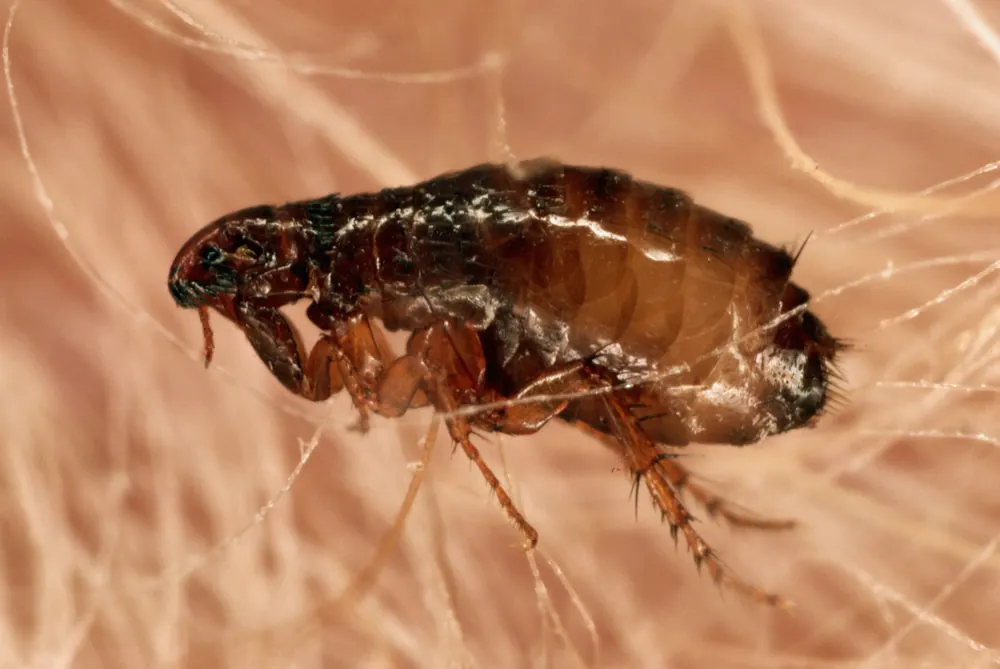
If you're still getting flea bites after treating your pets, the fleas are breeding in the house and garden, and that's where the treatment needs to go. Adult fleas on an animal are only a small part of the population. The rest are eggs, larvae and cocoons in carpets, couches, pet beds, cracks in the floor and shady spots in the garden where the dog lies. We've been treating fleas in Pretoria and Centurion homes for 25 years, and the jobs that work best are the ones where the house, the garden and the pets are all dealt with at the same time.
How the flea life cycle catches people out
A female flea lays eggs on your pet, and they fall off wherever the animal goes: its basket, your bed, the rug in front of the TV, the patch of soil under the hedge. Larvae hatch and burrow down into carpet fibres and cracks, away from light. Then they spin a cocoon, and this is the stage that causes so much frustration. Cocoons are protected from most treatments and can sit dormant for weeks until vibration, warmth and carbon dioxide tell them a host is nearby. That's why people moving into a house that's been empty for a while sometimes get bitten the moment they walk in.
Why fleas are a Pretoria summer problem
Fleas love warmth and humidity, so Pretoria's hot, stormy summers are their peak season. Gardens with deep shade, sandy soil under decks and dense ground cover give larvae everything they need. In winter, outdoor activity drops, but fleas carry on indoors in carpets and pet beds, especially when pets spend more time inside to keep warm. Many of our winter flea calls are from homes with underfloor heating or a fireplace rug that the dog has claimed.
Signs you have a flea problem
- Small, itchy bites in clusters, usually around the ankles and lower legs
- Pets scratching, biting at their back or tail, or losing fur
- Black specks in the pet's coat or bedding that turn reddish on a damp tissue. That's flea dirt, digested blood.
- Tiny dark insects jumping onto white socks when you walk across the carpet
- Bites that start after you've moved into a new house or come back from holiday
If the bites appear overnight in lines and you don't have pets, think bed bugs rather than fleas. Our page on bed bug treatment in Pretoria covers how to tell them apart. Bites in a home with birds nesting in the roof may also be bird mites.
How we treat fleas
We start with a short inspection, to see where the pets sleep and spend their time inside and out, and to check whether there are other sources such as stray cats under the house or a disused kennel. Then we treat the indoor areas with an odourless, non-staining residual treatment: carpets, rugs, under and around furniture, pet sleeping spots, cracks in wooden floors and skirting. Outside, we treat the shaded areas where pets lie and where larvae develop.
The house is safe to stay in, as long as children and pets stay off the treated floors and furniture until they have dried. We'll ask you to arrange for your pets to be treated by your vet on the same day or just before, because a treated house with untreated pets will reinfest itself quickly.
Getting the house ready
- Vacuum thoroughly the day before, including under beds and couches, and empty the vacuum outside.
- Wash pet bedding and throws on a hot cycle.
- Clear the floors, so we can get to the carpet edges and corners.
- After treatment, keep vacuuming every day or two. The vibration wakes cocoons, the newly hatched fleas come into contact with the treatment, and they die.
The thing most people get wrong
Stopping too soon. It's normal to see a few fleas for a week or two after treatment, because cocoons that survived keep hatching. People see a flea, assume the treatment failed and buy a spray or a flea bomb, which often just irritates the problem. Keep vacuuming, keep the pets on their vet treatment, and give it time. If activity is still high after a couple of weeks, call us and we'll come back.
A local tip: the soil under the deck
Many Pretoria homes have a wooden deck, a raised stoep or a gap under an outbuilding where dogs like to lie in the heat of the day. That shady, dry, sandy soil is perfect flea breeding ground and often gets missed. Block access under decks if you can, and point it out to us so we can include it in the treatment.
Homes, rentals and businesses
Flea problems often turn up when tenants change. A pet owner moves out, the house stands empty, and the new occupant is greeted by fleas hatching from cocoons in the carpets. Landlords and letting agents can book a flea treatment between tenants to avoid that. We also treat kennels, catteries, pet grooming areas and offices where fleas have come in on staff or visitors' pets.
What does flea treatment cost?
It depends on the size of the house, how much carpet and soft furnishing there is, whether the garden needs treating, and whether follow-up is needed. A small flat with tiled floors and one cat is a straightforward job. A large house with wall-to-wall carpets, several dogs and a big garden takes longer. If you've caught it early, treating your pets properly and vacuuming hard every day for a few weeks can be enough on its own, and we'll tell you if that's the case.
Fleas are common in family homes across the city. See flea treatments in Centurion, and flea control in Montana for the newer homes and complexes in the north.
SAPCA registered, and backed by a 3-month guarantee: if the fleas return within three months of treatment, we return too. Call 012 012 5526, or WhatsApp us a photo of the bites or the specks you've found and we'll help you work out what it is.
Questions we get asked
Why am I still getting bitten after treating my dog?
Because most of the flea population is in the house and garden as eggs, larvae and cocoons, not on the dog. The home needs treating too.
Will fleas die if I leave the house empty?
No. Cocoons can lie dormant for weeks and hatch as soon as someone comes back, which is why empty houses often have a burst of fleas when people move in.
Can fleas live on people?
Not really. Fleas bite people, but they don't live or breed on human skin. They need a pet or other animal to complete their life cycle.
Why do I see fleas after the treatment?
Cocoons that survived the treatment keep hatching for a week or two. Keep vacuuming every day or two so they hatch, touch the treated surfaces and die.
Do you treat the garden for fleas?
Yes, if the pets spend time outside. We treat the shaded areas, under decks and other spots where pets lie and flea larvae develop.
Do fleas carry disease?
They can carry tapeworm to pets, and heavy flea burdens can cause skin problems and anaemia in young animals. Ask your vet about treating your pets.