
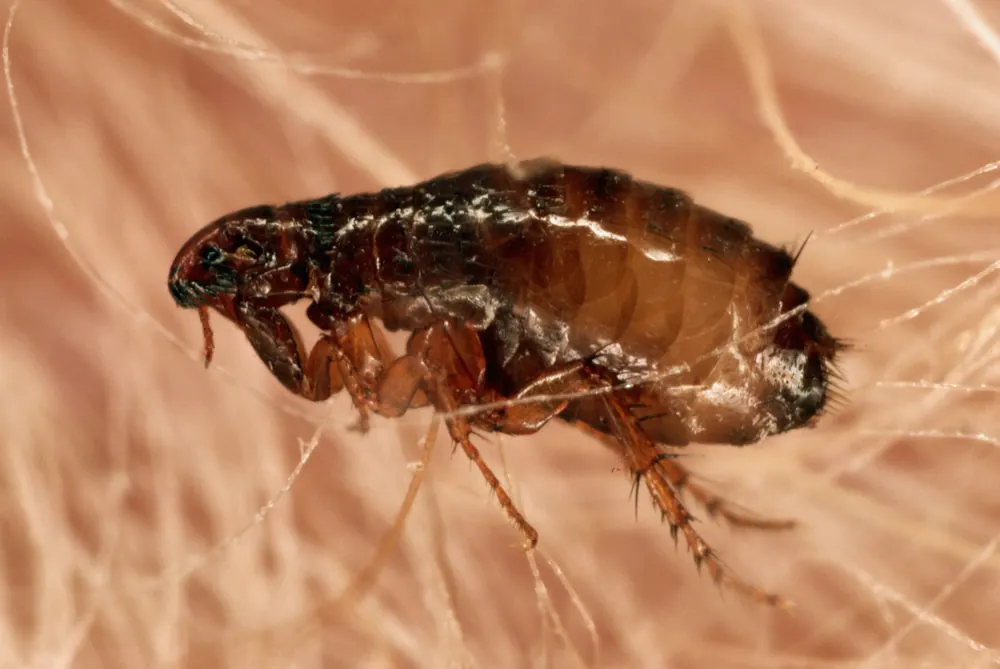
To clear fleas from a Montana home properly, three things have to happen at the same time: your pets are treated by your vet or with a vet-recommended product, the inside of the house is treated, and the garden areas where your pets lie are treated too. Miss one, and the fleas living there reinfest everything else within a few weeks.
Why fleas build up so easily
Only a small part of a flea population is ever on your pet. Most of it is eggs, larvae and pupae in carpets, rugs, pet beds, couch cushions and shaded soil in the garden. The pupae are particularly tough. They can sit in a cocoon for weeks, then hatch all at once when they sense warmth and vibration. This is why people come back from holiday to a sudden flood of fleas, or move into a house that seemed clean and get bitten on the first night.
The Montana picture
Many Montana homes have dogs, and in the estates and complexes they're often walked on common grass, verges and the veld nearby. That's where fleas get picked up. Hot, humid summers make the problem much worse, because flea life cycles speed up when it's warm. Smaller complex gardens concentrate things too. When a dog spends most of its day on a small patch of lawn or in a shaded corner by the back door, that spot can hold a lot of flea larvae.
We also get calls from people moving into rented units that previously had pets. The carpets can hold dormant pupae that hatch as soon as someone moves in.
Signs you have fleas
- Pets scratching, chewing or licking more than usual, especially around the base of the tail
- Small, itchy bites around ankles and lower legs
- Black specks in your pet's fur or bedding that turn reddish when dabbed on wet paper, which is flea dirt
- Tiny dark insects jumping on light-coloured carpet or socks
How we treat fleas
We ask you to treat your pets first, ideally the day before we arrive. Then we treat the house: carpets, rugs, under furniture, pet sleeping areas and along skirting boards, with an odourless, non-staining product that targets adults and stops the larvae developing. Outside, we treat the shaded areas your pets use, such as under the stoep, along walls and beneath shrubs. You don't need to leave the home, but keep children and pets off treated surfaces until they're dry.
Because pupae aren't affected by most treatments, you may still see a few fleas for a week or two as the last ones hatch. Keep vacuuming during this time. The vibration encourages them out of their cocoons and into contact with the treatment.
Estates, complexes and rentals
In estates where many residents walk their dogs on the same common areas, fleas pass from pet to pet very easily, and a treated house can be reinfested within weeks. If you notice the problem keeps returning, it helps to compare notes with neighbours who share the walking routes. For landlords and agents, a flea treatment between tenants is sensible whenever the previous occupants kept pets, even if the unit looks spotless. Carpets in particular can hide a surprising number of pupae.
What people get wrong
Treating the dog and nothing else. The pet looks better for a short while, then picks up newly hatched fleas from its bed, the couch and the garden. The other mistake is mopping or steam-cleaning carpets straight after a treatment, which removes the product before it has worked. Ask us how long to wait.
A tip for Montana dog owners
Pay attention to where your dog lies outside. In many Montana gardens, there's one shaded spot by the back door or under a tree where the soil stays cool. That's where flea larvae concentrate. Raking it clear of debris and letting sunlight in makes it far less suitable.
What does flea treatment cost?
The cost depends on the size of the home, how much carpet and soft furnishing there is, whether the garden needs treatment and if a follow-up is required. A townhouse with tiled floors and one dog is a small job. A large house with carpets throughout and several pets costs more. For a mild problem, consistent pet treatment and thorough vacuuming can sometimes be enough, and we'll be honest if that's the case.
If you're getting bites but have no pets, it may be something else, so see biting insect control in Montana. For our wider service, see flea control across Pretoria, and we also treat fleas in Lynnwood. Everything else we treat in the suburb is on our Montana pest control page.
We're SAPCA registered with 25 years of experience. If the fleas come back within three months of treatment, our guarantee means we come back too. Call 012 012 5526, or WhatsApp us to book a flea treatment.
Questions we get asked
Why do I still see fleas after treatment?
Flea pupae aren't killed by most treatments, so new fleas hatch for a week or two. They die when they contact the treated surfaces.
Do I need to treat my pets as well?
Yes. Treating the house without the pets, or the pets without the house, rarely works. Your vet can advise on the right product.
Can fleas live in a tiled house?
Yes, though fewer. They survive in pet beds, rugs, couch cushions and the gaps along skirting boards.
Why did I get bitten the first night in my new rental?
Dormant flea pupae from a previous tenant's pet can hatch the moment they sense people moving around.
Is flea treatment safe for my dog and cat?
Yes, once the treated surfaces are dry. Keep pets off them until then.