
Queenswood homes are solid and full of character, but an older house has gaps a new one doesn't. Most of the pest calls we get here come down to three places: the roof, where rats and birds get in; the inside, where fishmoths and cockroaches live in old cupboards and drains; and the foundations, where subterranean termites look for timber. Here's how we go through a Queenswood house, from the top down.
Why the Moot gets the pests it does
Queenswood is one of the older Moot suburbs on the northern side of the city, with established houses and big trees. Mature trees mean branches over roofs, leaf litter in gutters and shade on the walls. Older houses mean timber floors, original door frames, roofs that have shifted a little, and drains laid long ago. None of that is a problem in itself. It just gives pests more ways in.
Starting at the roof
Roof rats
Black rats are climbers. In Queenswood they use overhanging branches, creepers and cables to reach the roof, then squeeze under loose tiles or through gaps at the fascia. You'll hear them after dark, especially in winter. We put lockable bait stations outside, trap inside the roof, and show you where they're getting in. Our rat control across Pretoria goes through the method in detail.
Birds and bird mites
Older roofs with open eaves are popular with pigeons and mynas. When the young birds leave the nest, the mites they leave behind come down into the house and bite. If you're itchy at night and see tiny moving specks on the walls, look up.
Wasps
Paper wasps love the sheltered corners of old eaves and verandas. Nests are best treated early in summer while they're small.
Inside the house
Fishmoths
Built-in cupboards, bookshelves, boxes of papers in the spare room: fishmoths thrive in dark, still places with a bit of humidity. They eat paper, glue in book bindings, wallpaper paste and some fabrics. A targeted treatment, plus some clearing and airing out, deals with them. See fishmoth control in Pretoria homes.
Cockroaches
Older drain systems give large American cockroaches a route up into bathrooms and kitchens. Gel baits and treating the drains and entry points sort them out.
Down at the foundations
Subterranean termites
This is the one that matters most in an older Queenswood home. Timber floors, skirting, door frames and roof trusses are all food, and any soil treatment done when the house was built has long since worn off. Watch for thin mud tubes up foundation walls or inside cupboards, skirting that sounds hollow, and flying termites coming out of a wall after the first summer rain. Our page on termite treatment in Montana and the north explains the options, from soil treatments to baiting.
How a visit goes
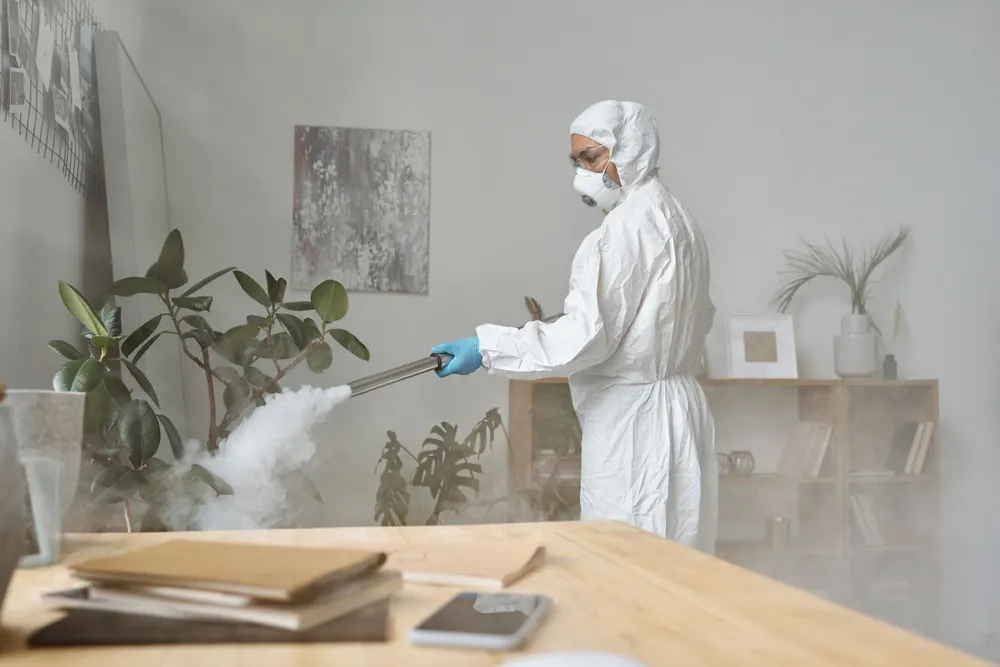
We check the roof space if there's safe access, the eaves, the kitchen and bathrooms, built-in cupboards and the outside walls down to ground level. We confirm what's there before treating, and then use the right tool: bait stations and traps for rodents, nest treatment for bird mites and wasps, gel baits for cockroaches, registered soil treatments or baiting for termites, and odourless, non-staining sprays where they help. You don't need to move out. Keep children and pets off treated areas until dry.
What owners of older homes get wrong
Trimming the tree back once and thinking the rat problem is solved. Branches grow back, and within a season they're touching the roof again. Keep a gap of at least an arm's length between branches and the roof line, and check it every year. The same goes for creepers on walls, which are a ladder for rats.
A Queenswood tip
Old gutters full of jacaranda and other leaf litter stay damp and attract cockroaches, ants and nesting birds. Clean them before the summer rains, and check the downpipes aren't soaking the soil against the foundations. Damp soil next to the walls is where termites like to start.
What does it cost?
That depends on what's in the house and how far it has spread. Fishmoths or a wasp nest are small jobs. Rodents in a big roof need a few visits. A termite treatment on an older house is the largest job, priced on the length of the walls, the kind of floors and how much drilling is needed. We'll quote after inspecting, never blind.
Queenswood sits in our northern area, covered fully on the Montana pest control page, and nearby Villieria has the same older-home story. We're SAPCA registered with 25 years of experience, and our 3-month guarantee means we return if the pest does. Call 012 012 5526, or WhatsApp us a photo of what you've found.
Questions we get asked
How often should an older Queenswood house be checked for termites?
Once a year is sensible for older homes with timber floors or roofs, and after any building work that disturbs the soil around the foundations.
Are the tiny biting specks on my walls bird mites or bed bugs?
If they're very small, move fast and appear near ceilings, windows or light fittings, bird mites from a roof nest are more likely. Bed bugs are larger, slower and stay close to the bed.
Will trimming my trees stop rats getting into the roof?
It helps a lot, but only if you keep branches well away from the roof line and also close the gaps they've been using.
Do fishmoths mean my house is damp?
Not necessarily damp, but there's usually a dark, undisturbed and slightly humid spot such as a built-in cupboard, bookshelf or storeroom. Airing it out helps.
Can you work in an old house without damaging wooden floors?
Yes. Our residual sprays don't stain, and for termites we choose a method that suits the floor, which can include baiting where drilling isn't practical.