
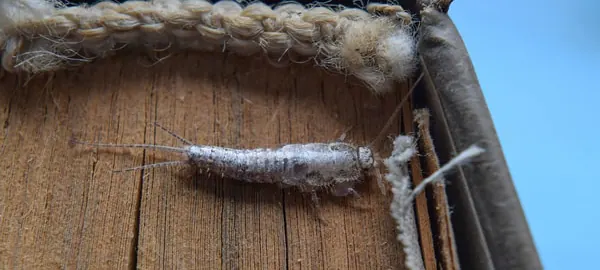
Fishmoths, also called silverfish, are best controlled by treating the dark, slightly damp spaces where they hide and by fixing the damp that drew them there in the first place. They don't bite, sting or spread disease, but they eat starch, glue, paper and natural fibres, and over time they damage books, documents, photos, wallpaper and stored clothing. In 25 years of pest control in Pretoria and Centurion, we've found fishmoths in homes of every age, in offices, in school storerooms and in archive rooms where years of paperwork sit undisturbed.
What you're looking at
A fishmoth is a small, wingless, silver-grey insect, narrow and carrot-shaped, with long antennae at the front and three bristle-like tails at the back. It moves in a quick, wriggling way that looks a bit like a fish swimming. They're mostly active at night, and you often see them only when you switch on the bathroom light or lift a box that's been sitting on the floor.
Where fishmoths live in Pretoria homes
The Highveld is dry for much of the year, which surprises people who expect fishmoths to be a coastal pest. But they don't need a damp climate, only a damp corner. In Pretoria homes that usually means:
- Bathrooms with poor ventilation, especially around the bath panel and under the basin
- Built-in cupboards against outside walls, particularly in older houses where rising damp is an issue
- Roof spaces under a leaking tile or a slow geyser drip
- Garages and storerooms with stacked cardboard boxes, old magazines and books
- Bookshelves and linen cupboards that are seldom opened
Older homes in the established suburbs, with their solid timber cupboards and decades of stored belongings, see a lot of fishmoth activity. We do regular work in fishmoth treatments in Waterkloof homes and the large family houses covered by our Lynnwood fishmoth service.
Signs of fishmoth damage
- Small, irregular holes or scraped surfaces on paper, book covers and photographs
- Yellowish stains or tiny dark droppings like pepper on shelves and in drawers
- Thin, silvery shed skins in cupboards
- Damaged wallpaper where the paste has been eaten
- Small holes in cotton, linen or silk clothing in long-term storage
Our fishmoth treatment
We start by finding where they're breeding, rather than treating every room. That means checking bathrooms, cupboards, the roof space, the garage and any storage areas, and looking for moisture: leaks, condensation, rising damp or poor airflow. Then we apply an odourless, non-staining residual treatment into the cracks, crevices, cupboard corners, skirting gaps and roof spaces where fishmoths hide. It's applied to the places they live, not sprayed over your belongings, and you don't need to leave home while it's done. Keep children and pets out of treated cupboards until surfaces are dry.
We'll also point out what's keeping the problem going: a leaking pipe, a blocked extractor fan, a cupboard pressed tight against a cold, damp wall, or boxes of paper stored directly on a concrete floor.
What people commonly get wrong
Treating fishmoths as a cleanliness problem. People clear out a cupboard, wipe it down, put everything back and find fishmoths again a month later. Cleaning helps, but the eggs are in cracks and joints, and if the cupboard is still damp, they'll be back. The second mistake is storing important papers, photos and books in cardboard boxes. Fishmoths eat the cardboard and the glue in it, then move on to what's inside.
A Pretoria tip for the summer rains
Pretoria's summer thunderstorms often reveal small roof leaks that go unnoticed in the dry months. After the first heavy storms, check the ceiling and the cupboards along outside walls for damp patches. A slow leak that keeps one cupboard slightly damp all summer is exactly what a fishmoth colony needs. Fixing that, and storing books and papers in sealed plastic containers off the floor, makes the biggest difference.
Offices, schools and document storage
For businesses that keep paper records, from legal and medical offices to schools and government buildings around the city centre and Arcadia, fishmoths can do real damage to archives. Storerooms with poor ventilation and years of undisturbed boxes are perfect for them. We treat archive rooms and storerooms, advise on storage, and can include fishmoth monitoring in a regular service contract. Fishmoths are often found alongside other insects in these spaces, which our page on crawling insect treatments in Pretoria covers.
What does fishmoth control cost?
It depends on how many rooms and cupboards are affected, whether the roof space and storerooms need treating, and how established the population is. A few fishmoths in one bathroom is a small job, and improving the ventilation might be all it takes. A whole house of built-in cupboards, or an archive room full of boxes, takes longer. We'll quote after looking.
We're a SAPCA-registered company with 25 years behind us, and if fishmoths return within three months of treatment, our guarantee means we come back. Call 012 012 5526, or send a photo on WhatsApp of the insect or the damage and we'll confirm whether it's fishmoths.
Questions we get asked
Are fishmoths harmful to people?
No. Fishmoths don't bite, sting or carry disease. The problem is the damage they do to paper, books, photographs, wallpaper and natural fabrics.
Why do I find fishmoths in the bath?
They often fall into the bath while looking for moisture and can't climb the smooth sides. It usually means they're living nearby, under the bath panel or in the bathroom cupboards.
Can fishmoths live in a dry climate like Pretoria's?
Yes. They don't need a damp climate, just a damp spot, such as a poorly ventilated bathroom, a leaking roof or a cupboard against a damp wall.
Will mothballs get rid of fishmoths?
Not reliably. Mothballs may repel some insects in a closed cupboard, but they don't reach the fishmoths living in cracks and joints, and the smell lingers on your belongings.
How should I store old photos and documents?
In sealed plastic containers, off the floor, in a dry, ventilated room. Cardboard boxes attract fishmoths because they eat the cardboard and the glue.
Do you treat archive rooms and storerooms?
Yes. We treat document storage areas for offices, schools and other businesses, and can include fishmoth monitoring in a regular service.