
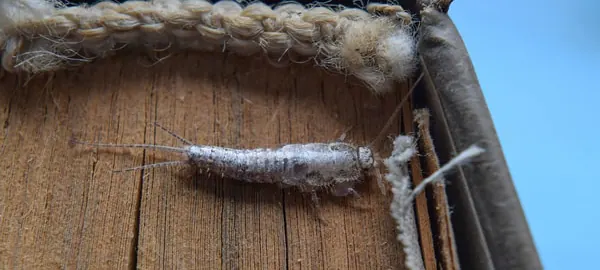
Fishmoths, also called silverfish, are a common problem in Lynnwood's older homes and offices, and they're best dealt with by finding the dark, undisturbed places where they breed, treating those directly and making them less comfortable. Moth balls and a quick spray along the skirting won't reach them. They live inside cupboards, behind boards and in stacked paper, not out in the open.
What fishmoths are and what they eat
Fishmoths are small, flat, wingless insects with a silvery, scaly body that tapers to three tail bristles. They move with a fish-like wriggle, which is where the name comes from. They feed on starch and cellulose: the glue in book bindings, wallpaper paste, paper, cardboard, photographs, cotton and linen, and the crumbs and dust in the corners of cupboards. They like it dark, sheltered and slightly damp, and they can live a long time without eating, which is why an infestation can build slowly for years.
Why we see them so often in Lynnwood
A lot of Lynnwood houses have exactly what fishmoths want. Older homes tend to have large wooden built-in cupboards, linen presses and wardrobes, often with gaps behind the back panels where dust collects. Many have studies and libraries, boxes of old papers, school projects and photo albums in the roof or the garage, and spare rooms that aren't opened for weeks. Summer storms bring humidity, and bathrooms and sculleries in older houses sometimes lack good ventilation.
The offices along Lynnwood Road have their own version: archive rooms, filing cabinets, boxes of records stored on the floor, and storerooms that only get opened once a year. Paper that sits undisturbed in the dark is a fishmoth's ideal home.
How to tell you have fishmoths
- Seeing them dart away when you open a cupboard, lift a box or switch on the bathroom light at night
- Irregular holes or scraped patches on book covers, wallpaper, photographs and labels
- Yellowish stains and small holes in stored linen and cotton clothing
- Tiny pepper-like droppings and shed silvery scales on shelves
What we do
We inspect cupboards, shelves, bathrooms, the roof space and storerooms to find where the insects are breeding, and look at the conditions behind it: damp, poor ventilation, stacked paper and boxes. We then apply an odourless, non-staining residual treatment into the cracks, voids and joints of cupboards, shelving and skirting, the places fishmoths actually hide, and treat roof spaces where stored boxes are involved. You don't need to leave the house; just let treated areas dry before children and pets go near them. For offices with archives or storerooms, regular treatment can be part of a scheduled service.
The mistake that keeps them coming back
Treating the cupboard and putting the same old cardboard boxes back in. Cardboard is both food and shelter for fishmoths, and a box that's been in the roof for years often holds a colony of its own. Unpack it, check it, and move anything you want to keep into sealed plastic containers. The other mistake is relying on moth balls or cedar blocks. They're aimed at clothes moths and do very little against fishmoths.
A local tip for older houses
Empty your built-in cupboards and linen press once a year, vacuum the corners and the gap at the back of each shelf, and leave the doors open for a day to air them out. In older Lynnwood homes, the gaps where shelves meet the back panel collect years of dust, lint and crumbs, and that layer is a fishmoth's pantry. Doing this in spring, before the humid storm months, makes the biggest difference.
What does it cost?
The price depends on how many rooms and cupboards are affected, whether the roof space or a storeroom needs treating, and the size of the house or office. A couple of cupboards in one room is a small job. A whole older house, or an office with an archive room, takes more. If you've seen the odd fishmoth in the bath and nothing else, better ventilation and a good clean might be all you need.
Fishmoths often share cupboards with pantry pests, so if you're finding weevils or moths in the food, read about pantry pest treatment in Lynnwood. For the rest of the city, see fishmoth control in Pretoria, and for the older homes and converted-house offices next door, fishmoth treatments in Brooklyn. Other local pests are on our Lynnwood pest control page.
We're SAPCA registered and have 25 years of experience, and if fishmoths return within three months of treatment, we come back. Phone 012 012 5526, or WhatsApp us a photo of the insect or the damage.
Questions we get asked
Are fishmoths harmful to people?
No. They don't bite or carry disease. The harm is to books, papers, photos, wallpaper and stored fabrics.
Why do I see fishmoths in the bath?
They're drawn to damp areas and can't climb smooth surfaces, so they get trapped in baths and basins at night.
Will moth balls get rid of fishmoths?
Not really. Moth balls target clothes moths. Fishmoths need treatment in the cracks and voids where they hide, plus less clutter and damp.
Can fishmoths ruin important documents?
Yes, over time. Store valuable papers and photos in sealed plastic containers off the floor, in a dry room.
Do fishmoths come from outside?
Sometimes, but mostly they're carried in with boxes, books and stored goods and then breed indoors in undisturbed spaces.