
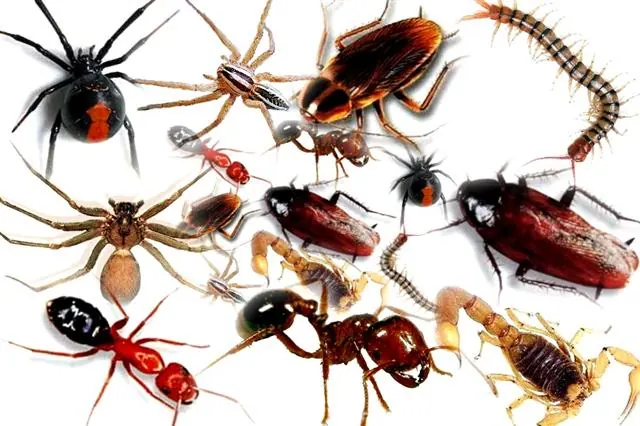
Good insect control in Lynnwood starts with a simple question: which insect is it? Many calls we get begin with "there are little things everywhere", and the answer could be ants, fishmoths, beetles in the pantry, fleas, fruit flies or something else entirely. Each one lives in a different place and needs a different product and method. So we identify first, find the source, and then treat. A general spray of everything rarely solves anything for long.
A suburb with a lot of insect life
Lynnwood's large, mature gardens are a big part of its appeal. They're also home to an enormous range of insects. Thick tree canopies, deep beds and compost, irrigated lawns and ponds all support life, and some of that inevitably comes indoors. Add older houses with gaps around doors, windows and roof edges, and the commercial buildings along Lynnwood Road with kitchens, storerooms and constant deliveries, and you get a wide variety of insect problems across a single suburb.
The kinds of insect problems we treat
Crawling insects
Cockroaches, ants, fishmoths, crickets, beetles, centipedes and millipedes. These mostly come in at ground level or live in cupboards and voids. Our page on crawling insect control in Lynnwood covers the perimeter-and-harbourage approach that works for most of them.
Flying insects
Flies, mosquitoes, wasps and moths. With these, the key is usually where they breed or nest: a bin, a drain, a pond, a patio roof. See flying insects in Lynnwood for more.
Biting insects
Fleas, bed bugs, bird mites and mosquitoes. These need careful identification, because the bites can look similar and the treatments are very different.
Pantry and stored-product insects
Weevils, flour beetles and pantry moths in food cupboards, pet food and bird seed. These are treated by finding and removing the infested product first.
How we work
- Identify. We look at the insect itself, or a good photo, and at the damage or signs it leaves.
- Find the source. Nests, breeding sites, entry points, food, moisture: the reason it's there.
- Treat the right way. Gel baits for cockroaches, baits for ants, targeted nest treatment for wasps, residual treatments that are odourless and non-staining for crawling insects, and so on.
- Prevent. We tell you what to fix: a gap under a door, a drain, a light that draws insects, clutter that gives them a home.
- Follow up where the insect's life cycle needs it.
For a normal insect treatment, you can stay home; keep children and pets off treated surfaces until they're dry.
Homes, offices and schools
In homes, most insect problems come in from the garden or start in the kitchen. In Lynnwood's offices and schools, the pressure points are different: staff kitchens, tuck shops, refuse areas, storerooms and the ceiling voids that connect them. Businesses can choose a scheduled monitoring contract, with regular inspections and treatments and a record of each visit, so issues are dealt with before staff or clients notice them.
The most common mistake
Buying a broad-spectrum spray and using it on everything. Some insects scatter when sprayed, like German cockroaches and certain ants, and end up in more rooms than before. Others, like fleas and bed bugs, are in places a surface spray never reaches. If something keeps coming back, it's usually because it was treated the wrong way, not because it needs more spray.
One tip for Lynnwood homes
Do an outside walk-around at the start of each summer. Check for branches and creepers touching the roof, mulch and soil piled against the walls, gaps under doors, broken air bricks and outside lights shining right onto a doorway. These small things let all sorts of insects into a house in one of Lynnwood's big, leafy gardens, and fixing them makes every treatment last longer.
What does it cost?
The price depends on which insect it is, how big the property is, how established the problem is and whether a follow-up is needed. A one-off treatment for a single problem in a home is usually simple. A business with several areas on a monitoring contract is quoted to suit the site. If it's something minor you can manage yourself, we'll tell you how.
For the broader service, see insect control across Pretoria. We also cover the neighbouring suburb through insect control in Brooklyn. For a list of all the pests we handle locally, see pest control in the Lynnwood area.
We're SAPCA registered, with 25 years of experience, and our treatments come with a 3-month guarantee. Not sure what you've got? Call 012 012 5526, or send a photo on WhatsApp and we'll identify it for you.
Questions we get asked
Can you identify an insect from a photo?
Usually, yes. A clear, close-up photo on WhatsApp, ideally with something for scale, is often enough for us to tell you what it is.
Do you do a general spray for all insects?
Not as a habit. We identify the insect and treat it the way that works for that species, which lasts longer and uses less product.
How often should an office be treated?
It depends on the building and the risk. Offices with kitchens or food areas usually do well on a regular monitoring contract.
Why do I get more insects in summer?
Heat and rain speed up insect breeding, and storms drive many species out of the garden and into homes.
Are your insect treatments safe for children and pets?
Yes, when used as directed. Keep them off treated surfaces until they're dry.