
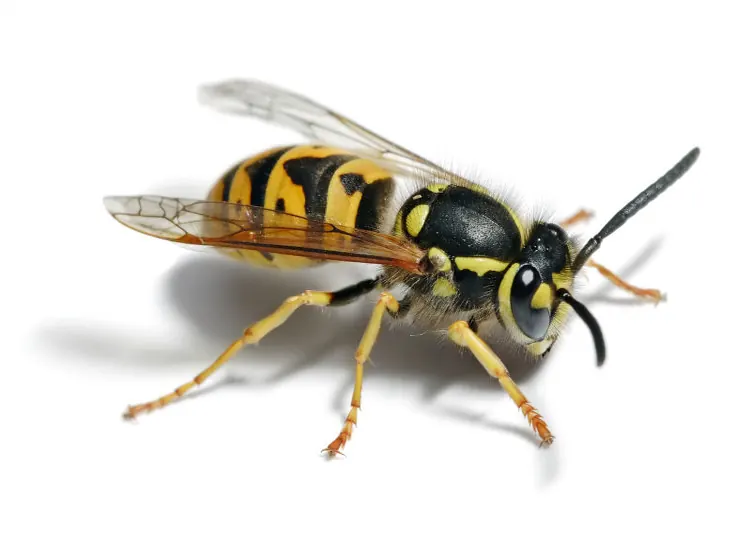
If wasps are building under your eaves, patio roof or pergola in Lynnwood, the safest fix is a targeted treatment of the nest itself, done at the right time of day with the right protection, followed by removing the nest. Knocking it down with a broom, or spraying it from a step-ladder, is how people get stung. We treat wasp nests at homes, offices and schools across the suburb every summer.
Why Lynnwood properties attract wasps
The wasps we deal with most are paper wasps. The queens come out of hiding in spring and look for a sheltered, dry spot with a bit of overhang to start a new nest: the underside of an eave, the inside of a patio roof, the beams of a wooden pergola, a carport, a window frame, the inside of a meter box, or deep in a dense hedge. Older Lynnwood houses with wide, open eaves, timber patio structures and large shrubs offer dozens of these spots on one property. Big gardens also provide what wasps need to feed their young: caterpillars and other insects, plus water from pools, ponds and birdbaths and nectar from flowering plants.
Nests grow through summer. A small comb with a few wasps in October can be a big, busy colony by January, and that's when most calls come in.
When a nest needs treating
Not every wasp nest has to go. A small nest high up in a far corner of the garden, away from where people walk, can often be left alone; paper wasps help control caterpillars. A nest needs dealing with when it's:
- Near a door, window, patio, braai area, pool or play area
- Where children, elderly people or pets spend time
- Next to a walkway, parking area or entrance at an office or school
- Close to anyone with a known allergy to stings
- Growing quickly, or one of several nests on the same building
How we treat wasp nests
We locate every nest on the property, because there's often more than one, and work out the safest approach for each. We use protective gear, and treat the nest directly with a product designed for nest treatment, usually early or late in the day when most of the wasps are home. Once the colony is dead, we remove the nest so it doesn't attract new queens and isn't left hanging as a reminder. If wasps are getting into a wall cavity or roof space, we treat the entry point and the void.
For offices and schools along Lynnwood Road, we can work outside of busy times so that staff and learners aren't near the area. It's a quick job, and the area can be used again once the nest is gone and the treated spot has dried.
The mistakes we see every summer
Spraying a nest with a can of household insecticide in the middle of the day. Half the colony is out foraging, the ones on the nest get angry and the returning wasps find the area and sting whoever is nearby. Then there's hosing the nest down, burning it, or knocking it off with a broom. All of these put you within stinging distance of a disturbed colony. If someone in the household is allergic to stings, don't try it at all.
A Lynnwood prevention tip
Walk around the house in early spring, when the first queens are starting out, and look up under the eaves, the patio roof and the pergola. A new nest at this stage is the size of a coin, with one queen and a handful of cells, and it's far easier to deal with than a mature colony. Check the inside of the meter box and the gate motor housing too. Wasps love those small, dry, sheltered boxes.
What does it cost?
It depends on how many nests there are, how high and how hard to reach they are, and whether wasps are inside a cavity or roof space. A single nest under a patio roof is a small, quick job. Several nests on a double-storey house, or nests on an office building or school, take more time and equipment. We'll give you a clear price before we start.
Wasps are part of the wider summer pattern of flying pests, which we cover on flying insect control in Lynnwood. For our city-wide service, see wasp control in Pretoria, and next door, wasp nest removal in Waterkloof. For anything else in the area, go to our Lynnwood pest control page.
We're SAPCA registered, with 25 years in pest control, and if wasps rebuild on a treated spot within three months, we'll come back. Call 012 012 5526, or WhatsApp us a photo of the nest and where it is.
Questions we get asked
Should I remove a small wasp nest myself?
It's safer not to, especially if anyone in the house is allergic to stings. Even a small nest can produce several stings if it's disturbed badly.
Will the wasps come back to the same place?
New queens can choose the same sheltered spot in a later season, which is one reason we remove the nest after treating it.
Are wasps or bees in my wall?
Wasps usually build open paper combs under overhangs. If insects are flying in and out of a hole in the wall in large numbers, it may be bees, and a beekeeper should be called first.
Can you treat wasp nests at a school?
Yes. We plan the treatment around times when learners aren't near the area and make sure the spot is safe before it's used again.
When are wasps worst in Lynnwood?
Late spring through midsummer, when nests that started small in spring reach their largest size.