
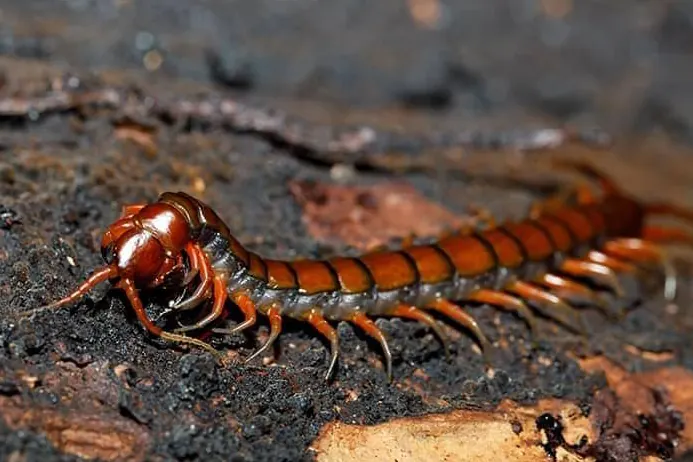
Centipedes in a Lynnwood home almost always come from outside, from the damp mulch, leaf litter and flowerbeds around the house. The fix is to treat those outdoor hiding places and the gaps they come through, and to dry out the edges of the house a little. Inside, they're usually just passing through, hunting or looking for somewhere damp to shelter.
What centipedes are doing here
Centipedes are predators. They have one pair of legs per body segment, move very quickly and use a pair of modified front legs to grab and inject venom into the insects, spiders, slugs and worms they hunt. In a garden, that makes them useful. The trouble starts when they come inside.
Lynnwood's established gardens hold a lot of moisture close to the walls. Mature trees drop thick layers of leaves. Shrubs and beds planted against the house keep the soil cool and shaded. Irrigation, gutters and downpipes keep it wet. Under that blanket, centipedes find food and cover, and in summer, when heavy storms soak the ground or a dry spell drives them to find damp, they wander into bathrooms, sculleries, garages and basements.
Will a centipede bite?
They can, if you pick one up or press on it, for example putting on a shoe or reaching into a box in the garage. A bite from the larger species is painful and can swell, a bit like a bee sting, and people with allergies or young children should get it looked at. Most centipede encounters, though, end with it running for the nearest gap.
Centipede or millipede?
It's worth knowing the difference, because people often confuse them. Centipedes are flattened, fast and have one pair of legs per segment, with long legs sticking out to the sides. Millipedes, including the shongololo, are rounded, slow, have two pairs of legs per segment and curl up when disturbed. Millipedes eat rotting plant matter and don't bite. If what you're finding is slow and curls up, see our millipede page for Lynnwood instead.
Signs of a centipede problem
- Centipedes running across bathroom or scullery floors at night
- Finding them in the bath, shower or basin in the morning
- Seeing them in the garage, a basement or the laundry, especially in the wet months
- Many under pots, paving, logs and mulch when you lift them in the garden
How we deal with centipedes
We start outside, looking at the beds, mulch, leaf litter, paving and wall bases where they shelter, and checking how they get in: gaps under doors, weep holes, cracks in walls and around pipes and drains. We then apply an odourless, non-staining residual barrier treatment around the outside of the house and into those entry points, and treat the damp areas inside where they've been turning up, like bathrooms, sculleries and garages. Because centipedes feed on other insects, reducing the crawling insects around the house helps too. Our crawling insect treatments in Lynnwood look at that wider picture.
A common mistake
Spraying every centipede you see indoors and never looking at the beds outside. The supply is outside, so the indoor visitors keep coming. The other is overwatering. Irrigation set to run every evening, right up to the walls, keeps the soil around the house permanently damp, which is exactly what centipedes need.
A local prevention tip
Rake back the leaf litter and mulch from a strip right next to the walls, about the width of a spade, and keep that strip as dry as you can. In Lynnwood gardens shaded by big trees, the leaves often build up thick against the house over winter, and by the time the rains arrive, they're a damp, ready-made centipede shelter. Clear gutters and check that downpipes drain away from the walls too.
What does it cost?
It's priced on the size of the house and the area of beds and paving that need treating, and whether we're treating outbuildings, a basement or a cottage as well. A standard house with centipedes in the bathroom is a modest job. If you see the odd one, clearing the strip by the walls and fitting a draught strip under the door might be all it takes.
For the full picture across the city, see centipede control in Pretoria. Older homes with big trees in the next suburb have the same issue, covered under centipede treatments in Brooklyn. Everything else we treat locally is on Lynnwood pest control.
We're SAPCA registered with 25 years behind us, and if centipedes return within three months of treatment, we'll come back. Ring 012 012 5526, or WhatsApp a photo and we'll confirm whether it's a centipede or a millipede.
Questions we get asked
Are centipedes dangerous?
Not usually. A bite from a large one is painful and can swell, but serious reactions are rare. See a doctor if a child is bitten or the swelling spreads.
Why do I find centipedes in the bath?
They come in looking for moisture and prey, fall into smooth baths and basins at night and can't climb out.
Do centipedes mean I have other pests?
Often, yes. They hunt insects, spiders and slugs, so plenty of centipedes usually means plenty of food for them around the house.
When are centipedes worst in Lynnwood?
During the summer rains, when wet ground pushes them up and around houses, and in dry spells when they seek damp spots indoors.
Can I stay home during the treatment?
Yes. Most of the treatment is outside. Keep children and pets off treated areas until they've dried.