
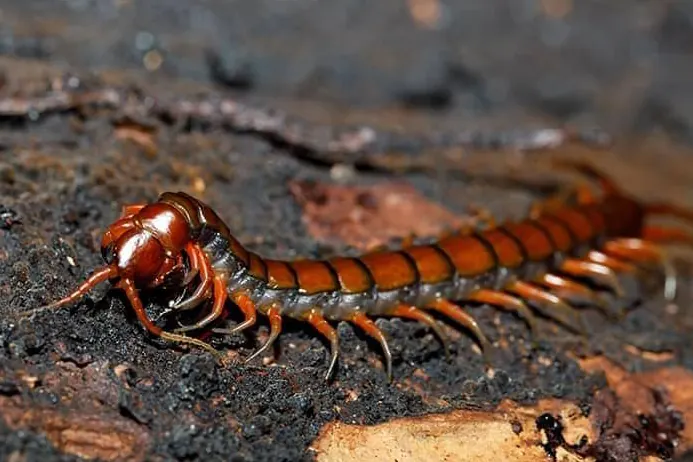
If you're finding centipedes in a Brooklyn house, the cause is almost always outside: damp leaf litter, mulch and cracked old drains right against the walls. Treating those harbourage areas and drying them out, along with sealing the gaps the centipedes use to get in, is usually all it takes.
Why centipedes like Brooklyn
Centipedes need moisture. They lose water quickly through their bodies, so they spend the day under stones, logs, leaf litter and mulch, and come out at night to hunt insects, spiders and other small creatures. Brooklyn's mature trees drop a lot of leaves, and in shaded gardens that litter stays damp for days after rain. Older houses often have cracked drains, gutters that overflow against the walls and garden beds pushed right up to the foundations. Put those together and you have centipedes living a metre from your back door.
Indoors, they turn up in bathrooms, laundries, geyser cupboards and under sinks, anywhere damp and dark. Many people notice them most after summer storms, when the ground is soaked and they move in search of a drier spot.
Signs centipedes are living close by
- Centipedes in the bath, shower or laundry basin in the morning
- Sightings under pot plants, doormats and garden stones when you lift them
- Activity near floor drains and the outside gully
- More of them after a run of storms
- Damp patches on the outside walls where gutters overflow
Are they dangerous?
Most centipedes found in Brooklyn homes are small and harmless to people. Larger ones can bite if handled, and the bite is painful and can swell, a bit like a bee sting. Children and people with allergies should be careful. Centipedes are actually useful in the garden because they eat other pests, so the aim is to keep them outside, not to wipe them out.
Centipede or millipede?
The two are often confused. Centipedes are flat and fast, with one pair of legs per body segment, and they hunt. Millipedes are rounder, slower and have two pairs of legs per segment, and they eat decaying plant matter. Millipedes tend to arrive in large numbers after rain. If that's what you're seeing, read our page on millipedes in Brooklyn.
What we do
- Find the damp spots. We check around the outside of the house for leaf litter, mulch, overflowing gutters, cracked drains and plants against the walls, and inside for leaks under sinks and in bathrooms.
- Treat the harbourage. We apply an odourless, non-staining residual treatment to the base of the walls, the edges of beds next to the house, drains and entry points.
- Close the way in. We show you the gaps under doors, around pipes and in old air bricks that need sealing.
- Advise on drying out. Without changing the conditions, the centipedes come back.
The mistake most people make
Spraying centipedes in the bathroom and leaving the damp bed of leaves outside the window alone. The ones indoors are a symptom. The population lives outside, and the fix is outside.
A tip for Brooklyn homes under big trees
Rake a clear strip about half a metre wide around the base of the house, free of leaves and mulch, and keep it that way through summer. Swap mulch against the walls for gravel. It looks neat, dries quickly after rain and takes away the damp cover centipedes rely on. Clearing gutters before the rains stops them overflowing onto that strip.
Converted houses and offices
Offices in older Brooklyn houses often have rarely used bathrooms, back rooms or storerooms where centipedes settle in quietly. Staff only notice them when one runs across the floor in the morning. Including those rooms in a regular service, and fixing any slow leaks, keeps the building clear.
What does centipede control cost?
It's usually a modest treatment. The cost depends on the size of the house, how much of the perimeter and garden needs treating, and whether there are outbuildings or storerooms to include. Often the most effective thing you can do costs nothing: clear the leaf litter, fix the dripping tap and dry out the damp corner. If that works, you may not need us at all.
We handle centipedes across the city through our centipede control for Pretoria, and the leafy older gardens next door are covered by our Lynnwood centipede treatments. Other pests we see in the suburb are listed on the Brooklyn area page. One Stop Pest Control is SAPCA registered and has spent 25 years in the business. If centipedes return within 3 months, we come back under our guarantee. Call 012 012 5526 or WhatsApp us a photo.
Questions we get asked
Do centipedes bite?
Larger centipedes can bite if handled, and it's painful, but the small ones usually found in homes are harmless. Use a container to move one rather than your hand.
Why do I find centipedes in the bath?
They come in looking for moisture and food, and once in a bath they can't climb out. It usually means damp spots near the house outside.
Do centipedes damage the house?
No. They don't eat timber, fabric or food. They hunt insects, so they're a nuisance rather than a destructive pest.
Why are there more centipedes after rain?
Heavy rain soaks the ground and leaf litter, so centipedes move to drier spots, which sometimes means inside your house.
Is it worth treating if they're useful in the garden?
We focus on the walls and entry points of the house, so they stay out of your home without wiping them out of the garden.
Will clearing leaves really help?
Yes. A dry strip around the house removes the damp cover centipedes need, and it's often the single most effective step.