
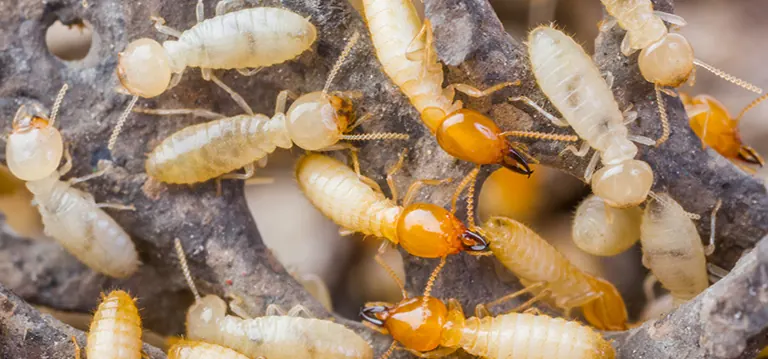
If you suspect termites in a Brooklyn property, start with an inspection rather than a spray. Most of what we find here is subterranean termites working in old timber: suspended floors, skirting boards, built-in cupboards and the frames of doors and windows. Harvester termites are a separate issue in sunny lawns. They need a completely different treatment, so working out which one you have comes first.
Why older Brooklyn houses attract termites
Many Brooklyn homes went up long before modern pre-construction soil treatments were standard practice, and even where a house was treated, that protection has long since worn off. The timber in these buildings is plentiful, and it has often been in place for a lifetime. Add mature gardens with beds banked up against the walls, old tree stumps left in the ground and decades of leaf litter, and you have exactly the conditions a subterranean colony wants: moisture, cover and a steady food supply right next to the foundations.
Conversions are another trigger. When a house becomes an office or a practice, there is usually building work: new paving for parking, an extra bathroom, a ramp, a new drain line. Every one of those disturbs the soil against the building and can open a fresh path into the structure.
What termite activity looks like here
- Pencil-thin mud tubes on foundation walls, inside cupboards or behind skirting
- Floorboards that feel soft or sound hollow, particularly near outside walls
- Paint that blisters or bubbles on door frames
- Soil packed into cracks in plaster or around plug points
- Winged termites emerging from inside the house after the first summer storm
- In the lawn: small round holes, little heaps of loose soil and short cut grass blades
Our process in Brooklyn properties
We begin with the building. That means walls, floors, cupboards, roof void and outbuildings, and then the garden, looking for tubes, damage, old stumps and soil activity. We note how the termites are getting in, which in older homes is often along a crack in the foundation, an old pipe entry or wood that touches soil under a veranda.
Treatment follows from what we find. For subterranean termites we use registered soil treatments to create a treated zone around and under the affected parts of the structure, and baiting where drilling through old floors or decorative paving isn't sensible. For harvester termites, we treat the active nest openings in the lawn. Heavy infestations get a follow-up visit to make sure the tubes stay dead. The details of each method are on our main termite control page for Pretoria.
A mistake we see in Brooklyn gardens
Leaving the stump when a big tree comes down. It's understandable, as grinding out a large stump is a job in itself, but a rotting stump close to the house is an open invitation to a termite colony. Once established there, the termites only have to travel a few metres to reach your floorboards.
Prevention tips for established homes
- Pull flowerbeds and mulch back so soil sits below the damp-proof course.
- Grind out old stumps near the house, or have the area checked if you can't.
- Don't let creepers and leaf litter build up against the walls.
- Before converting or extending, ask for a termite check so the new work doesn't hide an existing problem.
- Keep firewood and stored timber off the ground and away from the house.
Flying ants or termites?
After the first summer rain, swarms of winged insects are normal. Some will be termites, some will be ants. If they're coming out of the soil in the garden, it isn't an emergency. If they're coming out of a skirting board or a crack in the floor, call us. If you are mostly seeing ant trails rather than swarms, our page on ants in Brooklyn is more useful.
What does termite control cost?
For subterranean termites, the price depends on the length of the perimeter, how much drilling is needed through floors or paving, how much timber is affected and whether baiting suits the building better. A large old house with suspended floors is a bigger job than a slab-on-ground cottage. A harvester termite treatment in a lawn is a much smaller job. We quote after the inspection, because guessing over the phone helps nobody.
We see the same old-house pattern next door, through our termite work in Waterkloof, and you can read about the other common problems in the suburb on our Brooklyn pest control overview. We've been at this for 25 years, we're SAPCA registered, and if termite activity returns within 3 months of treatment we come back and deal with it. Phone 012 012 5526, or WhatsApp us a picture of the mud tubes.
Questions we get asked
Are termites common in Brooklyn?
Yes. The older homes, mature gardens and timber floors in Brooklyn make subterranean termites a regular call, and harvester termites affect sunny lawns in dry months.
Will treatment damage my old floors?
We avoid it wherever we can. Where drilling a floor or decorative paving isn't sensible, baiting is often a better option, and we'll explain the choice before we start.
Should I have a house checked before buying in Brooklyn?
It's a good idea, especially for older homes with suspended timber floors. Termite damage is often hidden behind skirting and inside cupboards.
Does an old tree stump really attract termites?
It can. A rotting stump near the house gives a colony food and moisture, and from there it is a short trip to your floorboards.
Can the office stay open while you treat?
Usually, yes. Soil treatments and baiting are applied outside and at specific points, so staff can carry on working. We keep people off treated areas until they've dried.
How do I tell termite damage from wood rot?
Termites leave soil packed into the timber and mud tubes nearby. Rot is soft and crumbly without soil. If you're not sure, a photo on WhatsApp is often enough for us to tell.