
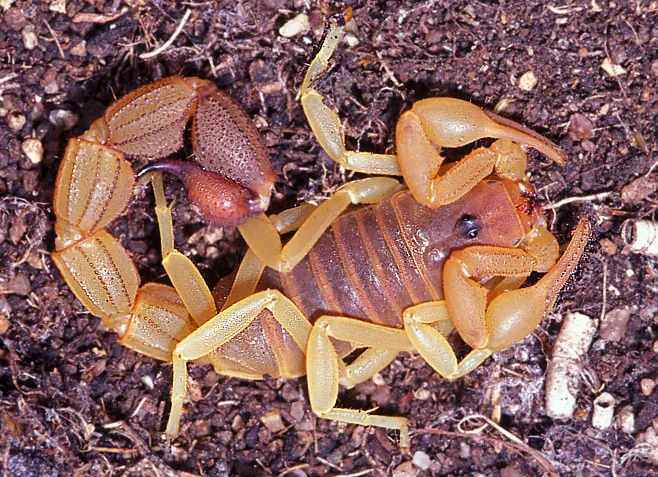
Scorpions are less common in Brooklyn than in the rocky suburbs on the ridges nearby, but they do turn up, usually in rockeries, under stacked bricks and paving, in wood piles and in cluttered garages. If you've found one, the answer is to treat the places it's living and remove the clutter that gives it cover, rather than spraying the whole garden.
How scorpions end up in a Brooklyn garden
Scorpions want somewhere dry and dark to hide by day and a supply of insects to hunt at night. Brooklyn's established gardens provide both. Old rockeries, retaining walls with gaps between the stones, loose brick edging around beds, stacks of leftover paving from renovations and firewood piled against a wall are all ideal. Garages and storerooms full of boxes are a second favourite. From there, the odd scorpion wanders into the house through a gap under a door, especially on warm summer nights.
Renovation work is a common trigger. When a converted house is extended or repaved, the rubble and stacked materials left in the garden for weeks can become a scorpion shelter almost overnight.
Which scorpions matter?
There's a simple rule of thumb used throughout South Africa: look at the pincers and the tail.
- Thick tail, small pincers: treat with caution. These scorpions rely on their venom, and a sting can be serious, especially for children, the elderly and people with health problems. Get medical help after a sting.
- Thin tail, big pincers: these rely on their claws. A sting is painful, like a bee sting, but not usually dangerous to a healthy adult.
If you're not sure, take a photo from a safe distance and send it to us, or keep the scorpion in a sealed jar. Don't pick it up.
Signs you have scorpions around
- Scorpions found in shoes, on bathroom floors or in the bath in the morning
- Sightings when moving bricks, rocks or wood in the garden
- Pets pawing at the base of a wall or a rockery at night
- Plenty of crickets, cockroaches and other insects around outside lights, which is their food
What we do
We inspect the garden and outbuildings to find likely harbourage: rockeries, walls, stacked materials, wood piles and garage corners. We treat those areas, the base of outside walls and entry points into the house with an odourless, non-staining residual product. Because scorpions follow their food, we also look at the insects around your lights and in the garden, as reducing them helps keep scorpions away. Where the infestation is linked to a lot of clutter, we'll tell you plainly that clearing it is as important as anything we spray.
What people get wrong
Assuming that a scorpion inside means scorpions inside. In most Brooklyn homes, the one in the bathroom came in from the garden under a door. The fix is outside: treating the hiding places and fitting a good door seal. Bombing the house won't help.
A local tip
When renovation rubble or spare paving is going to sit in the garden for a while, stack it on pallets well away from the house, and move it out as soon as you can. Shake out shoes and work gloves that have been left in the garage, and keep a torch handy on summer nights when you walk barefoot outside.
Scorpions and spiders together
The same rockeries and wood piles that shelter scorpions are home to spiders, and the same treatments often cover both. See our page on spider treatments in Brooklyn for the species to watch. Centipedes are another night hunter in the same spots, so you may find our Brooklyn centipede page useful too.
What does scorpion control cost?
It depends on the size of the garden, how much harbourage there is, and whether outbuildings and garages need treating. A small garden with one rockery is a short job. A large property with retaining walls, stacked materials and several outbuildings takes longer. If you've seen one scorpion in years and it was a thin-tailed one, you probably don't need a treatment. Clear the clutter, seal the door and keep an eye out.
For a fuller picture, read about scorpion control in Pretoria, or our work with scorpions on the Waterkloof Ridge, where rocky slopes make them far more common. For the full list of local pests, go to the Brooklyn pest control hub. We're SAPCA registered, with a 25-year track record, and our scorpion treatments come with a 3-month guarantee: if they're back within three months, so are we. Phone 012 012 5526, or WhatsApp us a photo so we can tell you which kind it is.
Questions we get asked
Are there dangerous scorpions in Brooklyn?
Scorpions with thick tails and small pincers can occur anywhere in Pretoria and should be treated with caution. Brooklyn sees fewer scorpions than the rocky ridge suburbs.
What should I do if someone is stung?
Keep them calm and get medical help, especially for children, the elderly or if the scorpion had a thick tail. Take a photo of the scorpion if it's safe.
Why was there a scorpion in my bath?
It most likely came in from the garden under a door or through a gap, then couldn't climb the smooth sides of the bath.
Do scorpions live in the house?
Rarely. They usually live outside in rockeries, walls and wood piles, and wander in at night. Treating outdoor hiding places is the key.
Can I treat scorpions myself?
Clearing clutter, sealing doors and moving wood piles help a lot. If you keep finding them, a professional treatment of their hiding places is more effective.
Are scorpion treatments safe for pets?
Yes, once dry. Keep pets and children away from treated areas until then.