
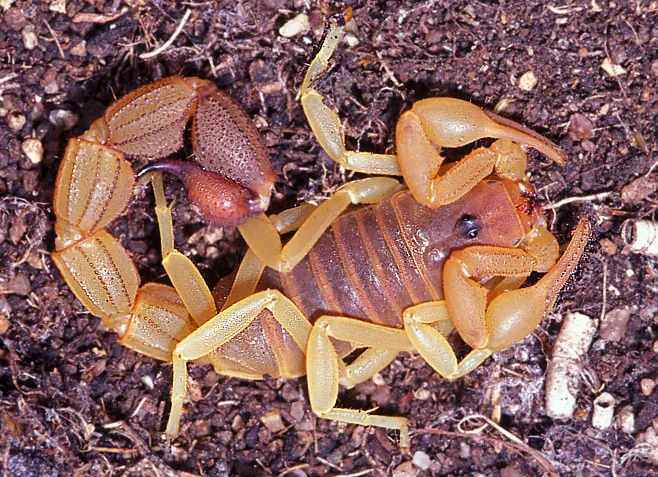
To reduce scorpions around a Faerie Glen home, you have to treat where they hide by day, take away the shelter that keeps them close to the house, and close the gaps they use to get inside. Scorpions are tough, slow-living animals that can go a long time without eating, so a quick spray on the one in the bath achieves very little. Targeted treatment of rock piles, walls, paving edges and outbuildings works far better.
Why scorpions turn up here
The suburb borders a nature reserve with ridges, rock outcrops and open grassland, which is natural scorpion habitat. Many gardens extend that habitat right up to the house: stone retaining walls on sloping stands, rockeries, loose paving, stacked bricks left over from building work, and piles of firewood. Scorpions hide in these by day and come out after dark to hunt crickets, cockroaches and other insects. On warm summer nights, especially after rain, they wander further and that's when they end up in garages, under doors and in shoes left outside.
Which scorpions should worry you?
A rough rule used across South Africa is to look at the tail and the pincers. Scorpions with thick tails and thin, small pincers tend to have the more potent venom, and a sting from one of these needs medical attention, especially for small children and older adults. Scorpions with big, heavy pincers and a thin tail rely on their claws and are generally less dangerous, although the sting is still painful. Don't handle either kind. If you've been stung and feel anything beyond local pain, go to a doctor or hospital.
How we treat scorpions
- Night or dusk inspection where useful. Scorpions glow under ultraviolet light, which makes a UV torch an excellent way to find where they're concentrated along walls and rockeries.
- Treating harbourage. We apply odourless residual treatments to rock piles, the base and joints of stone walls, paving edges, outbuildings, garages, door thresholds and around the foundations.
- Cutting the food supply. Scorpions follow insects. Where crickets and cockroaches are abundant, we treat for those too.
- Proofing advice. We point out gaps under doors, weep holes and cracks that let scorpions in.
Normal scorpion treatments don't require you to leave the house. Keep children and pets clear of the treated areas until the product has dried.
What people often get wrong
Building a beautiful rockery right against the house, then wondering why scorpions keep appearing in the lounge. Decorative stone, gravel and stacked rocks next to the walls create the ideal habitat. Another mistake is relying on the odd sighting. If you see one scorpion indoors, there are likely more hiding outdoors nearby.
Practical steps for ridge and reserve-side homes
- Move rock piles, bricks and firewood away from the house and off the ground where you can.
- Fit brush strips or door sweeps on outside doors, particularly garage and kitchen doors.
- Shake out shoes, boots and gardening gloves before putting them on.
- Keep beds pulled away from walls and bedding off the floor in rooms where scorpions have been found.
- Switch outdoor lights to yellow bulbs or turn them off when not needed. Lights attract insects, and insects attract scorpions.
- Walk the garden with a UV torch on a warm summer evening to see where they gather.
Scorpions and retirement villages
Older residents are among those most at risk from a serious sting, so retirement villages bordering open ground benefit from regular treatment of perimeter walls, garden structures and the paths between units. We can set this up on a schedule with village management, timed for the warmer months when scorpions are most active.
What does it cost?
Scorpion work is priced mainly on the amount of habitat to treat: the length of stone walls, the number of rockeries and outbuildings, and the size of the garden. A small garden with one rock feature is quick. A large stand on the ridge with terraced retaining walls, and open ground behind it, takes considerably longer. You can do a great deal yourself by clearing rocks and rubble away from the house, and if that solves the problem, all the better.
Centipedes share the same hiding places and are often found during scorpion inspections, so it's worth reading about centipedes around Faerie Glen homes. For the bigger picture, see our Pretoria scorpion service, or scorpion treatments in Lynnwood if you're north-west of us. For all the other pests in the suburb, visit our Faerie Glen pest control page.
Our team has 25 years of experience with Pretoria East's rocky stands, and One Stop is SAPCA registered. Scorpions back within three months of treatment means a return visit from us. Call 012 012 5526, or WhatsApp us a clear picture showing the tail and pincers.
Questions we get asked
How can I tell if a scorpion is dangerous?
Look at the tail and pincers. A thick tail with small, slender pincers suggests a more venomous scorpion, while large pincers and a thin tail suggest a less dangerous one. Treat every sting with caution.
Why do scorpions come inside after rain?
Rain floods their hiding places and summer warmth makes them more active, so they move around more and end up indoors.
Do scorpions glow in the dark?
They glow under ultraviolet light. A UV torch at night makes them easy to spot on walls and in rockeries.
Can you get rid of every scorpion on my property?
Not when you live next to natural habitat. We can reduce numbers sharply around the house and make it much harder for them to get inside.
Are scorpion treatments safe for pets?
Yes, once the treated surfaces are dry. Keep pets away from treated areas until then.
What should I do if my child is stung?
Get medical help straight away, especially if the scorpion had a thick tail. Keep the child calm and still, and take a photo of the scorpion if it's safe to do so.