
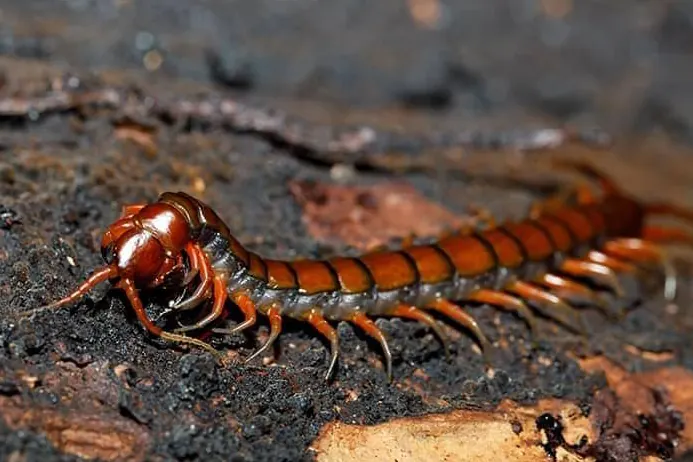
Centipedes come indoors when the garden next to the house gives them damp shelter and plenty of insects to eat. Controlling them means drying out and clearing those spots, treating the edges of the house where they shelter and enter, and reducing the insects they hunt. Most are more alarming than harmful, but a few of the larger species can give a painful bite, so it's worth keeping them out.
What we see in Faerie Glen
Centipedes are predators. They hunt crickets, cockroaches, spiders and other small creatures at night, and spend the day hidden somewhere cool and moist. In this suburb that means the base of stone retaining walls, under pot plants and paving slabs, beneath leaf litter and bark mulch, in compost and inside piles of rubble or old building material. Gardens on the reserve side and on the slopes, where natural rock and mulched beds are common, tend to have more.
Calls about centipedes spike after summer storms. Heavy rain saturates their hiding places, and they move out, often straight under a door or up through a floor drain. In dry winter months they stay deeper underground and you'll rarely see them.
Centipede or millipede?
People often confuse the two. A centipede is flattened, fast, with one pair of legs per body segment and long antennae, and it has pincer-like fangs behind the head. A millipede is rounded, slow, with two pairs of legs per segment, and it tends to curl into a coil when disturbed. Millipedes eat dead plant matter and are harmless, though they can come in large numbers. Our page on millipedes in Faerie Glen covers those.
Are they dangerous?
The small, thin centipedes found in most homes can barely break skin. Larger species, the long, banded ones that can be the length of your hand, can bite, and it hurts. For most people the result is local pain and swelling. Anyone with an allergic reaction, or a young child who has been bitten, should see a doctor.
How we treat centipedes
- An inspection of the garden beds, walls and paving around the house, and of bathrooms, laundries and garages where they're turning up.
- Odourless residual treatment around the foundations, door thresholds, weep holes, drains and the base of stone walls.
- Treatment of garages, storerooms and outbuildings where they shelter.
- Advice on clearing damp cover next to the house.
- Where cockroaches or crickets are feeding the centipedes, we treat those too.
Treatment doesn't require you to leave home. Keep kids and pets off treated thresholds until they've dried.
The common mistake
Piling bark mulch or compost thickly against the house walls to keep beds moist. It works for the plants, but it also creates a cool, damp strip right next to your doors and air bricks, which is exactly where centipedes want to live. Pull mulch back from the walls by a hand's width or two, and keep that strip as dry as possible.
Keeping centipedes out
- Fit door sweeps on outside doors and close gaps under garage doors.
- Keep floor drains topped up with water, or covered, so nothing climbs through.
- Clear rubble, loose bricks and stacked pots from beside the house.
- Fix dripping taps and irrigation heads near the walls.
- Run an extractor fan in bathrooms to keep them drier.
Centipedes in complexes and villages
In townhouse complexes, centipedes often turn up first in ground-floor units next to a shared garden bed or a landscaped bank. Because the source is in the common area, treating one unit's doorstep helps only that unit. A body corporate treatment of the shared beds, garages and the boundary wall facing open ground is more effective, and it costs each owner less than separate visits.
A local tip
If your stand has a natural rock face or a stone retaining wall close to the house, check its base after a storm with a torch. Centipedes and scorpions use the same crevices, and seeing what comes out tells you whether that wall needs regular treatment. Our page on scorpions around Faerie Glen homes explains the overlap.
What does it cost?
It's normally a modest job. What changes the price is the perimeter of the house, the amount of stonework and outbuildings, and whether insects feeding the centipedes also need treatment. If you're only seeing one or two after a big storm, a door sweep and drier beds may be enough without calling us.
For the city-wide view, see centipede control across Pretoria, and residents nearer the spruit can read about centipedes in Moreleta Park. The full list of local pests is on our Faerie Glen pest overview.
We're SAPCA registered, and our treatments are guaranteed for three months. If centipedes return in that time, we'll come back to sort it out. Call us on 012 012 5526, or WhatsApp a picture of the creature so we can tell you what it is.
Questions we get asked
Do centipedes bite?
The small ones in most homes rarely can. Larger centipedes can bite, causing local pain and swelling, and anyone who reacts badly should see a doctor.
Why do I find centipedes in the bath or shower?
They come up through drains or wander in looking for moisture, then can't climb the smooth sides. Topping up drain traps with water helps.
Are centipedes a sign of other pests?
Often, yes. They feed on insects, so a lot of centipedes can mean there are plenty of crickets, cockroaches or spiders nearby.
When are centipedes most active?
In warm, wet summer weather, especially after storms. They're far less noticeable in the dry Highveld winter.
Should I kill centipedes in the garden?
Not necessarily. Outdoors they help control other insects. The aim is to keep them out of the house, not to wipe them out of the garden.
Is the treatment safe for my vegetable garden?
We treat the house perimeter, thresholds and outbuildings, not edible plants. Tell us where your vegetable beds are and we'll keep clear of them.