
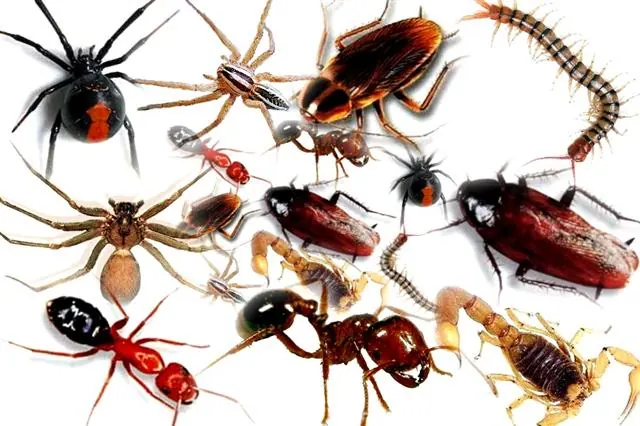
General insect control works best when one visit covers everything that's bugging you, starting with an inspection that works out why the insects are there. In Faerie Glen that usually means looking at three things: the open ground and gardens around the house, the way the building lets insects in, and what's attracting them indoors. Treating each pest separately, months apart, costs more and achieves less.
What a typical Faerie Glen insect call looks like
A homeowner rings about ants. During the inspection we also find cockroach droppings behind the fridge, a paper wasp nest starting under the patio, and spider webs thick around the outside lights. None of it is a crisis on its own, but together it adds up to a house that's comfortable for insects. A general insect treatment deals with all of it in one go, with each pest treated the right way rather than one spray for everything.
The suburb's setting plays a part. Homes near the reserve's grassland and ridges have more insects living close by, and more of the predators that eat them, such as spiders, centipedes and scorpions. Complexes deal with insects travelling between units. Retirement villages need treatments that don't smell and don't disrupt residents.
What we treat under general insect control
- Crawling insects: cockroaches, ants, fishmoths, crickets, millipedes and beetles coming in at ground level. Our page on crawling insects in Faerie Glen goes into detail.
- Flying insects: flies, mosquitoes, wasps and moths. See our Faerie Glen flying insect service for more.
- Spiders and their prey: because spiders follow the insects, treating both together gives a longer-lasting result.
- Biting insects: fleas, bed bugs and bird mites, which need specific treatment and a clear diagnosis first.
How a general insect treatment works
We start with a full inspection, inside and out. We look at the kitchen, bathrooms, cupboards, garage and roof void, and walk the garden, paying attention to beds against the walls, outdoor lighting, bins, drains and any stonework. Then we put together a treatment that matches what we found:
- Gel baits in kitchen and bathroom crevices for cockroaches.
- Ant bait on active trails, and treatment of nests in paving.
- An odourless, non-staining residual barrier around the foundations, doors, windows and eaves.
- Targeted treatment of nests, such as wasps, where needed.
- Advice on the conditions that brought the insects in.
You can stay in the house. Keep pets and children off the treated surfaces until they've dried, which usually doesn't take long. A follow-up visit is booked if any part of the treatment needs one, for example to catch cockroach hatchlings.
Is it eco-friendly?
We use targeted treatments wherever possible: baits that go only where the pest feeds, nest treatments instead of spraying a whole garden, and residual products applied to specific surfaces. That keeps the amount of product low and protects beneficial insects and garden birds near the reserve. Our article on eco-friendly pest control in Pretoria explains the approach in more depth.
What people commonly get wrong
Buying a "kill everything" spray and fogging the whole house. Foggers spread product over every surface, miss the cracks where cockroaches and fishmoths hide, and often drive ants and cockroaches deeper into walls. They also leave residue on kitchen counters and children's toys. Targeted treatments work better and leave less behind.
Contracts for complexes, villages and businesses
Body corporates, retirement villages, schools, offices and food businesses in and around Faerie Glen can take a scheduled insect control contract. We visit on a fixed schedule, treat common areas, kitchens, refuse areas and perimeters, and keep a record. Insect activity stays low year-round, instead of building up until someone complains.
A seasonal tip
If you're planning one general insect treatment a year, book it for early spring, around September. It catches ants and cockroaches as they become active, stops wasps before nests grow, and sets up a barrier before the storms bring millipedes and crickets indoors.
What does it cost?
The price reflects the size of the property, how many different pests need treating and whether a follow-up is required. A general treatment for an average house is a single, reasonably priced visit. Contracts for complexes and villages are quoted per site. If you only have one minor problem, we'll treat just that.
See our Pretoria insect control page for the city-wide service, or insect treatments in Lynnwood next door, and the individual pests are covered on the main page for pest control in Faerie Glen. With 25 years in the trade and SAPCA registration behind us, we keep it simple, and if a treated insect returns within three months, so do we. Call 012 012 5526, or WhatsApp us a list of what you're seeing.
Questions we get asked
Can you treat several insects in one visit?
Yes. That's the point of a general insect treatment. We inspect once and treat each pest the right way during the same visit.
How often should I have an insect treatment?
For most homes, once a year in early spring is enough. Homes near the reserve, complexes and food businesses may need more frequent visits.
Do insect treatments harm birds and bees?
We keep the risk low by using baits, nest treatments and targeted residual products rather than broad spraying across the garden.
Does the spray leave a smell?
No. Our residual treatments are odourless and non-staining, which is why retirement villages and offices use them.
Do you offer insect control contracts for complexes?
Yes. We can service a whole complex on a fixed schedule, including common areas, refuse rooms and garden perimeters.
What if a pest needs a special treatment?
Some pests, such as bed bugs, termites and bird mites, need a specific treatment. We'll tell you after the inspection and quote for it separately.