
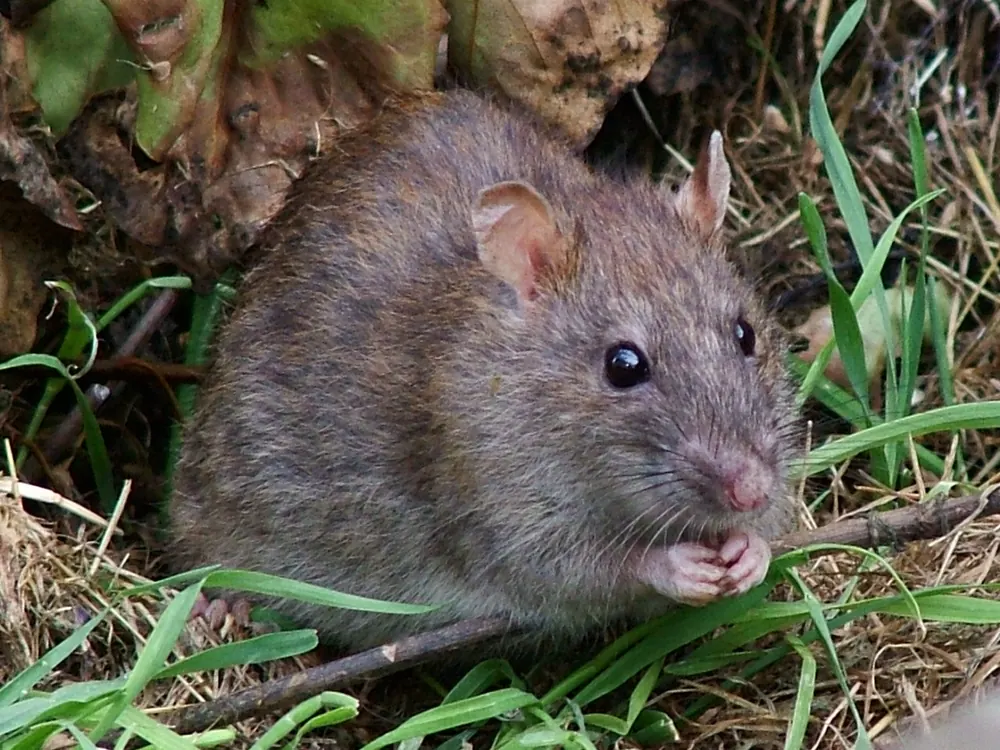
The way to get rid of rats for good is to find where they're living, remove them with secure baiting and trapping, and then close the way in. Skip the last step and you'll be dealing with a new family by next winter. We've been clearing rats from Pretoria houses, complexes and businesses for 25 years, and in nearly every case the answer to "why us?" is somewhere on the property: a gap, a food source, or a patch of cover close to the house.
Three places rats live on a Pretoria property
In the roof
This is the roof rat, a slim, agile climber with a long tail. It reaches the roof along tree branches, vines on walls, washing-line poles, electrical cables and the tops of boundary walls, then slips in under loose tiles, through gaps at the fascia boards or where the roof meets the wall. Once inside, it nests in the insulation and runs along the top plates at night. If the noise is overhead and starts after you switch off the lights, this is almost certainly what you have.
The older suburbs, with their jacarandas, fruit trees and roofs that have settled over the decades, are prime roof rat country. The tree-lined streets of the Moot and the large gardens in Brooklyn, where we do a lot of rat work, are good examples.
In the garden
The brown rat is heavier and prefers the ground. It digs burrows under paving, at the base of walls, beneath garden sheds, wendy houses and compost heaps, and comes out to feed on whatever it finds: fallen fruit, dog food, bird seed, chicken feed, kitchen scraps in the compost. Burrow entrances are usually about the width of a fist, with smooth, worn edges and a beaten path leading away.
In the drains and stormwater
Brown rats also use sewer lines, stormwater pipes and channels as highways. A broken drain cover, a cracked pipe near the house or an open gully can bring them straight into a garage or kitchen. Properties along a spruit or a stormwater channel see more of this.
Signs you have rats, not mice
- Droppings about the size of a raisin, darker and thicker than mouse droppings
- Loud running or thumping above the ceiling, rather than light scratching
- Gnaw marks on thick plastic, wood, irrigation pipe or wiring
- Dark, greasy rub marks along walls and beams where they travel
- Fruit on the trees with chunks bitten out, or avocados and pawpaws hollowed
Smaller droppings and quieter activity in the kitchen cupboards point to mice, which need a slightly different approach. Our page on dealing with mice in Pretoria explains the difference.
What our rat treatment involves
We start with the property walk: roof space where we can get in, the outside walls, the garden, the garage and the drains. That tells us which rat, how many routes, and where they're coming from. Outside, we place lockable, tamper-resistant bait stations along the walls and runways, secured so pets, children and wildlife can't get to the bait. Inside the roof and living areas we generally use traps, which avoids rats dying in the ceiling. Tracking powder is useful where we need to confirm a route through a wall void or duct.
When the activity drops, we take you through the proofing: which branches to cut back, which gaps to close, where a drain cover needs replacing. Some of it you can do yourself in an afternoon. Some needs a builder or roofer. We'll tell you which is which. For complexes and businesses we usually set up a wider plan, and our page on rodent control for Pretoria businesses and estates covers monitoring contracts.
The mistake we see every winter
Someone hears rats, buys a box of loose poison pellets and throws it into the roof. A few weeks later there's a terrible smell from a dead rat somewhere in the ceiling, the dog has found a pellet that fell out of the roof hatch, and the rats are back by spring. Loose poison in a roof is unsafe, it creates the smell problem, and it does nothing about the entry point. If you want to try yourself first, our guide on how to get rid of rats shows how to use traps properly instead.
A Pretoria tip: watch the fruit trees
Many older Pretoria gardens have avocado, citrus, fig or pecan trees, and they're a feast for rats. Pick fruit as it ripens, clear windfalls every day or two, and cut back any branches within about a metre of the roof. A fruit tree touching the gutter is both the food and the ladder.
What does rat control cost?
It depends on how big the property is, how many stations and traps are needed, whether the rats are in the roof, the garden or both, and how many follow-up visits it takes. A house with a few roof rats and an obvious way in is a fairly quick job. A property with burrows in the garden, rats in the roof and a drain problem takes more visits. We'll quote after the inspection, and if a couple of traps from the hardware store will genuinely do the job, we'll tell you.
Rats are a problem across the whole city, but some areas see more of them. We're often in Centurion, where rats come up from the Hennops River and veld, as well as the older eastern suburbs. We're SAPCA registered and offer a 3-month guarantee: if the rats come back within three months, so do we. Call 012 012 5526, or WhatsApp us a photo of the droppings and we'll confirm what you're dealing with.
Questions we get asked
What's the difference between a roof rat and a brown rat?
A roof rat is slimmer, climbs well and lives in roofs. A brown rat is heavier, digs burrows in the garden and usually comes in at ground level through drains and gaps.
Why do rats like my garden?
Food, water and cover close to the house. Fallen fruit, pet food, bird seed, compost heaps, wood piles and dense creepers on walls all make a garden attractive to them.
Can rats come up through the toilet or drains?
Brown rats can travel through sewer and stormwater pipes. Broken drain covers and cracked pipes near the house are the more common way in than the toilet itself.
Should I use poison in my roof?
Not loose poison. Rats can die in the ceiling and cause a strong smell, and pellets can fall where pets find them. We use traps in roofs and keep bait in locked stations outside.
Do rats carry disease?
They can. Rats contaminate surfaces and food with urine and droppings, so clean up droppings with gloves and a disinfectant rather than sweeping them up dry.
Will cutting back my trees stop roof rats?
It helps a lot. Cutting branches back from the roof removes one of their main routes up, but you also need to close the gaps they're already using to get in.