
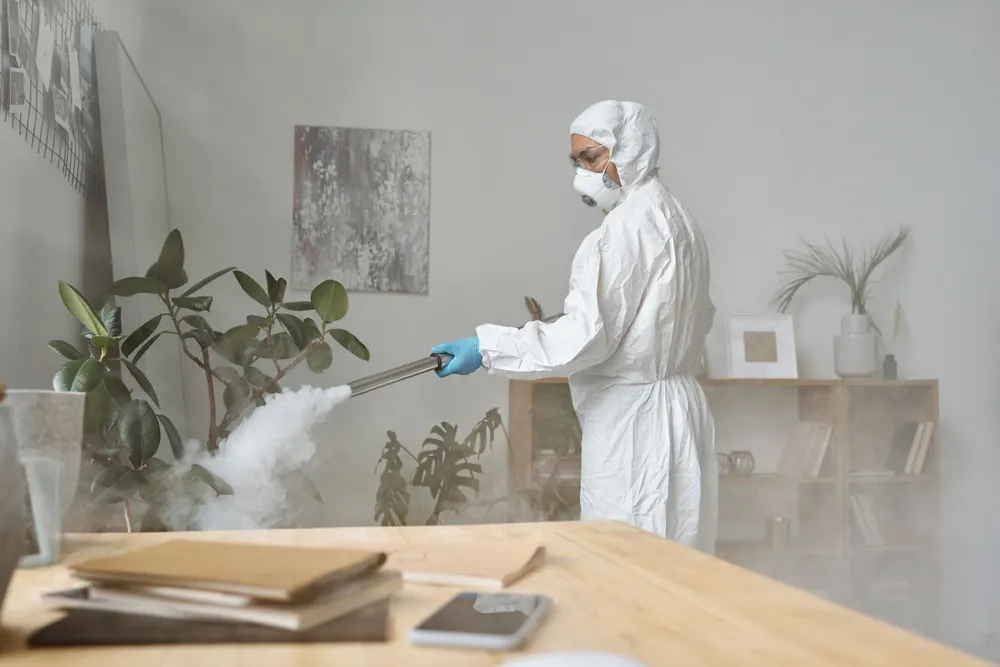
In Arcadia, pest control is mostly about buildings rather than gardens. The area around the Union Buildings is made up of older blocks of flats, offices and embassies, and the pests we're called for are the ones that live inside the structure: cockroaches in service ducts and refuse chutes, rats and mice in basements and ceilings, fishmoths in archives and stored files, and bird mites from pigeons nesting on ledges. For most buildings, a planned, scheduled programme works better than calling us when things get bad.
Older buildings, hidden routes
A block of flats built decades ago has years of small changes behind it: new pipes through old walls, cable runs through ceilings, sealed-off chutes, cracked plaster. Each of those leaves a gap. Cockroaches travel through plumbing ducts from one flat to the next. Rodents use lift shafts, basements and ceiling voids as highways. Pigeons nest on ledges, in air-conditioning housings and under roof overhangs. To deal with any of this properly, you have to think about the whole building, not just the flat where someone complained.
The main pests in Arcadia buildings
Cockroaches in flats and offices
German cockroaches live in kitchens and tea rooms, while larger American cockroaches come up from drains, basements and refuse areas. We use gel baits in kitchens, treat ducts and drain areas, and look for where they move between units. Doing one flat at a time, while the rest of the block stays untreated, rarely lasts.
Rats and mice
Basements, refuse rooms and ground-floor shops are where rodents usually start. From there, they climb inside walls and through service ducts. We use lockable, tamper-resistant bait stations in basements and outside, traps in ceilings and offices, and give the building manager a list of gaps to seal. Our rodent control in Brooklyn and Arcadia explains how we approach multi-storey buildings.
Fishmoths in archives and storerooms
Offices and embassies hold a lot of paper: files, records, books and boxes in storerooms that are seldom opened. Fishmoths feed on paper, glue and starch in exactly those conditions. Grazed paper, small holes and yellow stains are the signs. We treat storerooms, shelving and cupboards with odourless, non-staining products. See fishmoth treatments in Brooklyn for more.
Bird mites from pigeon nests
When pigeons nest on window ledges, in air-conditioning units or in roof spaces, their nests carry mites. Once the chicks leave, the mites move indoors looking for a host, and people in nearby rooms start getting itchy bites. We treat or remove the nest and treat the affected rooms. There's more on our page about bird mite control in Pretoria.
For building managers and embassies
A scheduled monitoring contract is usually the right fit. Regular visits cover bait stations, kitchens, refuse areas and any reported activity, and each visit is recorded, so you have a clear history for owners, tenants or security officers. We work around office hours and security procedures and can arrange visits at times that suit the building. Treatments are odourless, so offices can stay open.
For residents of a flat
If you rent, report pests to your landlord or managing agent with photos, as soon as you see them. If you own your unit, we can treat it, but ask the body corporate whether the building has a programme, because cockroaches and rodents from neighbouring units will keep coming back otherwise. You don't need to move out for normal treatments; just keep pets and children off treated surfaces until they're dry.
What gets overlooked
Refuse chutes and bin rooms. In older blocks, the refuse room is often the source of the whole building's cockroach and rodent problem, and nobody treats it because it isn't anyone's flat. Clean it, keep the bins covered and include it in every treatment.
A local tip
Check the window ledges and air-conditioning units on your side of the building. If pigeons are nesting there, deal with it before summer. Removing nests and fitting deterrents in spring prevents the bird mite problems that come later.
What does it cost?
For a building, the size, number of floors, number of units or offices, and how often we visit decide the price. For a single flat, it depends on the pest and how many rooms are affected. Bed bugs and heavy cockroach infestations need follow-up visits. We quote after an inspection. If the problem is a single mouse in a ground-floor office, a couple of traps may be all you need, and we'll tell you.
Arcadia is covered by our Brooklyn team, and the full overview for that part of the city is on our Brooklyn pest control page. We have 25 years of experience with Pretoria's older buildings and are SAPCA registered. Every treatment carries a 3-month guarantee: if the pest returns within three months, we come back. Call 012 012 5526, or WhatsApp us a photo.
Questions we get asked
Can you treat an entire block of flats?
Yes. We work with the body corporate or managing agent to treat the building as a whole, including ducts, refuse areas and basements, which gives a far longer-lasting result.
Do you work with embassies and diplomatic buildings?
Yes. We service offices and residences and follow the building's security and access procedures when we book.
What are the itchy bites near my window?
If pigeons nest on the ledge or in an air-conditioning unit nearby, bird mites are a likely cause. They move indoors once the chicks leave the nest.
How do I protect old files from fishmoths?
Store them off the floor in sealed boxes in a dry room, and have storerooms treated. Fishmoths thrive in dark, slightly damp and undisturbed spaces.
Can offices stay open during treatment?
Yes. Our treatments are odourless and non-staining, and we can plan visits around working hours.
Why are there rats in a building with no garden?
Basements, refuse rooms and nearby shops give them food and shelter. They then move up through walls, ducts and lift shafts.