
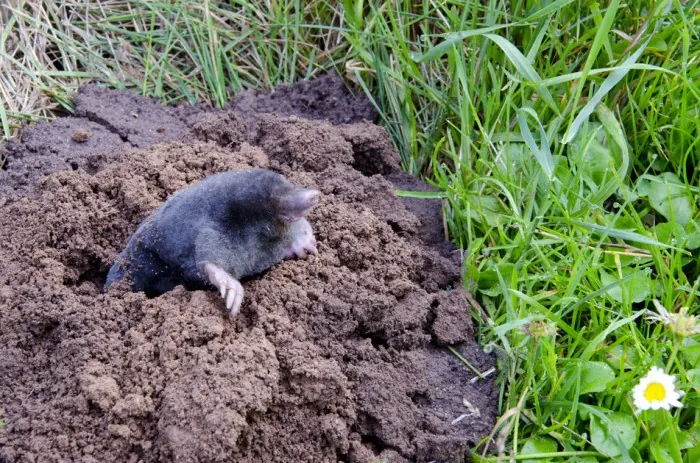
If your lawn is criss-crossed with raised runs or dotted with soil heaps, you've got either golden moles or mole-rats, and the right treatment depends on which one it is. They're not the same animal, they don't eat the same thing, and they don't respond to the same methods. In 25 years of treating gardens around Pretoria and Centurion, the most useful thing we've learnt is to identify the culprit properly before doing anything else.
Golden moles and mole-rats: what's in your lawn
Golden moles
Golden moles are small, blind insect-eaters that swim through the soil just below the surface, hunting earthworms, grubs and insect larvae. They don't eat plants. The damage comes from the tunnels: long, raised ridges across the lawn, soft spots that collapse when you step on them, and patches where grass roots are lifted and dry out. They're most noticeable after rain or watering, when the soil is soft and full of food.
Mole-rats
Mole-rats are rodents. They tunnel deeper and push up mounds of loose soil, a bit like small molehills, often in a line. They eat roots, bulbs and tubers, so the signs are plants that suddenly wilt or disappear, bulbs that never come up, and vegetables eaten from below. If your agapanthus or roses are dying while the soil around them looks fine, a mole-rat may be underneath.
Why Pretoria lawns attract them
Highveld summers bring rain and soft, warm soil, and many Pretoria gardens have deep kikuyu lawns watered by irrigation through the dry months. That combination keeps worms and grubs near the surface, which is exactly what golden moles are after. Estates, golf courses and sports fields with large irrigated areas see the most activity. Homes bordering veld or open ground also see mole-rats moving in along the boundary.
We do a lot of mole work in the big estates and complexes of Centurion, where green belts run between properties, and in the golf and lifestyle estates in the east such as Silver Lakes.
How we deal with moles
- Identify. Ridges or mounds, plant damage or none, depth of the tunnels. That tells us whether we're dealing with golden moles or mole-rats.
- Find the active runs. Not every tunnel is in use. We locate the runs the animal is still travelling, often by flattening sections and checking which ones are pushed back up.
- Treat or trap the active system. We target the live tunnels directly rather than treating the whole lawn, and trap mole-rats where that's the better option.
- Follow up. New activity can appear from a neighbouring property, so we check back and treat fresh runs if they show up.
The work is done without digging up the garden, and children and pets just need to stay off treated spots until we say they're clear.
What people get wrong
Flooding the tunnels with the hosepipe is the classic. It softens the soil, brings worms closer to the surface and often makes the golden mole problem worse. Car exhaust fumes, broken glass and chillies poured into the runs don't work reliably either, and some of them are dangerous to pets and children. Ultrasonic spikes may make an animal move a few metres, but it usually just shifts to another part of the lawn.
The other common mistake is blaming moles for every lawn problem. Bare, sandy patches with small holes and cut grass blades are a sign of harvester termites, not moles. That's a different treatment altogether, covered on our page about termite control in Pretoria.
A local tip: water deeply, not often
Lawns that get a light sprinkle every evening keep the top few centimetres permanently damp, which pulls grubs and worms up to where golden moles hunt. Watering more deeply and less often, early in the morning, encourages deeper grass roots and moves the food lower down. It won't stop moles on its own, but it helps keep them from coming back to the same patch.
Estates, sports fields and schools
For estates, schools and sports grounds, moles are partly a safety issue: collapsed tunnels on a playing field are an ankle injury waiting to happen. On large sites we work section by section and can return on a schedule through the wetter months, when activity is highest. Because moles cross boundaries freely, treating neighbouring gardens on a shared green belt together gives much better results than one garden at a time.
What does mole control cost?
It depends on how much of the lawn is affected, how many active runs there are, whether it's golden moles or mole-rats, and how many follow-up visits it takes. A single run in a small garden is a modest job. An estate green belt or a sports field is priced on the area. If you've only seen one short ridge after a storm, it may be worth watching it for a week before calling us, because a passing mole sometimes moves on by itself.
Pretoria East has plenty of mole activity too. Families in the area can read about mole control in Moreleta Park. As a SAPCA-registered company, we guarantee mole treatments for 3 months: fresh runs from the same moles in that time, and we're back. Call 012 012 5526 or WhatsApp us a photo of the lawn and we'll tell you which animal you're dealing with.
Questions we get asked
Do golden moles eat my plants?
No. Golden moles eat earthworms, grubs and insect larvae. If plants and bulbs are being eaten from below, a mole-rat is more likely the cause.
How can I tell if a mole tunnel is still active?
Flatten a short section of the ridge with your foot and check it a day or two later. If it's been pushed back up, the tunnel is still in use.
Will moles go away on their own?
Sometimes, if food runs out or the soil dries. But in a well-watered lawn they usually stay, and neighbouring moles move into empty tunnels.
Is mole treatment safe for my dogs?
Yes, when it's done properly. We treat inside the active tunnels rather than spreading anything across the lawn, and we'll tell you which spots to keep pets away from until they're clear.
Why are moles worse after rain?
Rain softens the soil and brings worms and grubs closer to the surface, so golden moles tunnel shallower and leave more visible ridges.
Can you treat moles on a school or sports field?
Yes. We work through large areas section by section and can schedule return visits during the wet months, when mole activity is highest.