
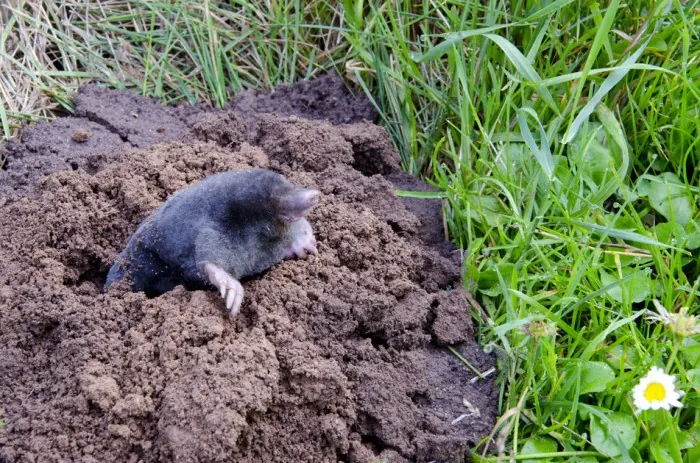
If your Brooklyn lawn is covered in raised ridges, soft spots that give underfoot, or neat mounds of soil, you most likely have a golden mole or a mole-rat working under the surface. The fix is to identify which one, target the runs that are actually active, and change the conditions that drew it there. Spraying the whole lawn is not the answer.
Golden mole or mole-rat?
They're often lumped together as "moles", but they're very different animals, and that changes the approach.
- Golden moles are small insect-eaters. They tunnel just below the surface hunting earthworms and grubs, pushing up long, winding ridges. They don't eat plants, but the tunnels lift the lawn, dry out the roots and leave the grass looking patchy.
- Mole-rats are rodents that feed on roots and bulbs. They push up mounds of loose soil rather than ridges, and the giveaway is plants that wilt or disappear from below, especially bulbs and young shrubs.
Why Brooklyn gardens attract them
Many Brooklyn properties have the sort of garden that's been built up over generations: deep, rich beds, lawns watered through the dry season and plenty of organic matter in the soil. That's the ideal habitat for the earthworms and grubs a golden mole feeds on. Shade from the big trees also keeps soil moist for longer, so the top few centimetres stay soft and easy to tunnel through.
Large stands help too. A mole working the edge of a big established garden has room to move between beds and lawn without crossing paving or a driveway.
Signs to check
- Raised, winding ridges that feel spongy when you step on them
- Fresh mounds of fine soil, often in a line
- Lawn that browns in strips even though it's being watered
- Bulbs or seedlings pulled down or missing
- Fresh activity after watering or after rain
How we deal with moles
We start by walking the garden with you and working out which runs are in use. Old tunnels stay visible long after the animal has moved on, so stepping down a few ridges and seeing which ones are pushed back up overnight tells us where to concentrate. From there we target the active runs directly, rather than treating the whole lawn, and we come back to check that the activity has stopped. We'll also look at what's feeding the mole: a heavy grub population in the lawn may need attention in its own right.
The common mistake
Flooding the tunnels with the hosepipe, or pouring in household chemicals. Water just softens the soil and makes tunnelling easier, and chemicals can kill the lawn and harm pets without touching the mole. Another favourite, sticking windmills or bottles into the lawn, may disturb a mole for a day or two, but it rarely moves it on.
Local prevention tips
- Water deeply and less often, rather than a little every day. Constantly damp topsoil draws earthworms and moles to the surface.
- Under Brooklyn's big trees, where the lawn struggles anyway, consider a mulched bed instead of grass. It's less attractive to tunnel through and easier to keep.
- Plant valuable bulbs in wire mesh baskets if mole-rats have been a problem before.
- Firm down old ridges so fresh activity is easy to spot.
Is it moles or harvester termites?
Both damage Brooklyn lawns, but they look nothing alike. Moles lift the surface into ridges and mounds. Harvester termites leave small round holes, bare sandy patches and short cut grass, mostly in sunny lawns during the dry months. If that sounds more like your garden, see our page on termites in Brooklyn.
What does it cost?
It depends on the size of the garden, how many active runs there are, and how many visits it takes to clear them. A single mole in a front lawn is a small job. A large garden with activity in several beds and neighbouring properties takes longer. If the damage is minor and the mole moves on, sometimes waiting and firming the soil back is all that's needed, and we'll say so.
We cover moles throughout the city through our mole control service in Pretoria, and the big gardens in Waterkloof, where moles are common too, face a very similar problem. For the rest of what we see in the suburb, visit our Brooklyn page. One Stop Pest Control is SAPCA registered with 25 years of experience. Our treatments come with a 3-month guarantee, so if fresh activity starts again in that window, we're back. Call 012 012 5526 or WhatsApp us a photo of the lawn.
Questions we get asked
Do moles eat my plants?
Golden moles don't. They eat earthworms and grubs, and the damage comes from tunnelling. Mole-rats, which push up mounds, do eat roots and bulbs.
Why do the moles come back every spring?
Spring watering and rain soften the soil and bring earthworms closer to the surface, which draws golden moles into lawns and beds.
Will treating moles harm my dog?
We target the active runs only, rather than treating the whole lawn, and we'll tell you how to keep pets away from treated spots.
Can I just wait for the mole to leave?
Sometimes, yes. If the damage is minor, golden moles often move on. If ridges keep spreading or plants are disappearing, it's time to act.
How can I tell which tunnels are active?
Press down a few ridges with your foot. The ones that are pushed back up within a day or two are the active runs.
Do moles come from neighbouring gardens?
Often. Big established gardens next to each other let moles move freely, so new activity can appear even after one garden is cleared.