
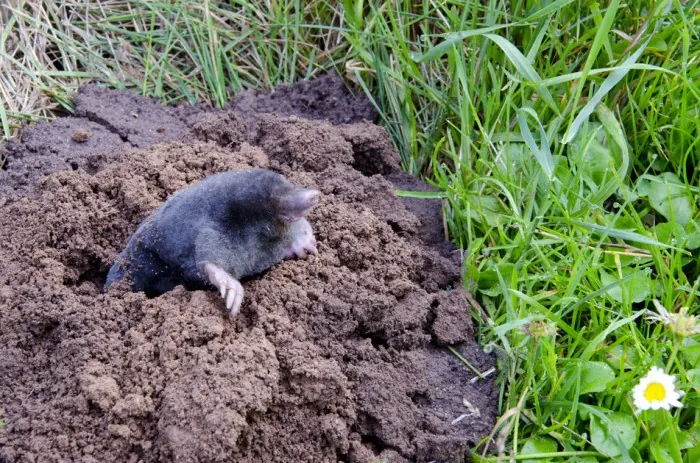
If you're finding raised tunnels just below the surface and little mounds of loose soil in your lawn, it's a golden mole, and it's there because it's found food. Moles in Pretoria don't eat your plants. They hunt beetle grubs, earthworms and other soil life, and a well-irrigated family lawn is full of it. We can deal with the mole, but the lasting fix also means understanding what's drawing it in.
Is it a mole, or something else?
Garsfontein gardens get three kinds of lawn damage that people often mix up:
- Moles leave raised ridges that feel soft underfoot and spread in curving lines, often overnight. Small heaps of loose soil appear along them.
- Harvester termites leave bare, patchy areas with small holes and cut grass pieces, usually during dry spells. There's no raised tunnel. If that sounds more like your lawn, see our harvester termite treatment in Garsfontein.
- Dogs digging leave open holes with soil thrown out to one side. It sounds obvious, but we've been called out for more than one excavating terrier.
Why moles like this suburb
Moles follow moisture and food. Many Garsfontein homes have lawns that are watered regularly to keep them green for children and pets, and irrigation keeps the topsoil soft and full of grubs and worms. Garden beds that have just been composted or mulched are even better hunting ground. Moles also move freely along boundaries, so a mole in your lawn may be running between three or four neighbouring gardens.
Activity tends to rise after summer rain and when people water heavily in autumn and spring. In the depth of a dry winter, if the lawn isn't irrigated, moles often go quiet or move to wetter ground.
How we deal with them
We start by finding the active runs, not just the most visible ones. Not every ridge is in use. Pressing a short section of tunnel flat and checking whether it's raised again the next day tells us which ones the mole is still using. Treatment then goes into those active runs, placed so it's out of reach of pets and children, rather than scattered across the lawn. On bigger properties or where moles keep returning from next door, a follow-up visit is usually part of the job.
We don't dig up the lawn, and the treatment won't harm the grass. Once the mole is gone, rake the ridges flat, press them down and water the area. Kikuyu recovers quickly in the growing season, and most lawns look normal again within a few weeks. If new ridges appear in the meantime, tell us, because that usually means a second mole is working the same garden.
What people commonly get wrong
Garden-centre gadgets get a lot of faith. Wind-up spinners, vibrating stakes, chewing gum pushed into tunnels, and flooding the run with the hosepipe all come up in conversation. Some of these move a mole a few metres for a day or two. None of them reliably clears it, and flooding the tunnels can soften the ground and make the damage worse.
The other mistake is assuming it'll go away on its own. Sometimes it does. But a mole that's found a good food supply will keep working the same lawn for months.
A local tip
Water deeper and less often. Short, daily irrigation cycles keep the top few centimetres permanently damp, which is exactly where moles hunt. Watering properly two or three times a week, when restrictions allow, sends roots deeper, keeps the surface drier between cycles and makes the lawn less attractive.
Lawn grubs matter too. Where a lawn has a heavy grub problem, moles will keep coming for them. If you're seeing beetles swarming around lights in early summer and patches of grass that lift like a carpet, the grubs are worth dealing with as part of the plan.
What does mole control cost?
It's mostly about the size of the garden and how many active runs there are. A single mole in a suburban lawn is a fairly small job. Large stands, or several neighbouring gardens with moles moving between them, take longer and may need a follow-up. If neighbours are having the same problem, treating together often works out better for everyone.
See how we handle moles across the city on our Pretoria mole control page. We see a lot of the same damage in the irrigated lawns of Faerie Glen, and you'll find every other pest we treat in this suburb on the Garsfontein overview page.
If a treated mole comes back within three months, we come back too, under our guarantee. Give us a ring on 012 012 5526, or WhatsApp a photo of the ridges so we can confirm it's a mole before we visit.
Questions we get asked
Do moles eat the roots of my plants?
No. Golden moles eat insects, grubs and earthworms. The damage to plants comes from the tunnelling, which lifts roots and dries out the soil around them.
Why do the mole ridges appear overnight?
Moles are most active when it's quiet and the soil is moist, so a lot of tunnelling happens at night and in the early morning.
Will the mole come back after treatment?
Another one can move in from a neighbouring garden if there's still plenty of food. That's why we look at irrigation habits and, where possible, treat neighbouring properties together.
Is mole treatment safe for my dog?
Yes, when it's done properly. We place treatment inside the active tunnel, not on the surface, and close the opening so pets can't get to it.
Do ultrasonic mole repellers work?
Not reliably. Some may move a mole a short distance for a while, but we haven't seen them clear a lawn.
How do I know which tunnels are active?
Press a short section of ridge flat with your foot. If it's raised again within a day or two, the mole is using that run.