
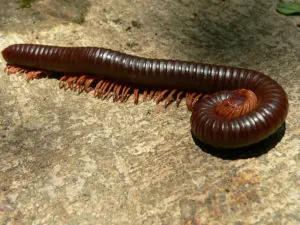
Millipedes, or shongololos as most of us call them, don't bite, don't sting and don't damage the house. They become a problem when they arrive in numbers, crawling up walls, getting into pool filters and onto patios and doorsteps, or dying in heaps on the tiles inside. In Garsfontein that mostly happens in the weeks after the first heavy summer rain. A barrier treatment around the house, together with a few changes in the garden, sorts it out.
What's happening in your garden
Millipedes feed on rotting plant matter: leaf litter, compost, decaying mulch and old grass cuttings. They spend the dry winter tucked away deep in the soil and under cover. When summer storms soak the ground, they come up in large numbers to feed and mate, and they wander. Paving, walls and patio tiles happen to be in the way, so they end up climbing the house or coming in under doors.
Family gardens in this suburb give them a lot to work with. Deep beds of bark mulch, compost heaps in a corner behind the garage, piles of lawn cuttings left after mowing, and thick layers of fallen leaves under mature trees all feed big millipede populations. Homes next to open ground can see even more.
The big ones and the small ones
The large black or brown shongololos you see on paths and lawns are the familiar ones, and they're fascinating to children. Smaller, thinner millipedes are the ones more likely to invade houses in numbers. Both release a defensive liquid when handled roughly, which can stain skin and irritate eyes, so it's best not to pick them up with bare hands and to wash your hands if you do.
How we treat a millipede invasion
- Look at the source. We check the garden beds, compost, mulch and leaf litter close to the house, as well as the points where they're climbing or getting in.
- Barrier treatment. We apply a residual treatment in a band around the foundations, along the base of the outer walls, across door thresholds and around weep holes and drains. Millipedes that cross it die before reaching the house.
- Targeted treatment of hot spots. Where there's a large build-up, such as under a deck or in a bed of mulch against a wall, we treat that area directly.
- Advice on the garden. The treatment works much better when there's less food right up against the house.
The products we use are odourless and won't mark paving or walls. You don't need to leave home; keep kids and pets off the treated band until it has dried.
What people get wrong
Sweeping them up and spraying them every morning feels like progress, but in a big rain year the next wave is already on its way from the garden beds. The other mistake is piling fresh mulch right up against the walls to tidy up after the storms. You're adding to their food supply exactly where you don't want them.
A local tip for after the storms
Garsfontein gardens tend to have a lot of shaded beds along the house, under eaves and next to patios. After the first big rains, rake the leaf litter and old mulch away from the walls and the patio edge, and leave a gravel or bare strip along the foundations. Move the compost heap well away from the house if it's close. You'll be amazed how much quieter the patio gets.
Are millipedes good or bad?
In the garden, they're good. They break down dead plant material and help build healthy soil. The aim isn't to remove every millipede from the property, just to keep them out of the house and off the patio. That's why we focus on the edges of the building and not on blanket-spraying the beds.
What does millipede control cost?
It's mainly about the perimeter: how long the outside walls are, how many doors open onto the garden, and whether there's a deck, patio or outbuilding to include. A townhouse with one garden door is a small job. A large house with wide patios and long beds is bigger. In a light year, raking back the mulch and sweeping might be all you need, and we're happy to say so.
Many people who call about millipedes are also seeing centipedes. Our centipede control for Garsfontein homes page explains the difference. The full Pretoria service is described on our millipede control in Pretoria page, and we do plenty of this work in Moreleta Park after the rains. For the other pests in this suburb, see pest control in Garsfontein.
Our treatments carry a 3-month guarantee, so if shongololos invade the house again within that time, we'll come back out. Phone 012 012 5526 to book, or WhatsApp a photo of the patio after a rainy night.
Questions we get asked
Are shongololos poisonous?
No, not in the sense of biting or stinging. They release a defensive liquid that can stain skin and irritate the eyes, so wash your hands after handling one.
Why are there so many millipedes after it rains?
Rain softens the soil and wakes them from their dry-season hiding places, so they come up in large numbers to feed and breed.
Can millipedes damage my house?
No. They don't eat timber or structures. The problem is the number of them, the mess and the smell when they die indoors.
Will the barrier treatment kill all the millipedes in my garden?
No, and it isn't meant to. It protects the house and patio while leaving the garden beds, where they do useful work, alone.
Why do millipedes get into my pool?
They wander across paving after rain and fall in. A clean edge around the pool with less leaf litter nearby helps.
Should I move my compost heap?
If it's close to the house, yes. Compost feeds large millipede populations, and having it well away from the walls reduces the numbers coming in.