
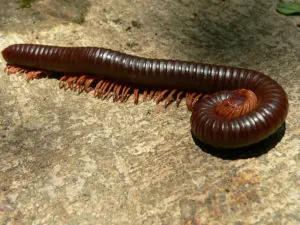
Millipedes are harmless to people, pets and the house, but when they come in by the hundred after the rains, most people want them gone. The answer isn't a spray inside the house. It's making the area right around your walls less inviting and treating the perimeter they cross, so far fewer reach the doors.
The Centurion millipede season
Anyone who has lived in Centurion for a summer knows the pattern. The ground dries out over winter, then the first big thunderstorms soak it, and millipedes, the shongololos many of us grew up with, come out in large numbers. They head for the surface, wander across lawns and paving and end up on patios, in garages and under doors. On some properties the numbers are startling for a few weeks, then settle down as the season goes on.
Estates and complexes with lots of mulched beds, leaf litter and compost see the biggest numbers, because millipedes live on decaying plant material. Homes backing onto grassland or green belts can get a steady march of them coming in from the veld after rain.
Why they come indoors
Millipedes don't want to be inside. They move in search of moisture and shelter, especially when their burrows are flooded or the weather swings from wet to hot and dry. A cool tiled floor, the damp corner of a garage or the gap under a sliding door looks like good shelter. Inside a dry house most of them die within a day or two, which is why you find them curled up and dead along skirting boards.
Are they harmful?
No. Millipedes don't bite or sting. Some species release a defensive fluid when handled that can stain the skin and irritate the eyes, so it's sensible to wash your hands after picking one up and to keep them away from your face. Dogs that mouth them may drool or foam briefly. They don't damage buildings, furniture or food. In the garden they occasionally nibble seedlings or soft fruit lying on the ground, but they're mostly helpful, breaking down dead leaves into soil.
What we do
- Look at where they're coming from. Thick mulch beds against the walls, compost heaps, leaf litter under hedges, and damp, shady paving are the usual sources.
- Treat the perimeter. We apply a residual barrier treatment around the base of the walls, door thresholds, garage entrances and the paving edges they cross.
- Treat the entry points such as gaps under doors, weep holes and the edges of garage doors.
- Explain the changes that reduce numbers in the following seasons.
Where people go wrong
Sweeping up hundreds of millipedes every morning and spraying the house inside. The ones indoors are the stragglers; the source is the beds and leaf litter against your walls. Fix the outside strip and treat the perimeter, and the indoor numbers fall by themselves.
A local tip
Many Centurion gardens are heavily mulched to save water through the dry winter, which is good practice. Just keep that mulch back from the walls. Leave a strip of gravel, paving or bare soil about the width of a spade next to the house, and keep the gutters and downpipes discharging away from the walls so the base of the house doesn't stay soaked after every storm. Brush strips under sliding doors and garage doors also help a lot.
Is it worth paying for?
Be honest with yourself here. If you're seeing a few dozen millipedes for a couple of weeks after the first rains, moving the mulch back, sealing under the doors and sweeping them out is often enough, and you may not need us at all. If the numbers are high every year, if they're getting into a business, a school or a food area, or you simply can't stand them, a perimeter treatment makes a clear difference.
The cost depends on the length of the perimeter, how many outbuildings and garages are involved, and whether a second treatment is needed later in the season. A small townhouse is quick; a large estate home with a long boundary takes longer.
Millipedes often get confused with centipedes, which do bite; see our page on centipedes in Centurion if what you're seeing is fast and flat. For more, there's millipede control in Pretoria, our work on Waterkloof millipedes, and every pest we treat in Centurion.
We're SAPCA registered, and if millipedes come back across the treated perimeter within three months, so will we. Give us a call on 012 012 5526, or snap the patio and send it to us on WhatsApp.
Questions we get asked
Why are there so many millipedes after the first rains?
Rain soaks the ground after the dry winter, which triggers them to come up to the surface, feed and breed. Numbers usually settle after a few weeks.
Do millipedes bite?
No. They don't bite or sting, though some release a fluid that can stain skin and irritate eyes, so wash your hands after touching one.
Are millipedes bad for my garden?
Mostly not. They break down dead plant material. They may nibble seedlings or fallen fruit, but they rarely do serious damage.
Why do I keep finding dead millipedes indoors?
They wander inside looking for shelter and moisture, then dry out on tiled and carpeted floors and die.
Is my dog in danger if it eats a millipede?
Usually it just drools or foams for a while because of the taste. If your dog seems unwell, contact your vet.
How do I stop them getting under the doors?
Fit brush strips or seals under sliding doors and garage doors, and keep mulch and leaf litter away from the thresholds.