
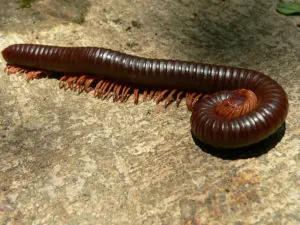
Millipedes are harmless to people, but on some Lynnwood properties they arrive in such numbers in the rainy season that they cover patios, walls and doorsteps and find their way indoors in dozens. The way to cut them down is a barrier treatment around the house, focused on the damp, leafy areas they come out of, plus a few changes to the garden right against the walls.
Why millipedes pile up in Lynnwood gardens
Millipedes, including the big black shongololo and the smaller brown and grey species, feed on decaying plant material: leaf litter, rotting mulch, compost and soft wood. That makes them part of a healthy garden, breaking down dead leaves into soil. It also means that a garden with a lot of decaying organic matter can support a very large population.
Lynnwood's older gardens tick every box. Big trees shed leaves year after year. Beds are mulched and composted. Shady corners rarely dry out. Then the summer rains arrive, the soil floods and the millipedes come up and out, often in a mass, heading for higher, drier ground: your paving, your patio and the bottom of your walls. Some get in under doors and through air bricks and end up curled in corners of the house, where they quickly dry out and die.
What you'll see
- Large numbers on paving, patios and walls, usually early morning after rain
- Dead, curled millipedes in corners, under doors and in garages
- Groups gathered under pot plants, doormats and garden furniture
- A slight stain or smell on hands when you pick one up, from the defensive fluid some species release
If what you're seeing is fast and flattened rather than slow and rounded, it's probably a centipede, and our page on centipedes in Lynnwood homes is the one to read.
How we treat millipedes
We look at where they're coming from: usually the beds, mulch and leaf litter around the house, damp lawn edges and compost areas. Then we apply an odourless, non-staining residual barrier around the house, along the base of walls, across door thresholds, along paving edges and around air bricks and weep holes, so millipedes heading for the house cross treated ground first. We also treat the main damp, leafy areas close to the house where they're concentrated. The aim isn't to wipe out every millipede in your garden, which would neither be possible nor good for the soil, but to stop them reaching the house in large numbers.
What people get wrong
Sweeping them up and spraying the patio every morning. It deals with the day's arrivals, but there are far more where they came from, and the spray on paving is washed off by the next storm. The other mistake is fresh mulch. Many Lynnwood gardeners lay a thick new layer of bark or compost in spring, right up against the house. Come the rains, it's the perfect millipede nursery a step from the back door.
A Lynnwood tip: create a dry edge
Pull the mulch and leaf litter back from the house to leave a strip of gravel, paving or bare soil about half a metre wide, and keep it dry by pointing downpipes and irrigation away from it. Millipedes don't like crossing dry, open ground. This single change makes a barrier treatment work far better, and it helps with centipedes, ants and termites too.
What does it cost?
It depends on the size of the house, how much of the perimeter and garden needs treating, and whether we're also treating a cottage, garage or outbuildings. A standard house is a fairly modest job. Large Lynnwood properties with long perimeters and extensive beds take more time. If you only see a few millipedes now and then, a dry edge around the house will probably sort it out without any treatment, and we'll tell you so.
When it settles down
Millipede swarms are seasonal. They're worst during the main rainy months and calm down as the season ends. Treating early in the rains, before the population peaks, works better than waiting until the patio is covered. If last summer was bad, book a treatment as the first storms arrive this year, and lay out the dry edge before then. Most homes find the second season far easier than the first, because the barrier and the cleared strip work together from the start.
See our Pretoria millipede service for how we handle it citywide, and millipede control in Faerie Glen for properties along the nature reserve. Every other pest we treat in the suburb is on the Lynnwood page.
We're SAPCA registered, with 25 years' experience. If millipedes come back in numbers within three months of treatment, we'll come back. Give us a call on 012 012 5526, or send us a photo on WhatsApp.
Questions we get asked
Are millipedes dangerous to children or pets?
No. They don't bite or sting. Some release a fluid that can stain skin or irritate eyes, so wash hands after handling them.
Why do millipedes come out after rain?
Heavy rain floods the soil and leaf litter where they live, so they move up and onto higher, drier ground such as paving and walls.
Do millipedes damage plants?
Rarely. They mainly eat decaying plant matter, though in large numbers they may nibble seedlings or soft fruit on the ground.
Why do I find dead millipedes inside?
Millipedes that wander indoors dry out quickly away from damp soil and die, which is why you find them curled in corners.
Should I stop using mulch?
No. Just keep it away from the walls of the house and leave a dry strip between the beds and the building.