
Crawling insects, from cockroaches and ants to crickets, beetles, fishmoths and centipedes, are best kept out of a Lynnwood home with two things working together: a residual barrier around the outside of the building where they enter, and targeted treatment of the cracks and voids inside where they hide. It's a structured, preventive approach that suits big properties, older homes and commercial buildings particularly well.
Why the perimeter matters so much here
Lynnwood's gardens are mature and deep. Beds run right up to the walls, mulch and leaf litter build up along foundations, and paving often meets the house at a door threshold with a gap underneath. That means a thick band of insect habitat sits against the house on every side. On a warm, wet summer night, crickets, beetles, cockroaches, ants, centipedes and millipedes all move through that band, and the first gaps they find are under doors, around pipes, through weep holes and in cracks in the plaster.
Older homes add their own entry points: perished door seals, cracked air bricks, gaps around old plumbing and timber floors with voids underneath. Offices and schools have service ducts, cable trunking and loading doors that stand open.
What we treat under this service
- Cockroaches, especially American cockroaches coming in from drains and gardens
- Ants trailing in from garden nests
- Crickets and beetles attracted by lights and moisture
- Fishmoths in cupboards and storerooms
- Centipedes and millipedes coming in from damp beds
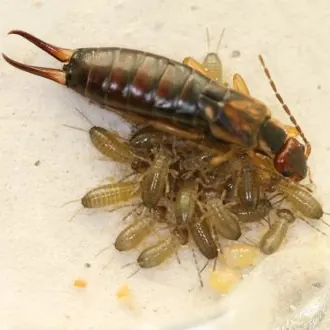
- Earwigs, woodlice and other garden crawlers that end up indoors
Some need extra, specific treatment. German cockroaches in a kitchen need gel bait in their hiding places, and ants are best dealt with by bait that reaches the nest; see ant control for Lynnwood homes for that.
How a crawling insect treatment works
We inspect inside and outside to see which insects are present, where they're getting in and where they're hiding. Outside, we apply an odourless, non-staining residual treatment along the base of the walls, around door and window frames, at weep holes, air bricks and pipe entries, and over paving edges near the house. Inside, we treat skirting, cracks, cupboard voids, behind appliances and other harbourage, not open surfaces. Insects crossing the barrier, or coming out of hiding, pick up the treatment. You don't need to go anywhere while we work; keep kids and pets away from treated surfaces until they're dry.
For businesses, schools and larger homes, this works well as a scheduled service, with regular treatment of the perimeter through the warm months and monitoring indoors.
Signs your perimeter is failing
You'll usually notice it in a particular order. First it's the odd beetle or cricket in the scullery in the morning. Then dead insects collecting along the inside of the patio door and under the kitchen window. Then cockroaches or ants in the kitchen at night, and fishmoths or silverfish in cupboards that haven't been opened for a while. If you're seeing several different crawling insects at once, rather than one problem species, it's a strong sign that the outside of the house is letting them through.
The mistake that undoes the barrier
Laying new mulch or piling garden soil against the house after a treatment. It buries the treated zone, gives insects a protected route past it and brings moisture back to the walls. The same goes for pressure-washing the paving along the house right after we've treated. Give the barrier a chance to work.
Local prevention: the gap under the door
Get down on your knees and look at the bottom of your outside doors, especially kitchen, scullery and patio doors. Many older Lynnwood homes have doors that have dropped or warped over the years, leaving a gap at the threshold you can slide your fingers under. That gap is the main entrance for most crawling insects. A good brush strip or rubber seal costs little and makes a real difference, especially on doors that open onto the garden.
What does it cost?
The price depends on the size of the building and the length of its perimeter, how many outbuildings there are, which insects are involved and whether a regular service is wanted. A standard house is fairly straightforward. A large Lynnwood stand with a long perimeter and a cottage takes more, and offices and schools are priced on their size and layout. If you only see the occasional cricket or beetle, sealing the door and changing the outside light may be all you need.
For the city-wide service, see crawling insect control in Pretoria. On the ridge next door, where rocky gardens add scorpions to the mix, we offer crawling insect treatments in Waterkloof. For other pests in your area, visit our Lynnwood pest control hub.
We're SAPCA registered with 25 years' experience, and if the insects we treated come back within three months, we'll return. Phone 012 012 5526, or WhatsApp us a photo of what's crawling in.
Questions we get asked
How long does a perimeter barrier last?
It depends on the weather, the surface and how much the area is disturbed. Heavy rain, digging and new mulch shorten it, which is why regular treatment suits larger properties.
Will a crawling insect treatment get rid of German cockroaches?
Not on its own. German cockroaches breed indoors and need gel bait placed in their hiding places, which we do as part of a cockroach treatment.
Do you spray inside the whole house?
No. Inside, we treat cracks, voids, skirting and hiding places, not open floors and surfaces.
Why do crickets come inside at night?
They're drawn by light and moisture. Changing outside bulbs to warm yellow ones and sealing door gaps cuts them down a lot.
Is this service suitable for a school or office?
Yes. Many schools and offices use a regular perimeter and indoor service so crawling insects don't build up.