
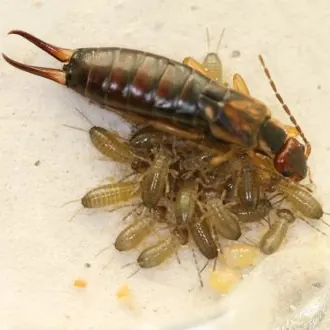
Crawling insects are best controlled by combining three things: baits for the insects that feed and share food with their colony, targeted treatment of the cracks and voids where they hide, and a barrier around the outside of the house to cut down how many get in. Applied together, that approach deals with cockroaches, ants, fishmoths, centipedes, crickets and beetles far better than spraying each one as it appears.
What crawls into Moreleta Park homes
- German cockroaches in kitchens, especially in townhouse complexes with shared plumbing.
- American cockroaches coming up from drains and manholes on summer nights.
- Ants trailing in from nests under the paving and along the foundations.
- Fishmoths in built-in cupboards, bookshelves and damp bathrooms.
- Centipedes and the odd scorpion from damp beds and rockeries against the house.
- Crickets and beetles drawn to outside lights and sheltering in garages.
Where they get in
We see the same entry points again and again in this suburb. Gaps under outside doors and garage doors. Weep holes in face-brick walls, which are common on many of the area's older homes. Spaces around pipes where they pass through walls under kitchen and bathroom basins. Floor drains with missing or loose covers. Cracks where an extension or a patio slab meets the original house. And plants, creepers and mulch piled against the walls, which give crawlers a sheltered bridge straight to the building.
Inside a complex, there's an extra route: shared cavities, ducts and roof spaces that link one unit to the next.
Why the season matters
Crawler activity in this part of Pretoria follows the weather. The first heavy storms of summer flood nests and shelters in the garden, and many insects head for the nearest dry building. Hot spells drive others indoors looking for water. In winter most outdoor crawlers slow right down, but cockroaches and fishmoths living inside a warm house carry on breeding regardless of the cold, which is why indoor problems can quietly grow over the colder months.
Our crawling insect treatment
Inspection
We identify the insects, find the hiding places and map the entry points, inside and out.
Baiting
Gel bait for cockroaches goes into hinges, appliance housings and cracks. Ant bait goes on active trails so workers carry it back to the nest. Both work because the insects spread the bait among themselves.
Crack, void and perimeter treatment
We apply an odourless, non-staining residual product into cracks, behind skirting and in cupboard voids, and as a band around the outside of the house, at doors, weep holes, the base of the walls and the edges of paving.
Follow-up
Heavy cockroach infestations in particular need a second visit, because eggs hatch after the first treatment.
You can stay at home throughout. Children and pets should stay off the treated areas until everything has dried.
What people commonly get wrong
Using a can of household insect spray on everything. It kills what it touches but scatters cockroaches deeper into walls, kills the ant workers before they can carry bait home, and can contaminate any gel or ant baits that are already down. The result is a problem that hides for a while and then comes back. Another frequent mistake is treating inside and ignoring the outside, where most crawlers start their journey.
Prevention
- Keep a clear, dry strip around the house, without mulch, thick ground cover or stored items against the walls.
- Fit door sweeps to outside and garage doors.
- Fit fine mesh or weep-hole covers to weep holes, which still lets the wall breathe.
- Seal gaps around pipes under sinks and basins.
- Keep floor drain covers in place and clean.
Local tip: on face-brick homes in Moreleta Park, the weep holes at the base of the walls are often the single biggest entry point for crawlers. Weep-hole covers are inexpensive and easy to fit, and they make a noticeable difference.
What does it cost?
It depends on the size of the property, which insects are present and how heavy the infestation is. A perimeter treatment and baiting for a standard house is a common, moderately sized job. A complex, or a home with a well-established German cockroach population, takes longer and needs follow-up. If you're only seeing an occasional beetle or cricket, the prevention steps above will probably do it.
For specific pests, see ant treatment in Moreleta Park or our local cockroach service. The city-wide version of this page is crawling insect control in Pretoria, and we offer the same service for Faerie Glen homes. Other pests are listed on pest control in Moreleta Park.
If the crawlers we treated return within three months, so do we. Call 012 012 5526, or send us a WhatsApp photo of what you're finding.
Questions we get asked
What counts as a crawling insect?
Cockroaches, ants, fishmoths, centipedes, crickets, beetles and similar insects that walk rather than fly into your home.
Why do you use bait instead of just spraying?
Cockroaches and ants share bait with their colony, so it reaches the insects you never see. Sprays only kill what they touch.
Do weep-hole covers stop the wall breathing?
No. Proper weep-hole covers let air and moisture out while keeping insects from crawling in.
Will the perimeter treatment harm my garden plants?
We apply it to the base of the walls, paving edges and entry points, not across your beds, so plants aren't affected.
Can you treat a whole complex for crawling insects?
Yes. Treating all units together stops insects moving from treated to untreated units.
How long does a crawling insect treatment last?
It depends on the insect and conditions, but our treatments carry a 3-month guarantee. If treated insects return in that time, we come back.