
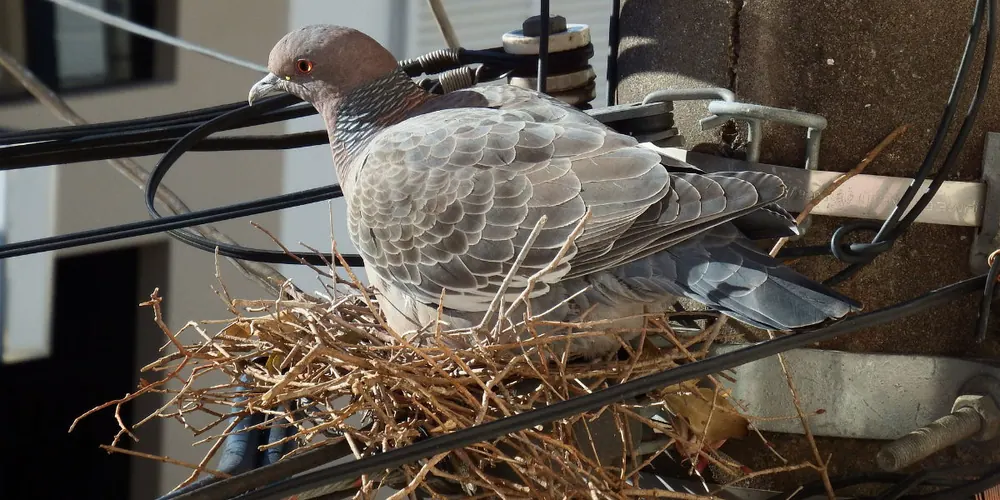
If you're being bitten at night, can see tiny moving specks on walls, ceilings or bedding, and have birds nesting in your roof or eaves, you very likely have bird mites. The fix is to find the nest, treat it and the surrounding roof space, and then treat the rooms where the mites have come through. Treating the bedroom alone usually fails, because the source is overhead.
How bird mites end up in your bedroom
Bird mites live on wild birds and in their nests, feeding on the birds' blood. In spring and early summer, Indian mynas, pigeons, sparrows and other birds nest under roof tiles, in gutters, in gaps in the fascia boards and in roof voids. When the chicks fledge and the nest is abandoned, the mites lose their hosts. They spread out looking for a new blood meal, through ceiling gaps, light fittings, cornices and air vents, and find the people sleeping below.
Bird mites can't complete their life cycle on people, so the problem doesn't last forever. But it can be miserable for weeks, and the bites are itchy and persistent.
Why Moreleta Park homes get them
Many houses in the suburb have tiled roofs with gaps where the tiles meet the fascia, older roof sheeting with openings at the eaves, and mature trees that birds use as a base. Mynas and pigeons are common across Pretoria East and happily move into roof spaces. Complexes with long, connected rooflines can have several nests along one row.
Solar panels and geyser installations have added a newer nesting spot. The sheltered gap between panels and roof tiles is warm, dry and protected from predators, and pigeons in particular have taken to it. If you've had panels fitted in the last few years and the bites started afterwards, that's one of the first places we'd check.
How to tell it's bird mites
- Tiny, fast-moving specks, pale or reddish, almost too small to see
- Mites on ceilings, walls, window sills and near light fittings, often in the room below a nest
- Itchy bites, usually at night, on the upper body and arms
- Birds seen going in and out of the roof, eaves or gutters, followed by sudden quiet when they leave
Bed bugs, fleas and mosquitoes can cause similar bites. If you're unsure, see our page on identifying biting insects in Moreleta Park.
How we treat bird mites
- Find the nest. We inspect the roof void, eaves, gutters and fascias for active or abandoned nests.
- Targeted nest treatment. The nest and the surrounding area are treated to kill the mites at the source. Abandoned nests are removed where they can be reached.
- Indoor treatment. The affected rooms, including ceilings, cornices, light fittings, window frames and skirting, are treated with an odourless, non-staining residual product.
- Bird-proofing advice. We'll show you where birds are getting in so you can close those gaps once the nesting season is over.
Normal insect treatments don't mean leaving home. Keep children and pets away from treated surfaces until they've dried.
The common mistake
Spraying the bedroom repeatedly and changing the bedding every day, while the nest in the roof keeps sending mites down. The second mistake is pulling a nest out by hand without treating it first, which spreads mites over yourself and the roof space. Treat first, then remove.
Prevention
- Close gaps under roof tiles, at the eaves and in fascias, ideally outside the nesting season.
- Fit bird mesh over gaps in the roofline and around solar geyser panels.
- Clean out gutters where birds are nesting.
- Prune branches that overhang the roof and give birds easy access.
Local tip: on many Moreleta Park homes, the gap where the roof tiles end above the fascia board is left open at the corners. Pigeons and mynas use exactly those corners to get in. Bird stops or mesh fitted there, outside spring, stop the cycle starting again next year.
What does it cost?
It depends on how many nests there are, how accessible the roof space is and how many rooms need treating. One nest over a single bedroom is a fairly small job. Several nests across a complex roofline take more work. Because the source is usually inside the roof, this is not one you can easily solve with a can of spray.
For the city-wide service, see bird mite control in Pretoria, and for neighbouring homes there's bird mite treatment in Faerie Glen. For other pests in the suburb, try our page for Moreleta Park.
If the mites come back within three months of our treatment, we return. Phone 012 012 5526, or WhatsApp us a photo of the specks or the nest.
Questions we get asked
Can bird mites live on people?
No. They bite people but can't complete their life cycle on human blood, so they die off once the bird source is removed and the house is treated.
Why are the mites in my bedroom and not elsewhere?
Usually because the abandoned nest is in the roof directly above that room, and the mites come down through gaps in the ceiling.
Do I need to remove the bird nest?
Yes, ideally, but only after it's been treated. Removing an untreated nest spreads the mites around.
When are bird mite problems most common?
In spring and early summer, when young birds leave their nests and the mites look for new hosts.
Can I just stop the birds getting into the roof?
Yes, and you should, but after nesting season and after treatment. Sealing birds out with a nest still inside makes the mite problem worse.
Are bird mites dangerous?
They're not known to spread disease to people in this context, but the bites are itchy, uncomfortable and can disturb sleep for weeks.