
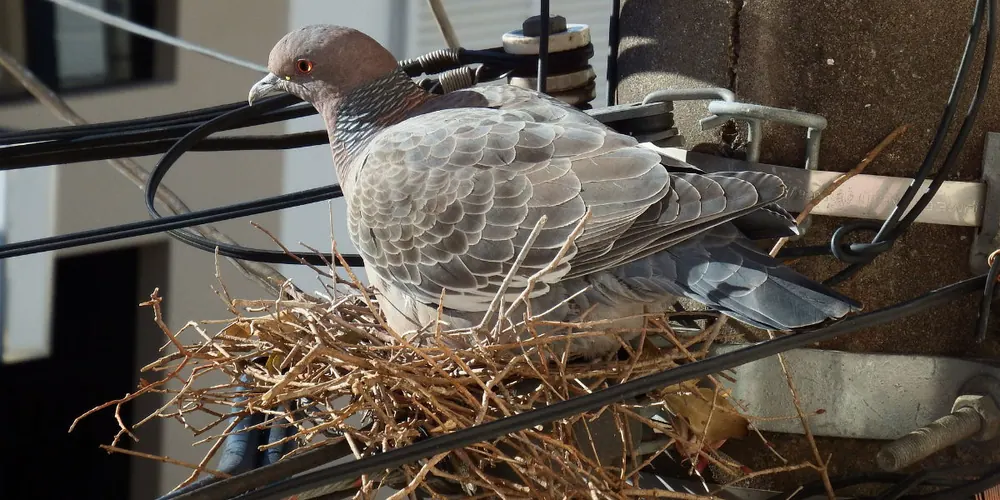
Bird mites are solved by finding and treating the nest they came from, then treating the rooms where they've spread. They're tiny, pale-to-greyish specks that move quickly and can be hard to see. In Faerie Glen, with the reserve's birdlife next door and many houses with tiled roofs, eaves and gaps where birds can get in, bird mite calls are a regular part of our spring and summer.
How bird mites end up indoors
Bird mites live in the nests of birds like pigeons, sparrows, mynahs and starlings, feeding on the birds and their chicks. While the nest is active, the mites stay put. The trouble starts when the young fledge, or the nest is abandoned or removed. Suddenly the mites have no host. They spread out looking for one, and they find their way through ceiling boards, light fittings, cornices and air vents into the rooms below. They'll bite people, but they can't complete their life cycle on humans, so the bites are the result of hungry mites searching rather than a permanent infestation of you.
Signs it's bird mites
- Itchy bites, often at night, and an uncomfortable crawling sensation
- Tiny moving specks on walls, ceilings, bedding, windowsills or light fittings near where birds were nesting
- A nest in the roof, gutter, eaves or an air vent that has recently gone quiet
- Bites concentrated in one room, usually the one under the nest
Bites in bed are also blamed on bed bugs and fleas, which need very different treatment. If there's no nest anywhere near, our page on identifying biting insects in Faerie Glen helps you work through the alternatives.
Where Faerie Glen birds nest in houses
Gaps under roof tiles at the gutter line, broken or missing barge boards, the space between the fascia and the wall, unscreened air vents, and the tops of downpipes are all popular. Mynahs and starlings are particularly good at finding an opening at the edge of a tiled roof. In complexes, one nest above a shared ceiling can send mites into more than one unit.
How we treat bird mites
- Locating the nest. We check the roof void, eaves, gutters and vents above the affected area.
- Treating the nest. A targeted treatment kills the mites in and around the nest. Once that's done, the nest material can be bagged and removed.
- Treating the rooms. We treat the ceiling, cornices, light fittings, window frames and areas around the bed where mites have spread, using odourless, non-staining products.
- Closing the entry. We advise on sealing the gap the birds used, so it doesn't happen again next season.
No one needs to move out for this. Children and pets should keep away from the treated room until surfaces have dried.
The mistake that makes it worse
Pulling an active or recently used nest out of the roof without treating it first. Every mite in that nest is released into the roof void and the rooms below, and the problem often gets worse overnight. Treat first, then remove. The same goes for blocking the hole while birds are still nesting: chicks trapped inside die, and their mites then come looking for you.
Prevention for Faerie Glen homes
- Fit bird mesh or proper closures to the gaps at the gutter line and under the first row of roof tiles.
- Screen air vents and check that downpipe tops are covered.
- Look up at the roofline in late winter, before nesting season begins, and fix gaps while the roof is empty.
- If you're having roof or gutter work done, ask the contractor to check for nest sites at the same time.
What does it cost?
Bird mite work is priced by how many nests need treating, how easy the roof void is to access, and how many rooms the mites have spread into. A single nest above one bedroom is a fairly contained job. Multiple nests along the roofline of a large house, or mites across several units in a complex, take more. If the nest is in an open tree or a garden box well away from the house, you may not need any treatment indoors at all.
For more on how we approach this across the city, see bird mite control in Pretoria. Residents in the next suburb can read about bird mites in Garsfontein roofs, and our Faerie Glen pest hub covers the rest of what we do locally.
Bird mite treatments carry our 3-month guarantee, and One Stop is SAPCA registered. Itching tonight? Phone 012 012 5526, or WhatsApp a close-up of the specks or the nest site.
Questions we get asked
Can bird mites live on people?
No. They bite people while searching for a bird host, but they can't complete their life cycle on humans and die without birds.
How long do bird mites last after the birds leave?
Without treatment, they can keep biting for a few weeks as they search for a host. Treating the nest and rooms stops that much sooner.
Should I remove the nest myself?
No. Removing it untreated releases the mites into your home. Have the nest treated first, then remove it.
Are bird mites harmful?
They're not known to spread disease to people, but the bites are very itchy and can become infected if scratched.
Which birds cause bird mites in Pretoria?
Common culprits are pigeons, sparrows, mynahs and starlings that nest in roofs, eaves, gutters and vents.
Can you stop birds nesting in my roof again?
We'll advise you on bird mesh, closures and screening for the gaps. Most homeowners have a roofer or handyman fit them.