
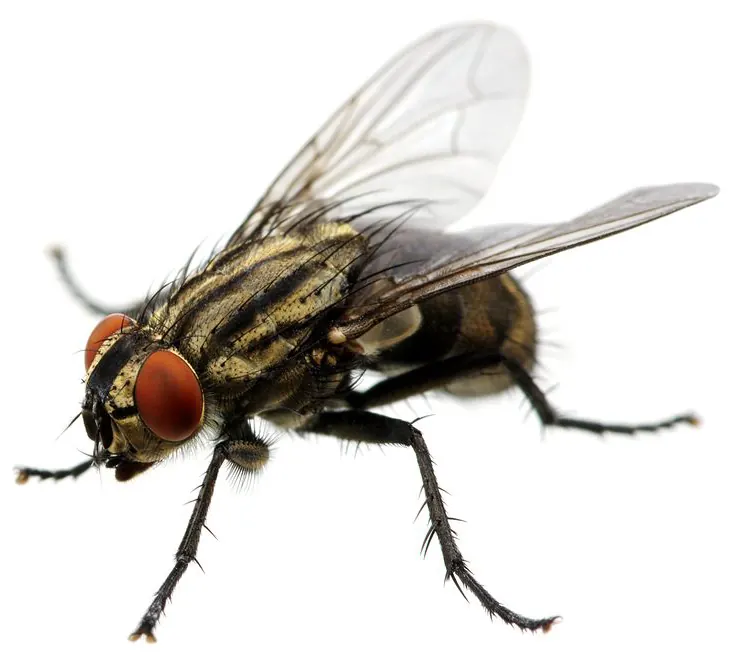
Getting on top of flies means finding where they breed and removing it, then treating the places adult flies rest. Swatting and spraying the ones in the air is a losing battle if hundreds more are hatching in a bin, a compost heap or a blocked drain nearby. In Faerie Glen we handle flies for homes, townhouse complexes, retirement village kitchens and food businesses, and in nearly every case the answer starts outside.
Which flies, and where they come from
House flies
Grey, medium-sized flies that land on food and surfaces. They breed in moist, rotting organic matter: kitchen waste, wet garden refuse, compost that's too soggy, and pet droppings left on the lawn. In hot weather, the cycle from egg to adult can take only about a week, which is why a summer fly problem can explode quickly.
Blowflies (bluebottles and greenbottles)
Big, noisy, metallic flies. They're drawn to meat, bones, dead animals and bins that hold meat scraps. A sudden swarm in one room often means something has died in the roof, wall or under the floor, such as a rat or a bird.
Drain flies and fruit flies
Tiny flies hovering around sinks, showers and fruit bowls. Drain flies breed in the film inside drains and floor traps. Fruit flies breed in overripe fruit, wet rubbish and the bottom of recycling bins.
Why summer is so bad here
Faerie Glen summers bring heat, humidity and afternoon storms. That's perfect for flies. Bins heat up in the sun, compost stays wet, and lawns where dogs do their business become breeding sites. Fallen fruit rotting under trees in older gardens adds to it, feeding fruit flies and house flies alike. Communal refuse areas in complexes and villages, where many households' waste sits for a few days between collections, are a magnet.
How we deal with flies
- Finding the source. We look at bins, refuse areas, compost, drains, pet areas and, if a sudden swarm points that way, the roof and wall voids.
- Removing or fixing it with you: cleaning and lidding bins, sorting out compost, clearing drains, or removing a carcass where we can reach it.
- Treating resting areas. Flies rest on walls, eaves, fences and ceilings near where they breed. We apply odourless residual treatments to those surfaces.
- Drain treatment for drain flies, aimed at the breeding film inside the pipe.
- Ongoing service for kitchens and refuse areas, on a monitoring schedule for businesses and villages.
Treatments are applied with care around food areas. You can stay at home. Keep children and pets away from treated walls until they've dried.
The common mistake
Relying on fly spray and sticky strips while the bin sits in full sun with a loose lid. Spraying only ever kills the adults already there. If the bin, the compost or the dog run keeps producing new flies, you'll be spraying every day all summer.
Practical steps that make the biggest difference
- Double-bag meat and fish scraps and put them out as close to collection day as possible.
- Rinse the wheelie bin regularly in summer and keep the lid shut.
- Pick up after dogs every day, not once a week.
- Turn compost and keep it balanced, adding dry material if it's wet and smelly.
- Pour boiling water down rarely used sinks and floor traps to break down the slime that drain flies breed in.
A Faerie Glen tip
If a sudden cloud of bluebottles appears inside, especially on a window in one room, don't assume it came from outside. Check the ceiling above. A rat or bird that has died in the roof is a very common cause, and once it's removed, the flies stop. If you suspect rodents were the cause, read about rat treatment in Faerie Glen homes.
What does it cost?
A one-off fly treatment of a house's resting areas and drains is a fairly small job. Restaurants, retirement village kitchens and complexes with communal refuse areas are usually better served by a contract, priced on the size of the site and how often we visit. If the problem is a bin left in the sun, fixing that may be all you need.
Flies sit within the wider summer group on our Faerie Glen flying insect page. For the city-wide service, see fly control in Pretoria, and if you're nearer the spruit, fly treatment in Moreleta Park. Everything else we handle locally is on our Faerie Glen pest control page.
If flies are back on the treated surfaces within three months, our guarantee means another visit at no extra charge, and as a SAPCA-registered company we'll explain exactly what we used. Ring 012 012 5526, or WhatsApp a picture showing where the flies gather.
Questions we get asked
Why do I suddenly have lots of big flies in one room?
Usually something has died nearby, often a rat or bird in the ceiling or wall. Blowflies breed in the carcass and emerge into the room.
Do fly treatments make my kitchen unsafe for food?
No. We treat resting surfaces carefully and keep products away from food preparation areas. Wipe counters before use as usual.
Why are there tiny flies in my shower?
They're likely drain flies breeding in the slime inside the drain. Cleaning the drain and pouring boiling water down it helps a lot.
Can you service a restaurant or village kitchen regularly?
Yes. We offer scheduled monitoring and treatment for kitchens and refuse areas, with visits planned around service times.
Do fly traps and zappers work?
They catch some adult flies indoors and can help in kitchens, but they won't fix a breeding source outside.
When is fly season in Faerie Glen?
Mostly from October to March, peaking in the hottest, wettest months. Flies drop off sharply in the dry winter.