
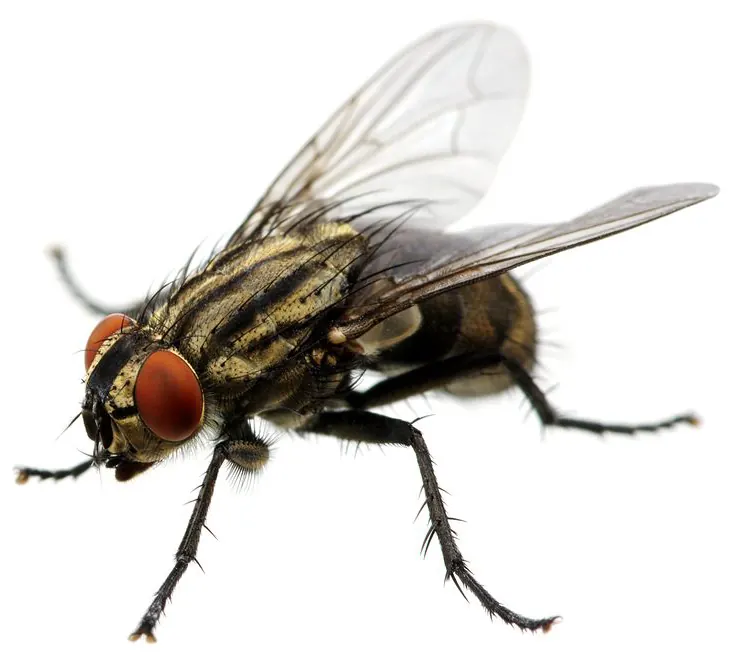
If flies are a constant problem at your Garsfontein home or business, they're breeding nearby, usually within a short distance of where you see them. A house fly lives on rotting food, animal waste and damp organic matter, and in summer it goes from egg to adult in days. Spraying the flies in the air treats the symptom. Finding and removing what they're breeding in, then treating the surfaces they rest on, is what brings the numbers down.
The flies you're likely to see
House flies
The grey, restless fly that lands on everything. They breed in household waste, pet droppings, compost and grass cuttings, and they're the main summer complaint around patios and kitchens.
Blowflies
Big, metallic green or blue, and loud. They're drawn to meat, bones and anything dead. A blowfly problem often points to a rubbish bin with meat scraps in it, a rodent that has died in the roof or a wall, or a pet's bone buried in the garden.
Fruit flies and drain flies
Tiny flies hovering over the fruit bowl, the recycling or the kitchen sink. Fruit flies breed in overripe fruit, spilt juice and the dregs in bottles and cans. Drain flies, which look like tiny furry moths, breed in the slimy film inside drains and are common in bathrooms and in commercial kitchens.
Why Garsfontein gets flies
Hot, wet Highveld summers are fly weather, and a family suburb produces plenty of the material they breed in. Dogs in most gardens mean droppings on the lawn. Wheelie bins stand in the sun for a week between collections. Compost heaps and piles of grass cuttings sit in the corner of the garden. Shopping centres and restaurants nearby generate food waste in large quantities. Each of these can produce a steady stream of flies if it's not managed.
How we deal with flies
At a home, we walk the property to find the breeding sources: bins, bin areas, dog runs, compost, drains and any dead animal. We give you a short, practical list of what needs to change, and then apply a residual treatment to the places flies rest, such as walls near bins, the underside of patio roofs, window frames, and fences around the dog run. It's odourless and won't stain. For drain flies, cleaning out the drain's organic film is the key step, and we'll show you how.
For food businesses, schools and shopping-centre tenants, fly control is best handled as part of a scheduled service. We inspect refuse areas, delivery doors, drains and food-prep zones on each visit, treat as needed, and keep a record you can show to an inspector or head office.
A common mistake
Buying a stronger fly spray. Sprays kill the flies in the air at that moment, but if there are maggots in the bin or droppings on the lawn, a fresh batch emerges within days. In a kitchen, spraying near food is also something you'd rather avoid. Removing the source does more than any spray.
Practical fly prevention for a family home
- Pick up dog droppings daily in summer, and bag them before they go in the bin.
- Wrap meat scraps and bones before throwing them away, and rinse the bin after collection day.
- Keep the bin lid shut and, if you can, stand the bin in the shade.
- Turn the compost regularly and don't add meat or cooked food to it.
- Fit fly screens to kitchen windows and the door you use most in summer.
- Don't leave fruit out on hot days, and rinse cans and bottles before they go into the recycling.
A Garsfontein tip
Look at where the bins live between collection days. In a lot of homes here, they stand against the kitchen wall or next to the back door, because it's convenient. Move them as far from the kitchen door as practical, ideally to a shaded spot along the side wall. Flies that hatch in the bin then have further to travel to reach the house, and many won't bother.
What does fly control cost?
For a house, what matters is the size of the stand and how many resting areas need treating. Often, the most important part is the advice, not the product. For a business, it depends on the size of the premises, the number of refuse areas and drains, and how often the site needs a visit. If your fly problem is clearly a single smelly bin, a good scrub and a lid that closes may be all you need.
Flies are just one group of flying pests. Our flying insect control for Garsfontein properties also covers mosquitoes, moths and wasps. A blowfly invasion can mean a dead rodent somewhere, in which case rodent control in Garsfontein may be the real answer. See fly control in Pretoria for the full service, or fly control in Moreleta Park if you're just over the border, and our pest control in Garsfontein page for everything else we treat in the suburb.
Fly treatments are covered by our 3-month guarantee, so if numbers bounce back in that window, we'll return. To book a visit, dial 012 012 5526. For a business, tell us about the site on WhatsApp and we'll suggest a sensible service plan.
Questions we get asked
Why do I suddenly have lots of flies in the house?
Something nearby has started breeding them, often a bin, a pet's waste, compost or a dead animal. A sudden swarm of big blowflies can point to a dead rodent in the roof or walls.
Are flies dangerous?
They can be. Flies move from waste to food and can carry bacteria that cause stomach illness, which is why they matter in kitchens and food businesses.
What are the tiny flies in my bathroom?
Usually drain flies. They breed in the slime inside drains, so cleaning the drain properly is the main fix.
Do fly screens really help?
Yes. On kitchen windows and the door you use most, screens keep a lot of flies out during summer, especially if you live close to bins or a dog run.
Can you service a restaurant or school for flies?
Yes. We offer scheduled visits for food businesses and schools, covering flies alongside other pests, with a record of each visit.
When is fly season in Pretoria?
Mostly from spring to the end of summer, when warm, wet weather lets flies breed very quickly. Numbers drop sharply in the dry winter.