
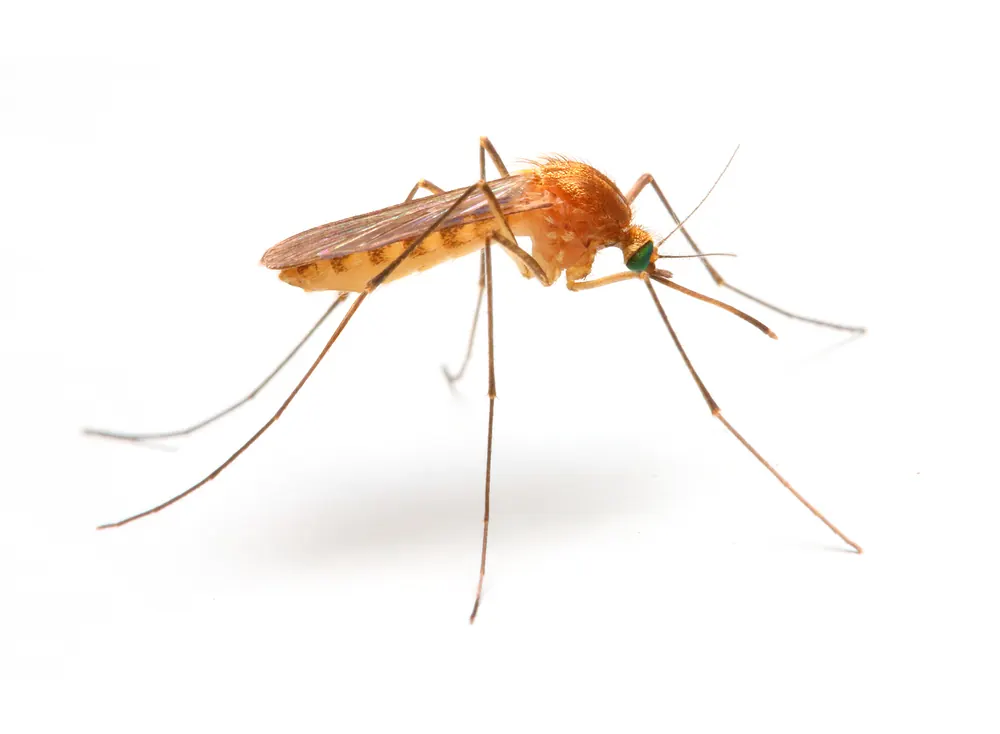
The quickest way to fewer flying insects is to find where they're coming from. Mosquitoes breed in standing water, flies in waste, pantry moths in stored food and wasps in a nest you probably haven't found yet. In Garsfontein, most of those sources are inside the property boundary, which is good news, because that means you can do something about them. We identify the insect, track down the source and treat the places where it rests and enters.
The main flying pests in Garsfontein
Mosquitoes
Summer evenings in Pretoria East bring mosquitoes, especially after a run of afternoon thunderstorms. They need only a small amount of still water to breed: a pot-plant saucer, a blocked gutter, a bucket left on the lawn, the folds of a pool cover, a birdbath that hasn't been changed, a garden pond without fish. Family gardens tend to have several of these at once, and the mosquitoes biting you at night have usually hatched within a short flight of your bedroom window.
Flies
House flies and blowflies follow bins, pet droppings and compost. They're a summer problem on patios and in kitchens, and a serious one for food outlets and school kitchens. Our page on fly problems in Garsfontein goes into detail.
Wasps
Paper wasps build under eaves, patio roofs and jungle gyms from spring onwards, and nests grow fast through the hottest months. See wasp nest removal in Garsfontein for how we handle those.
Moths and flying termites
Small moths fluttering out of the pantry are stored-food pests, not clothes moths. The swarms of winged insects that pour out of the lawn after the first heavy rain of summer are usually termites, and they're normal. They only need attention if they emerge from inside the house.
How we treat flying insects
Every visit starts with a walk around the property to find breeding sites and resting areas. For mosquitoes, that means standing water, dense shrubs and the shady walls near bedrooms where they rest during the day. For flies, it means bins, dog runs and drains. For wasps, it means checking eaves, roof overhangs and garden structures for nests.
We then treat where the insects rest and land, using odourless, non-staining residual products on walls, eaves, patio ceilings, window frames and shrubs near the house. Nests are treated directly. Breeding sites are dealt with through practical changes, which we'll talk you through on the day. Nobody needs to leave home while we work; just give sprayed surfaces time to dry before the children and dogs go near them.
What people often get wrong
Relying on a zapper or citronella candle alone. Bug zappers attract mostly harmless moths and beetles, and candles help only in a small circle around the table. Neither touches the water where mosquitoes are breeding in the garden, which is why the problem returns every evening.
A tip for Garsfontein pool owners
Look closely at your pool cover. Many homes here have a pool with a solid or bubble cover that collects rainwater in its folds and dips during the summer storms. That shallow, warm water is a perfect mosquito nursery, right next to the house. Pump or sweep the water off after rain, and check the pool pump area and any unused water features at the same time.
Prevention around the house
- Empty pot-plant saucers, buckets and toys that hold water after each storm.
- Clear gutters before the rainy season so water doesn't pool in them.
- Change birdbath water a couple of times a week.
- Fit screens to bedroom and kitchen windows that you keep open in summer.
- Use warm-toned outdoor light bulbs, which attract fewer flying insects.
- Keep bin lids shut and pick up dog droppings daily.
What does flying insect control cost?
It depends on which insects are involved, the size of the property and how much treatment the resting areas need. A home with a mosquito problem traced to a pool cover and a few saucers may need more advice than product. A large garden with dense shrubs, several wasp nests and a fly problem near the bins is a bigger job. Businesses and schools are usually best served by scheduled visits. If one change, like emptying the saucers, solves it, we'd rather you saved the money.
For the city-wide service, see flying insect control in Pretoria. Homes near the reserve in Faerie Glen see a lot of the same summer pressure, and the full list of our local work is on pest control in Garsfontein.
Our flying insect treatments are guaranteed for three months; if the problem returns in that time, we'll be back. Phone 012 012 5526 to book, or send a WhatsApp photo of the insect if you're not sure what it is.
Questions we get asked
Where are the mosquitoes in my house coming from?
Usually from standing water close by: pot saucers, gutters, pool covers, buckets or ponds. Finding and emptying those is the most effective fix.
Do bug zappers work?
Not well for mosquitoes. They mostly kill harmless moths and beetles. Removing breeding water and treating resting areas works far better.
Can you treat a garden for mosquitoes?
We treat the shady walls, eaves and shrubs where mosquitoes rest near the house, and help you remove the water they breed in.
Are flying ants after rain a problem?
Usually not. Those swarms are a normal part of the start of the rainy season. If they're coming out of walls or floors inside the house, it's worth having a termite inspection.
When is the worst season for flying insects in Pretoria?
Summer, from around October to March, when warm, wet weather lets mosquitoes, flies and wasps breed quickly.
Do fly screens make a difference?
Yes. Screens on bedroom and kitchen windows keep out a large share of mosquitoes and flies, especially during summer evenings.