
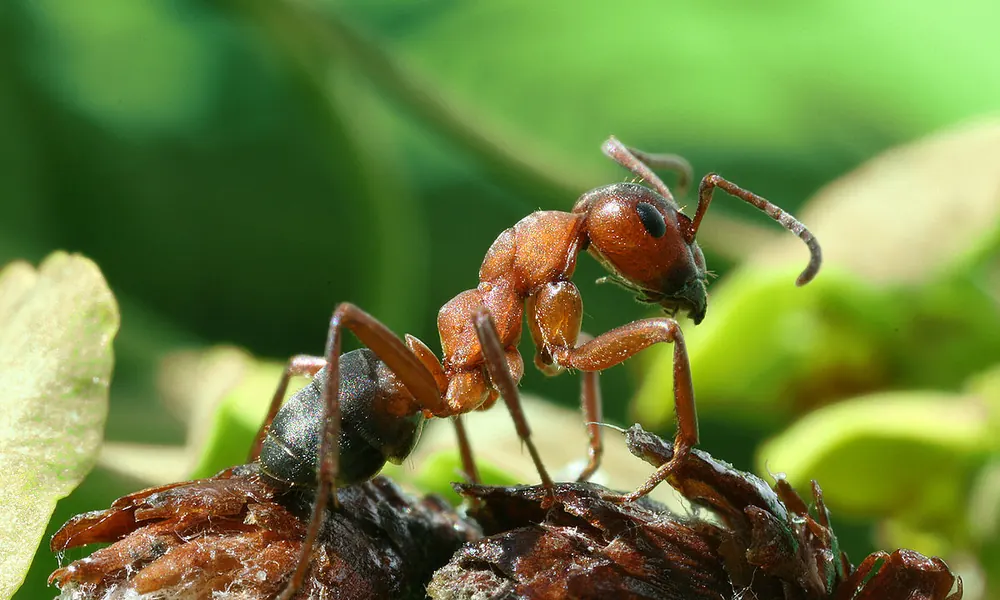
The reason ants keep coming back to your Garsfontein kitchen is that the nest is untouched. You see foraging workers, but the queen and the bulk of the colony are under the paving, in a wall or in the lawn. The fix is bait the workers carry back home, placed along their routes, along with a look at what's drawing them inside.
When and why ants come indoors here
On the Highveld, ants get busy in spring and go into overdrive as the summer storm season starts. Heavy rain floods shallow nests, and the colony moves, often indoors or to drier paving. Hot dry spells send them looking for water, which is why you'll find trails in bathrooms, around the dog's water bowl and at the kitchen tap.
Family homes give them plenty to aim for. Sticky juice spills, cereal on the floor under the breakfast table, sugar in school lunchboxes left in bags, pet food bowls on the patio. In complexes, ants travel along shared walls and through expansion joints in paving, so one unit's problem quickly becomes a row's.
Which ants are you seeing?
Small brown or black trailing ants
These are the kitchen regulars. They form neat lines, love sweet and greasy food, and nest in wall cavities, under paving and in pot plants. Many species have several queens and bud off new nests easily, which is why spraying often splits one colony into several.
Pugnacious and lawn ants
These build sandy mounds in lawns and between pavers, and some bite or sting when disturbed. They're a common complaint where children play on the grass and around pool surrounds.
Ants with wings
Winged ants after rain are often confused with flying termites. Ants have a narrow waist and front wings longer than the back ones; termites have a thick waist and four equal wings. If you're not sure, send us a photo.
The difference matters more than you might think. A few winged ants indoors in summer are a nuisance. Winged termites coming out of a skirting board or door frame inside the house can point to a colony in the structure, which is a different job altogether.
How we get rid of them
- Follow the trail. We trace the lines back to where they enter the house and, ideally, to the nest.
- Bait, not spray, inside. Ant baits are placed in and along the trails. Workers carry them back and share them, which is how the queen is reached. This takes a few days, so the ants may seem busier at first.
- Treat outside where needed. For mounds in lawns and between paving, and around the base of walls, we use targeted, odourless products. Perimeter barrier treatments help stop new trails forming.
- Remove the attraction. We'll point out the food and water sources that started it.
What people get wrong
Wiping the trail with bleach or spraying it the moment you see it feels good, but it kills the scouts and leaves the nest working. Worse, it can kill off ants that were about to carry bait home. If we've placed bait, leave the trail alone for a few days, even if it looks worse.
A tip for Garsfontein homes with pets
Put the dog or cat's food bowl inside a slightly larger shallow dish with a little water in it. Ants can't cross the water moat, and it stops a pet bowl on the patio turning into the start of a trail into the kitchen. Feed at set times and lift the bowl when it's empty.
What does ant control cost?
It depends on how many nests and trails are involved and whether we're treating indoors only or the outside perimeter and lawn as well. A single trail into a kitchen is a small job, and sometimes a good store-bought bait station placed on the trail is enough. Repeated ant problems, mounds across a lawn, or a complex with ants in several units need a professional treatment and possibly a follow-up.
Ants and cockroaches tend to show up in the same kitchens, and our cockroach control in Garsfontein can be combined with an ant visit. For how we deal with ants city-wide, see ant control across Pretoria. We treat the same trailing ants in Waterkloof homes and gardens, and the full local list is on our Garsfontein pest control page.
We're SAPCA registered and have been at this for 25 years. If the ants return within three months, our guarantee means we come back. Snap a picture of the trail and send it to us on WhatsApp, or phone 012 012 5526 to book a visit.
Questions we get asked
Why do ants come inside after it rains?
Heavy rain floods shallow nests in soil and paving, so the colony moves to drier ground, which is often your house. Thunderstorm season is peak time for ants indoors.
Why are there more ants after the bait was placed?
Because they're feeding on it. Workers recruit more ants to the bait and carry it back to the nest. Activity usually drops sharply within a few days.
Are the ants in my lawn dangerous to my children?
Some lawn and pugnacious ants bite or sting when their mound is disturbed. It's painful rather than dangerous for most people, but treating mounds where children play is sensible.
How do I tell flying ants from flying termites?
Look at the waist and wings. Ants have a pinched waist and uneven wings; termites have a straight body and four wings of the same length.
Can ants damage my house?
Most ants don't damage structures, but some nest in wall cavities and electrical boxes, and lawn ants can lift paving sand. The main issue is contamination of food.
Do you treat ants in a pool area?
Yes. We treat ant mounds and trails between pool paving and around the surround, keeping products away from the water.