
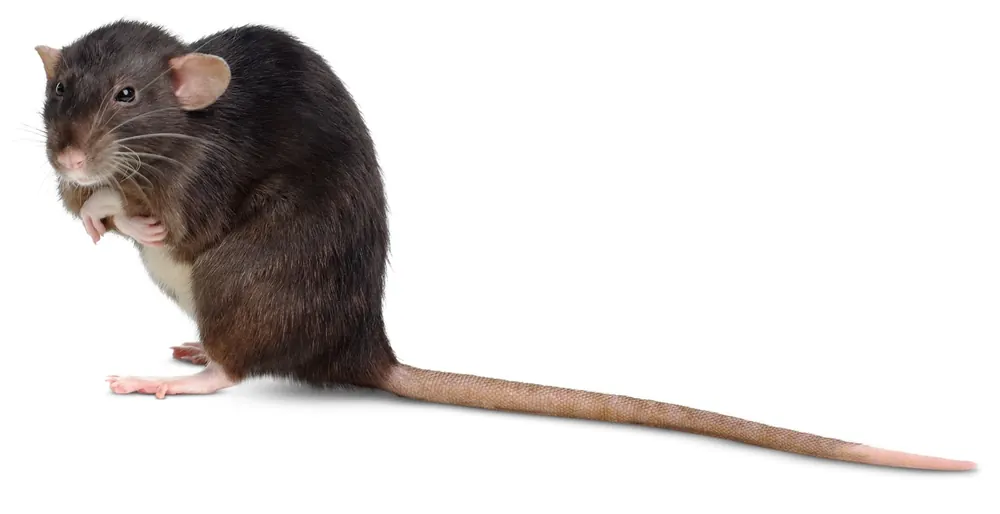
Getting rid of rodents in Garsfontein comes down to three things: knowing which rodent it is, putting bait or traps where it actually travels, and closing the way in. Rats and mice behave differently, and a plan built for one will often miss the other. That's why we inspect first and treat second.
Rat or mouse? A quick guide
Droppings are the easiest clue. Mouse droppings are tiny, like grains of rice, and scattered wherever the mouse has been, often in kitchen drawers and on top of cupboards. Rat droppings are larger, closer to a raisin, and tend to be grouped along regular routes. Noise is another clue. A rat in the roof sounds heavy, like something being dragged, while mice make a light, fast scratching. Gnawed holes the size of a thumb point to mice; anything you could fit a small fist through is a rat.
If you're sure it's one or the other, our separate pages go into more depth on dealing with rats in Garsfontein and on mice in Garsfontein homes and complexes.
Where rodents come from in this suburb
Garsfontein isn't a rodent hot spot because of rivers or veld. It's the everyday life of a big family suburb that feeds them. Wheelie bins wait on the pavement on collection day. Dog food sits out overnight. Bird feeders scatter seed onto the lawn. Fruit trees drop windfalls, and compost heaps stay warm all winter. Shopping centres and school tuck shops add food waste and delivery areas. When the cold arrives from late autumn, rodents that lived comfortably outside start testing roofs, garages and kitchens.
Our approach for different properties
Freestanding homes
We place lockable, tamper-resistant bait stations along the outside routes, use traps in the roof and indoors where poison isn't appropriate, and point out the gaps to close: missing air-brick covers, holes around pipes, gaps under the garage door, and branches resting on the roof.
Townhouse complexes
Shared roof voids are the problem. One unit can be cleared and reinfested from next door within weeks. We'd rather set up stations around the whole complex with the body corporate's agreement, which also spreads the cost.
Schools, shops and food businesses
For these sites, a scheduled monitoring contract works best. Stations are numbered and checked on every visit, activity is recorded, and we flag proofing issues before they turn into a problem in the kitchen or storeroom. Tracking powder can be used in voids and ducts where it's safe to do so.
Schools need particular care. Stations go where learners can't reach them, nothing loose is ever left in classrooms or tuck-shop storerooms, and visits are fitted around lesson times. Shops benefit from the same discipline, especially around refuse areas and the back doors where deliveries come in.
A mistake worth avoiding
Buying a box of loose poison pellets and scattering them in the roof is the most common DIY approach, and it causes more trouble than it solves. The pellets get carried off and hoarded, a rodent can die inside a wall where the smell lingers, and the hole it used is still open for the next one. In a house with dogs, loose bait on the floor of the garage is also a real risk.
A Garsfontein tip for winter
Before the cold sets in, walk around the house in the late afternoon and look up. Any creeper, tree branch or satellite cable that touches the roof is a rodent highway. Cut creepers back below the gutter, trim branches clear of the roof line, and you remove one of the easiest ways onto a freestanding home. For more seasonal advice, our article on preparing for rats and mice in summer covers the other half of the year.
What does rodent control cost?
Cost is driven by how big the property is, the number of stations needed, whether we have to work in the roof void, and how many visits it takes to bring activity down to nothing. A home with a single mouse in the pantry may need nothing more than two snap traps, and we'll tell you that honestly. A complex or a food business is quoted to the site, usually as a contract.
See how we handle rodents across the rest of the city on our Pretoria rodent control page, and everything else we treat locally on our Garsfontein page. We also run rodent programmes for homes and estates in Faerie Glen, just next door.
Every treatment has our 3-month guarantee, so if the rodents return within three months, we do too. Call 012 012 5526, or send a photo of the droppings on WhatsApp and we'll tell you whether it's rats or mice.
Questions we get asked
How can I tell if it's a rat or a mouse in my roof?
Listen to the weight of the noise and look at the droppings. Rats sound heavy and leave raisin-sized droppings; mice make quick, light scratching and leave droppings the size of rice grains.
Do you use poison or traps?
Both, depending on where. Outside we use bait in lockable stations; inside the roof and living areas we often prefer traps, so nothing dies out of reach.
Why do rodents come in during winter?
The cold. When Highveld nights drop sharply from late autumn, rodents look for warm, dry shelter, and roofs, garages and kitchens are the obvious choices.
Can one unit in a complex be treated on its own?
It can, but the results usually don't last. Rodents move through shared roof spaces, so treating the whole complex at once, with the trustees on board, is far more effective.
Is it safe to have bait stations with dogs around?
Yes. The stations lock and are built so a dog can't get at the bait, and we place them where pets don't usually go.
How long before the activity stops?
A typical home sees a clear drop within one to two weeks. Busy commercial sites, or homes with plenty of food around, need longer and usually a few return visits.