
The fastest way to clear rodents from a Lynnwood property is to identify the species, find out how they're getting in, and then combine secure baiting or trapping with proper proofing. Poison on its own rarely solves it. Rats and mice behave differently, live in different parts of a building and enter in different ways, and a plan aimed at the wrong one leaves the real problem untouched.
Two kinds of rodent problem in one suburb
Lynnwood has two faces. Behind the main roads are large residential stands with tall, old trees, thick hedges, compost heaps, fruit trees and outbuildings. Along Lynnwood Road and towards Menlyn there are offices, schools and businesses with staff kitchens, food deliveries and waste areas.
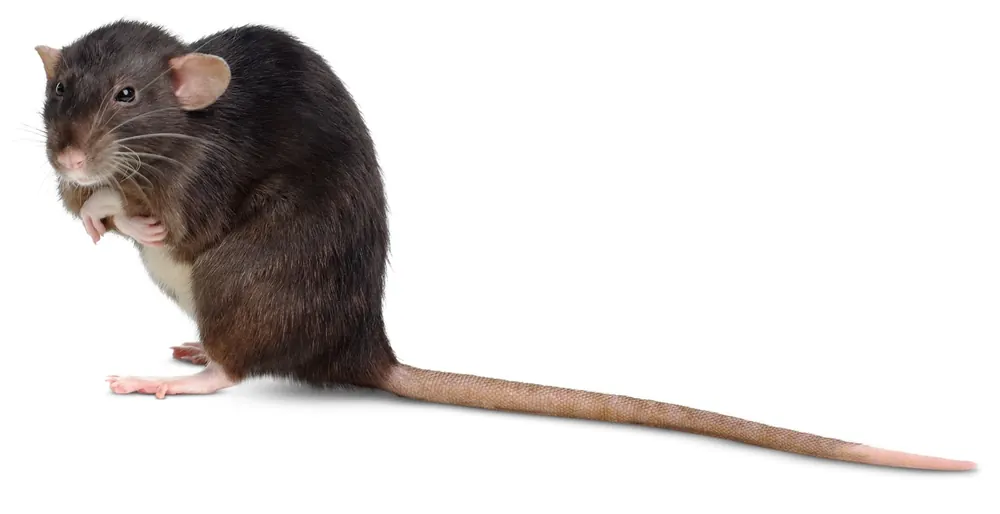
The residential side mostly sees roof rats. They're agile climbers that move from tree to gutter to roof without touching the ground, and the canopy over many Lynnwood homes gives them a ready-made road. The commercial side sees more house mice, which slip through gaps the width of a pencil and nest inside walls, ceilings, cupboards and stacked stock. Brown rats turn up in both, burrowing under paving, sheds and refuse areas.
Rat or mouse? How to tell
- Droppings: rat droppings are roughly raisin-sized; mouse droppings look like grains of rice and are scattered widely.
- Noise: rats make heavy scurrying in the ceiling; mice make lighter scratching inside walls and cupboards.
- Damage: rats gnaw bigger holes in bins, irrigation pipes and wood; mice chew packaging, paper and cables in small, neat holes.
- Where: rats favour roof voids and gardens; mice favour kitchens, storerooms and anywhere with stored food or paper.
We go into more detail on each on our pages for rats in Lynnwood and mouse control in Lynnwood.
What we do on site
- Inspection. Roof void, garage, kitchen, storerooms, outbuildings and the garden. We look for droppings, runs, rub marks, burrows and the gaps rodents use.
- Baiting. Lockable, tamper-resistant bait stations go along the routes rodents travel, placed where children, pets and wildlife can't reach the bait.
- Trapping. Inside roofs, offices and food areas we usually trap rather than bait, so rodents don't die somewhere you can't reach.
- Tracking powder in voids and runs where it's appropriate and safe to use.
- Proofing advice. We show you the gaps to close and the branches to cut back.
- Follow-up until activity stops, and scheduled monitoring for businesses and schools that want it.
Homes versus offices and schools
On a residential stand, most of the work happens outside and in the roof: stations along the boundary and near the compost, traps in the ceiling, and a list of branches and gaps to deal with. In an office or school the focus moves indoors, to kitchens, storerooms, server and plant rooms, and false ceilings. Businesses also need to think about records. A monitoring contract gives you a map of every station and a note of each visit, which helps if a client, landlord or inspector asks what you're doing about pests.
What commonly goes wrong
The usual story is a box of poison pellets thrown into the ceiling. The rodents eat some, carry the rest away, and a few die out of reach. Nobody closes the gap they came through, so new ones arrive within weeks. In offices, the mistake is different: staff keep snacks in desk drawers and the bin in the kitchenette is emptied once a day, so no amount of baiting outweighs the food supply. Rodent control works when food, shelter and entry are dealt with together.
A Lynnwood tip: mind the canopy
Stand in your garden and look at your roofline. If any branch is within about a metre of the gutter or roof sheets, a roof rat can jump it. Cutting back overhanging limbs is the single most useful thing many Lynnwood homeowners can do, and it costs nothing but an afternoon with a saw or a call to a tree feller. Do it before winter, when rats start looking for warm roofs.
What does it cost?
The price depends on the size of the property, how many bait stations or traps are needed, whether we work in the roof void, and how many follow-ups it takes. A house with one rat in the garage is a small job. An office block or school with mice in several areas is better served by a monitoring contract quoted to suit the site. And if you've seen a single mouse, a couple of good snap traps may be all you need. We'll say so if that's the case.
Rodents in Lynnwood are part of a wider pattern, so see rodent control throughout Pretoria or the work we do for older homes in rodent control in Brooklyn. Other local pests are on our main Lynnwood page.
We're SAPCA registered, with 25 years of rodent work behind us. If rodents return within three months of our treatment, we come back. Call 012 012 5526, or WhatsApp a photo of the droppings and we'll tell you whether it's rats or mice.
Questions we get asked
Can rats and mice both be in the same house?
Yes, and it's not unusual on bigger Lynnwood properties. Rats often hold the roof and garden while mice live in the kitchen or garage.
Do you use poison inside offices?
Usually not. Inside offices, schools and food areas we prefer traps, and keep baiting to lockable stations outside or in secure areas.
Is a monitoring contract worth it for a small office?
It can be, especially if you have a kitchen or store food or paper. Regular checks catch rodents before they spread through ceilings and cabling.
When do rodent problems peak in Lynnwood?
Late autumn through winter. Cold nights push rodents from gardens and trees into roofs, garages and buildings.
Will cutting back my trees really help?
Yes. Roof rats use overhanging branches to reach the roof, so removing that route is one of the most effective things you can do.