
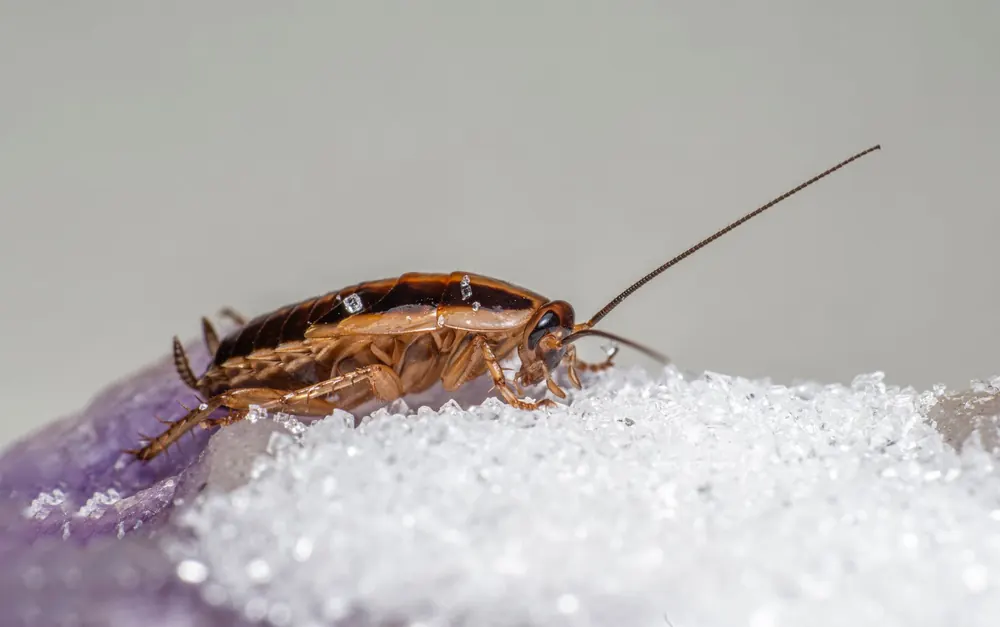
Cockroaches in Lynnwood are best treated with gel baits placed exactly where they hide, backed by a follow-up visit, rather than a spray that scatters them into the next cupboard. Which bait, where and how much depends on which cockroach you have. In this suburb we deal with two main species, and they come from different places.
The two cockroaches we see in Lynnwood
German cockroaches: the indoor breeders
These are small, light brown, with two dark stripes behind the head. They never really live outdoors. They breed inside warm, humid spaces close to food: behind fridges and stoves, inside dishwasher and microwave housings, under sinks, in the hinges of cupboards and in the motors of appliances. They multiply fast, and they travel in boxes, deliveries, second-hand appliances and bags.
In Lynnwood, we find them most often in shared kitchens: office kitchenettes along Lynnwood Road, school staff rooms and tuck shops, restaurants and takeaway kitchens, and flats or cottages where one kitchen backs onto another. If you're seeing small cockroaches during the day, that usually means a heavy population, because they only come out in the open when the hiding places are full.
American cockroaches: the drain dwellers
These are the big reddish-brown ones, sometimes called sewer cockroaches. They live in drains, sewer lines, manholes and damp areas outside, and come into houses through floor drains, shower outlets, gaps around pipes and under doors, mainly at night and in summer. Older Lynnwood homes, with original plumbing, inspection eyes in the garden and the odd cracked drain, give them plenty of ways up.
Signs of a cockroach problem
- Live cockroaches when you switch the kitchen light on at night
- Small black specks, like ground pepper, in cupboard corners and hinges
- Brown egg cases, about the size of a grain of rice, stuck inside cupboards or behind appliances
- A musty, oily smell in a cupboard with heavy activity
- Shed skins near the back of the fridge or under the sink
How we treat cockroaches
We inspect first, opening the cupboards, pulling out appliances where possible and checking drains, so the bait goes where the cockroaches actually live. For German cockroaches, we apply a gel bait in small spots in cracks, hinges and voids. They eat it, return to their hiding places and pass it on through the colony. Where it's needed, an odourless, non-staining residual spray goes into wall junctions and outside entry points. For American cockroaches, we treat drains, manholes and the outside perimeter, and point out gaps to seal. Heavy German cockroach infestations need a follow-up visit, because eggs inside their cases aren't touched by the first round.
In a home, you can stay in while we work; just keep children and pets off treated surfaces until they're dry. For offices and food businesses, we can treat out of hours and set up a monitoring contract so the problem doesn't rebuild.
The mistake that spreads cockroaches
Spraying a can of insecticide over gel bait. It contaminates the bait so they won't eat it, and the repellent spray drives German cockroaches deeper into walls and into neighbouring units. In an office block, one unit spraying hard can push the problem into the whole floor. If you've had us bait, don't spray or deep-clean those exact spots for a while.
A prevention tip for Lynnwood kitchens
If your house has floor drains in the scullery, laundry or outside the kitchen door, check that each has a working grid and keep the trap topped up with water, especially in a back room you don't use much. A dry trap is an open pipe straight from the sewer, and in older Lynnwood homes that's one of the most common ways American cockroaches arrive.
What does it cost?
A home with a few American cockroaches coming up the drains is a modest job. A German cockroach infestation through a kitchen and its appliances takes more time and a follow-up. Offices, restaurants and schools are priced on the size and number of kitchens, the level of activity and whether a monitoring contract makes sense. We'll quote once we've seen it.
Where there are cockroaches, there are often flies too, so see fly control in Lynnwood if that's also an issue. For the city-wide picture, go to cockroach treatment in Pretoria. Close by, we also handle cockroaches in Brooklyn's older homes and flats, and our Lynnwood pest control page covers every other pest in the suburb.
Our treatments carry a 3-month guarantee, so if the cockroaches return in that time we come back, and we're SAPCA registered. Call 012 012 5526, or WhatsApp us a photo of the cockroach and we'll tell you which one it is.
Questions we get asked
Why do I see small cockroaches in the day but big ones only at night?
They're different species. Small German cockroaches seen by day usually means a large indoor population; big American cockroaches come in from drains after dark.
Can you treat our office kitchen without closing the office?
Yes. We can work after hours, and gel baits go into cracks and hinges rather than onto open surfaces.
Is gel bait safe in a kitchen?
Yes, when it's applied properly. We place tiny amounts in cracks and voids out of reach, not on worktops or where food is prepared.
Why are there still cockroaches a week after treatment?
Some activity is normal at first. Cockroaches come out to feed on the bait, and eggs hatch after the first round, which is why heavy infestations get a follow-up.
Do cockroaches come from neighbours?
German cockroaches can move between units through shared walls, pipes and ducts, which is why complexes and office floors are best treated together.