
If you're seeing cockroaches in a Montana kitchen, the most effective treatment is gel bait placed where they hide, combined with sorting out what's feeding them and, in a complex, treating the neighbouring units at the same time. Spraying the visible ones with an aerosol makes the problem look better for a day and usually spreads it further into the walls.
Which cockroach do you have?
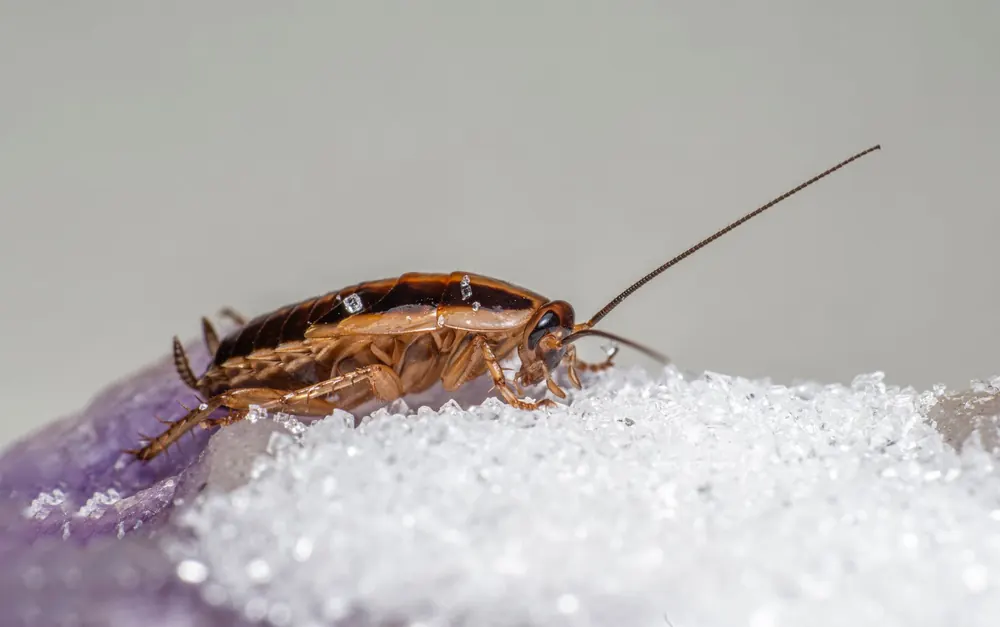
German cockroaches are the small, light-brown ones with two dark stripes behind the head. They live indoors, breed fast, and hide in warm, tight spaces: behind the fridge, inside the dishwasher door, under the stove and in the hinges of kitchen cupboards. They're the main problem in townhouses and flats.
American cockroaches are the large, reddish-brown roaches that can fly short distances. They live mostly in drains, sewer lines and stormwater pipes, and they come up through floor drains, shower outlets and gaps around waste pipes, especially on hot summer nights.
Why Montana complexes get cockroach problems
A large share of Montana's housing is in complexes, and that changes how cockroaches behave. Units are built back to back, so kitchens and bathrooms often share plumbing ducts and cavity walls. A German cockroach population in one unit can find its way along those pipes into the next one, which is why a single household treating on its own often sees them return within weeks.
The other route in is with people. A lot of Montana homeowners and tenants have moved in fairly recently, and cockroaches arrive in moving boxes, second-hand appliances and grocery cartons. A fridge or microwave bought second-hand is a common source. The warm motor compartment is exactly where German cockroaches like to live.
Signs to look for
- Small, dark specks like ground pepper in cupboard corners and on door hinges
- Brown egg cases tucked into cracks or behind appliances
- A musty, oily smell in a closed cupboard
- Roaches running when you turn on the light at night
- Shed skins under the sink or behind the fridge
How we treat cockroaches
We start by finding where they're living, not just where you've seen them. That means pulling out appliances, checking under sinks and in plumbing gaps, and looking at the drains. For German cockroaches, we apply gel baits in tiny dabs inside cracks, hinges and voids. The roaches eat the bait, go back to their hiding places and pass it on to others. Where it suits the situation, we add an odourless, non-staining residual treatment in places like the backs of cupboards and along skirting. For American cockroaches, we treat drains, manholes and the outside perimeter where they come up.
You don't need to move out, and there's no strong smell. Keep children and pets off sprayed surfaces until they're dry. Heavy German cockroach infestations usually need a follow-up visit to deal with the young that hatch after the first treatment.
The mistake that makes it worse
Using a can of insect spray on top of a professional gel bait. The spray contaminates the bait, so the roaches avoid it, and the survivors scatter deeper into walls and neighbouring units. If we've baited your kitchen, put the aerosol away and let the bait do its job.
A tip for Montana complexes
Before you plug in a second-hand fridge, microwave or toaster, check it outside in good light, especially around the motor and the seals. And if you've just moved into a complex unit, it's worth asking neighbours whether they've had cockroaches. If they have, a block treatment through the body corporate is the only approach that really works.
What does cockroach control cost?
It depends on the cockroach species, how big the infestation is, the size of the home and whether a follow-up visit is needed. A small kitchen problem caught early is straightforward. A heavy German cockroach population across several units, or a restaurant kitchen, takes more and is quoted on what we find. If you've seen one American cockroach come up the drain on a hot night, a drain cover and some cleaning may be all you need.
Cockroaches are often found alongside fishmoths in the same damp, dark spaces, so see fishmoth treatments in Montana if you've spotted those as well. All the other pests we treat in the suburb are on our Montana pest control page. For the wider view, see cockroach control throughout Pretoria, and we also treat cockroaches in Lynnwood.
We're SAPCA registered, with 25 years in the trade, and cockroach treatments carry our 3-month guarantee: if they come back within three months, we come back. Call 012 012 5526, or WhatsApp us a photo of the cockroach and we'll tell you which one you're dealing with.
Questions we get asked
Why do cockroaches keep coming back to my Montana townhouse?
Usually because neighbouring units share plumbing and cavity walls. If only your unit is treated, roaches from next door move straight back in.
Can a second-hand fridge bring in cockroaches?
Yes. German cockroaches often live in the warm motor area and door seals of fridges and microwaves.
Is gel bait safe in a kitchen?
Yes, when it's applied correctly. It goes in tiny amounts inside cracks and hinges where children and pets can't reach it.
Do big cockroaches mean my house is dirty?
No. American cockroaches live in drains and sewers and come up through floor drains on hot nights, even in very clean homes.
How long does gel bait take to work?
You'll usually see fewer cockroaches within a few days, with a big drop over the following weeks as the bait spreads through the population.
Can you treat a whole complex?
Yes. We work with bodies corporate on block treatments, which is the most reliable way to clear German cockroaches from shared buildings.