
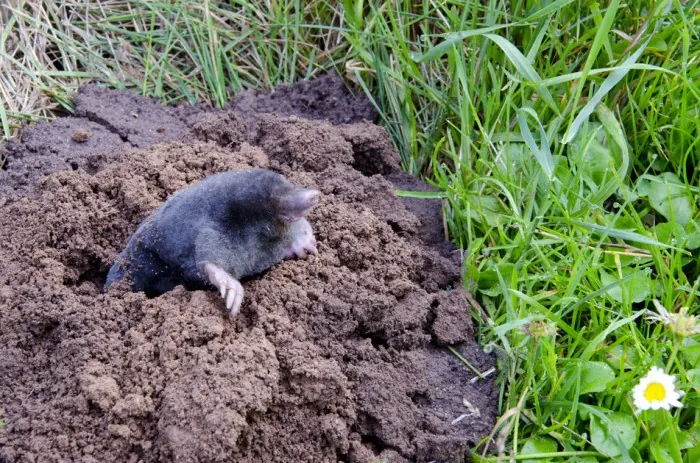
Raised ridges, soft spots that give way underfoot and small heaps of loose soil across your lawn mean you have golden moles. In Montana, they're especially common in the newer estate and complex gardens where lawns are watered often and the soil is full of grubs. We treat moles without tearing up the garden, and we make sure the damage isn't actually something else before we start.
Why Montana lawns attract moles
Golden moles aren't rodents. They're small insect-eaters that swim through loose topsoil hunting for worms, beetle larvae and other grubs. Much of Montana was open grassland until recently, and moles were already living in it. When a development goes in, the topsoil gets turned over, lawns are laid and irrigation goes on. That combination of soft, moist soil and plenty of grubs is exactly what a mole wants. Imported lawn dressing can also bring in more larvae, which feed the moles further.
Gardens that back onto veld see moles crossing in from the open ground, especially in autumn and after the summer rains when the soil is easy to tunnel through.
Mole or harvester termite?
Both damage Montana lawns, and they're often confused. The difference is easy once you know it:
- Moles leave raised ridges and soft, spongy tunnels just under the surface, plus scattered heaps of soil. The grass on top is usually still there, just lifted and drying out.
- Harvester termites leave small round holes with loose soil around them, short pieces of cut grass and bare patches. Nothing is raised.
If what you're seeing is holes and bare ground rather than ridges, read our page on harvester termites in Montana lawns instead.
How we treat moles
We start by walking the lawn and beds to find the active runs. Not every tunnel is in use, and treating old ones wastes time. We test which runs are active, then treat those directly, working into the tunnel system rather than digging up large sections of lawn. Where the soil is full of grubs, we'll also talk to you about reducing that food supply, because a lawn without food doesn't hold moles for long. If a neighbour on the same side is also affected, it helps to treat both gardens at the same time, since moles don't recognise boundary walls.
Estates, complexes and common areas
In Montana's security estates, moles are rarely confined to one garden. The common lawns, verges and green strips between houses are often irrigated on the same schedule, so they hold moles too, and those moles move into private gardens on either side. If you live in an estate and keep seeing new ridges after treatment, it's worth asking the estate manager whether the common areas can be checked at the same time. For bodies corporate, we can look at the whole site and treat it as one job, which saves the frustration of fixing one garden while the next one feeds the problem straight back in.
What people get wrong
Flooding the tunnels with a hose is the classic one. It makes a mess, waterlogs the lawn and the mole just moves deeper or a few metres along. Stamping the ridges flat every morning doesn't help either. It hides the damage but tells you nothing about where the mole is. The other common error is assuming moles eat plant roots. They don't. Damage to roots happens because the tunnelling lifts the grass and dries it out, not because the mole is eating your lawn.
A Montana garden tip
If you're laying a new lawn in Montana, try to water deeply and less often rather than a little every day. Constantly damp topsoil keeps grubs near the surface, which pulls moles up into your lawn. Deeper watering encourages stronger roots and makes the top layer less attractive. Keep an eye out in autumn, when mole activity tends to pick up.
What does mole control cost?
The bigger the lawn and the more active runs we find, the more time it takes, and some gardens need a return visit. A small townhouse garden with one mole is a quick job. A large estate garden with tunnels across several sections, or moles moving in from adjoining veld, takes more work. We'll look first and give you a straight quote.
For more on moles city-wide, see our Pretoria mole control page. We also deal with moles in Lynnwood gardens, where older, established lawns have their own challenges. The rest of what we treat locally is on the Montana area page.
We've been treating Highveld gardens for 25 years and we're SAPCA registered. Mole treatments carry our 3-month guarantee: if the mole comes back within three months, so do we. Call 012 012 5526, or WhatsApp us a photo of the lawn and we'll tell you whether it's moles or termites.
Questions we get asked
Are golden moles harmful to people or pets?
No. They're small, shy insect-eaters that live underground. The only harm is to the lawn and beds.
Do moles eat my grass?
No. They eat grubs and worms. The grass dies because tunnelling lifts it and dries out the roots.
Why do moles keep coming back to my Montana garden?
Usually because the lawn is moist and full of grubs, and open veld nearby keeps sending new moles in.
Do the noise-making spikes and windmills work?
Not reliably. Moles may shift a little, but they rarely leave a garden with a good food supply.
Is mole treatment safe for my dog?
Yes, when it's done properly. Treatment goes into active tunnels, and we'll tell you how long to keep pets off that part of the lawn.