
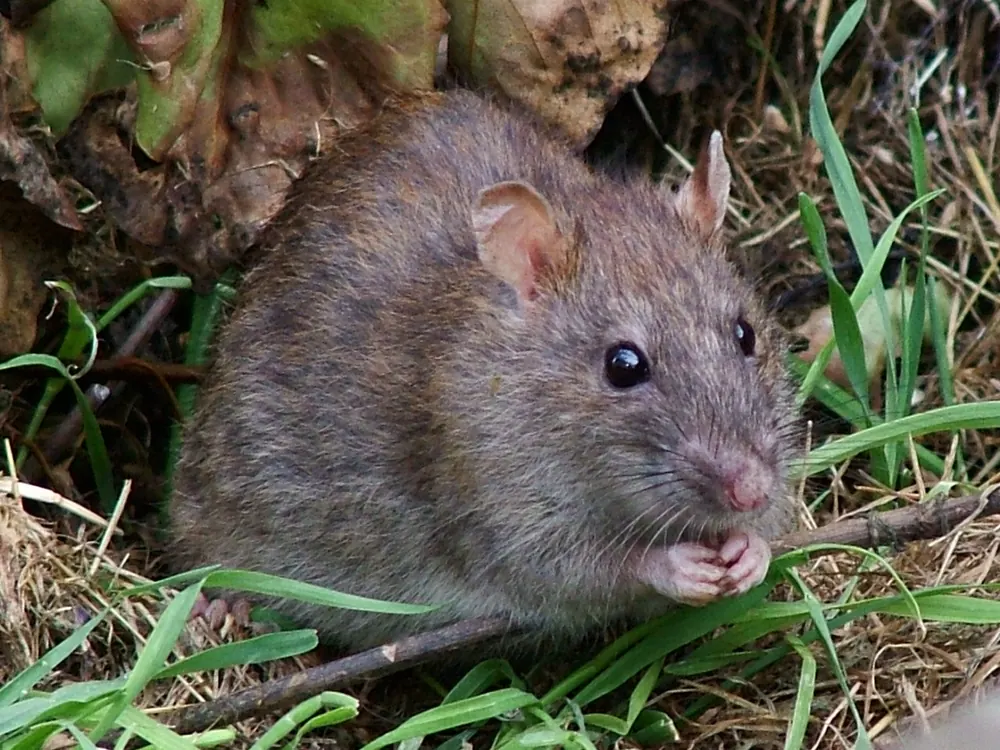
If you've got rats in Montana, the usual pattern is simple: they live in the veld, a stormwater channel or a neglected corner of the complex, and they use your roof or garage as a warm, dry base. We clear them with secure bait stations outside, traps inside the roof, and then show you exactly which gaps to close. That last step is the one that stops them coming back.
Two kinds of rat, two kinds of problem
Roof rats
The roof rat, also called the black rat, is a good climber. It runs along boundary walls, palisade fencing, creepers and cables, then slips into the roof through any gap under the tiles or where the fascia board leaves a space. Many Montana homes are built close together in estates and complexes, so one roof can be reached from another. If the noise is above your head at night, this is almost certainly your rat.
Brown rats
The brown rat is heavier and prefers the ground. It digs burrows under paving, sheds, retaining walls and compost heaps, and comes in through drains, air bricks and gaps under garage doors. On properties next to open veld, we often find brown rat burrows along the boundary wall.
Why Montana sees so much rat activity
A suburb built on former grassland has a large wild rodent population right on its edge. That alone would be enough, but newer developments add a few more factors. Shared refuse areas in complexes can feed rats for a whole block if bins are left open. Young gardens with heavy watering and bird feeders provide water and seed. And homes that are still being finished or extended often have open service ducts and holes in walls for a while. Building rubble left in a corner of the garden is ideal shelter too.
How to tell you have rats
Droppings about the size of a raisin are the clearest sign. Watch for dark greasy marks along regular routes, such as the top of a wall or the edge of a beam. Gnawed corners on plastic bins, chewed garden hoses and nibbled fruit on the tree all point the same way. Dogs that sit staring at the same spot on the garage wall every evening are often right.
Our rat treatment
- Inspection. We check the roof void, garage, garden, refuse area and the boundary, especially any side that faces veld or a drainage line.
- Secure baiting. Lockable, tamper-resistant bait stations go along the outside runs, fixed in place so they can't be moved or opened by children, dogs or wildlife.
- Traps indoors. In the roof we use traps rather than loose bait, which reduces the chance of a rat dying out of reach.
- Proofing advice. We show you the entry points: gaps under roof tiles, unsealed pipe and cable entries, garage doors that don't seal, and branches or creepers giving roof access.
- Follow-up. We check the stations and replace bait until activity stops.
The mistake that brings them back
Many people buy a box of rat poison, throw it into the roof and consider the job done. The rats that eat it may die in the ceiling, and the smell lasts for weeks. Worse, the gap they used is still there, and the next rats from the veld move in. Poison without proofing is a temporary fix.
A Montana tip worth doing
Ask your body corporate or estate manager how the refuse area is managed. Lidded bins, a sealed enclosure and regular cleaning do more for rat control in a complex than any single homeowner can. If your wall faces veld, trim back creepers and don't stack anything against it.
What does rat control cost?
Price depends on the size of the property, the number of bait stations, whether roof work is involved and how many follow-ups are needed. A freestanding house with a few rats in the roof is a straightforward job. A complex or estate section is quoted on the whole site, and businesses can take a monitoring contract. If you're only seeing evidence outside, along a far fence line, a few well-placed stations may be all that's needed.
Rats are only one part of the picture, and our full list of Montana pest services covers the rest. Where there are rats there are often cockroaches near the bins, so see cockroach treatments in Montana too. Read our practical guide on how to get rid of rats, or see rat control across the city. We also treat rats in Lynnwood homes.
We're SAPCA registered, we've been at this for 25 years, and our 3-month guarantee means that if the rats return within three months, we return too. Call 012 012 5526, or WhatsApp us a photo and we'll help you work out where they're getting in.
Questions we get asked
Why do I hear rats in the roof but never see them?
Roof rats are cautious and move mostly after dark, using the top of walls and roof beams as their routes. You hear them long before you see one.
Can rats get from my neighbour's roof into mine?
Yes, especially in complexes and closely built estates where roofs, walls and gutters connect.
Do you put poison in the roof?
We prefer traps inside the roof and lockable bait stations outside. That lowers the chance of a rat dying somewhere you can't reach.
How long until the rats are gone?
Most homes see a clear drop within one to two weeks. Properties next to open veld can take longer and need follow-up visits.
Will rats chew my car's wiring in the garage?
They can. Rats gnaw cables and hoses, and a warm garage near the veld is a common nesting spot, so act early if you see droppings there.
Who's responsible for rats in a complex: me or the body corporate?
Usually both. You deal with your unit, but shared refuse areas and common gardens are the body corporate's job, and treating together works best.