
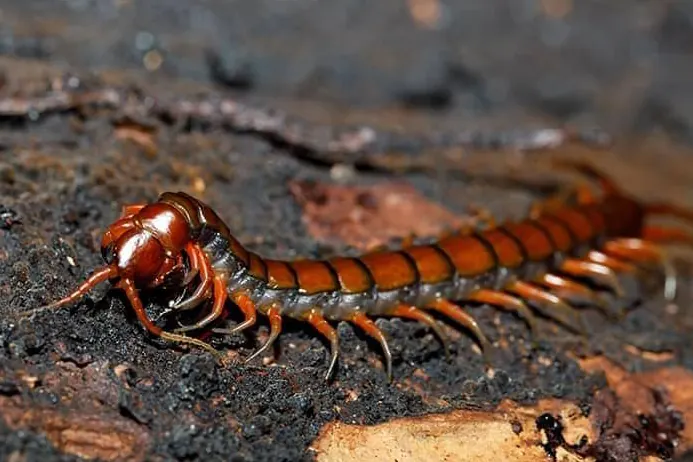
If centipedes are getting into your Montana home, the answer is to treat their outdoor hiding places, block the gaps they're using under doors and around drains, and dry out the damp spots that hold them near the house. They're hunters rather than pests in the usual sense, and their presence often means there are other insects around for them to eat.
Centipedes in a Montana garden
Centipedes live in moist, sheltered places: under paving slabs and stones, in mulch, compost, leaf litter, wood piles and in the cracks of retaining walls. The veld and koppies around Montana have plenty of them, and many newer gardens give them more habitat than the old grassland ever did. Thick bark mulch around new plants, rockeries, and irrigated beds right up against the house walls all suit centipedes well.
They become most noticeable from October onwards, when summer storms soak the ground. Waterlogged soil and flooded hiding spots push them up and out, and many end up indoors through gaps under doors, floor drains and weep holes.
Do centipedes bite?
They can. Centipedes have a pair of modified front legs that inject venom into their prey. The small house and garden centipedes most people see rarely bite, and when they do, it's usually only painful, like a bee sting. Larger species found in the veld can give a more painful bite with swelling. Don't pick them up. If someone is bitten and has a strong reaction, get medical help.
Centipede or millipede?
People often mix them up. Centipedes are flat, fast and have one pair of legs per body segment. They run when disturbed. Millipedes are rounder, slower, have two pairs of legs per segment and curl up when touched. Millipedes are harmless plant-eaters. If yours are slow and curled, see our page on millipedes in Montana instead.
How we treat centipedes
We start outside, because that's where the population lives. We inspect the garden, flowerbeds, paving edges, rockeries and walls, and look for damp spots near the house. Then we apply a targeted, odourless residual treatment to the foundation line, the edges of paving and patios, door thresholds, drains and the cracks where they shelter. Inside, we treat entry points such as door frames, skirting and around floor drains. Because centipedes feed on other insects, we may also recommend dealing with an underlying insect problem, such as cockroaches or fishmoths, if we find one.
The treatment doesn't require you to leave home. Children and pets just need to wait until the treated ground and thresholds are dry.
What people get wrong
Treating only the inside of the house. Centipedes inside are a symptom of centipedes outside, and spraying the floors indoors doesn't touch the population under the paving. Another common error is heaping mulch, compost or decorative bark right up against the walls. It looks neat, but it keeps the foundation line damp and gives centipedes a sheltered route straight to the door.
A Montana tip
Pull mulch and dense ground cover back at least half a metre from the walls of the house, and replace it with gravel or bare paving. Check that irrigation isn't spraying directly onto walls and doorways. In summer, fit door brushes on outside doors and keep floor drain covers in place. These small changes make a noticeable difference in a few weeks.
Homes, complexes and offices
In complexes, ground-floor units with small gardens or patios next to common lawns tend to see the most centipedes, because moisture from the shared irrigation collects along the walls. Schools and offices with planted courtyards can have the same issue. For bodies corporate, it makes sense to treat the shared beds and walls at the same time as private gardens.
What does centipede control cost?
The main factors are the area of garden and paving to treat, and whether there's an underlying insect problem feeding the centipedes. A small townhouse garden is a quick job. A large property with extensive beds, rockeries and a boundary onto veld takes longer. If you only see one or two centipedes after a storm, a door brush and pulling mulch back may be all that's needed.
Scorpions use the same hiding spots, so see scorpion control in Montana if you've spotted those too. The full local list is on our Montana pest control hub. We also treat centipedes in Lynnwood, and our general service is under centipede control around Pretoria.
SAPCA registered, with 25 years in the business, we back our treatments with a 3-month guarantee. If centipedes return within that time, we return as well. Call 012 012 5526, or WhatsApp us a photo of the creature and we'll tell you whether it's a centipede or millipede.
Questions we get asked
Are centipedes dangerous to children?
Most house centipedes are not, though a bite can be painful. Larger veld species can cause more pain and swelling, so teach children not to pick them up.
Why do centipedes appear after rain?
Heavy rain floods their hiding spots under paving and mulch, so they move up and often wander indoors.
Do centipedes mean I have other pests?
Often, yes. Centipedes hunt insects, so a lot of them can point to cockroaches, fishmoths or other small insects nearby.
Can I just vacuum them up?
For one or two indoors, yes. If you're seeing them regularly, the source outside needs treating.
Will centipedes damage my house or garden?
No. They don't eat plants or wood. They're predators, and the only issue is their bite and the fact that people don't want them indoors.