
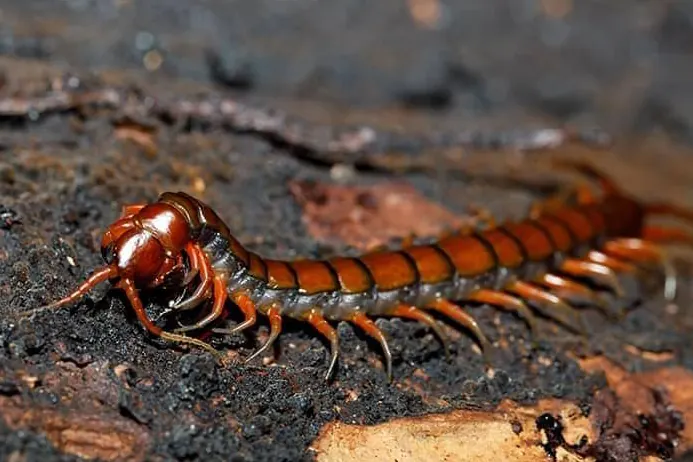
A centipede indoors almost always means two things: there's damp somewhere close to the house, and there are small insects for it to eat. Centipedes don't breed in large numbers inside the home. They live in the garden, under paving, pots, logs and mulch, and come in when it's wet outside or dry inside. Deal with the damp hiding places around the house and the gaps they use, and the indoor sightings drop.
Centipede or millipede?
People mix them up all the time, and it matters. Centipedes are flat, quick, and have one pair of legs per body segment, with a pair of venom claws at the front. They're hunters. Millipedes are rounded, slow, curl up when disturbed, and have two pairs of legs per segment. They eat rotting plant material and don't bite. If what you're finding is slow and curls into a spiral, read our page on millipedes in Centurion instead.
Why they turn up in Centurion homes
The Highveld summer pattern of hot days and heavy afternoon storms suits centipedes well. Wet soil drives them to shelter, and the gap under a patio door or the cool tiles of a bathroom are close by. In Centurion's estates, irrigated beds, mulch and decorative stones often sit right against the walls, so there's a permanently damp, sheltered strip along the house for centipedes to live in. Townhouses with small courtyards, pot plants and paving get them too, usually through the kitchen or bathroom doors that open straight onto the garden.
In winter, when the ground dries out, the opposite can happen: centipedes look for moisture indoors around sinks, floor drains and leaky geysers.
Do centipedes bite?
They can. Most garden centipedes are small and rarely bite people, and if they do, it's usually only when they're trapped against skin, for example in a shoe or a towel. The larger centipedes can give a painful bite that causes swelling and redness. Clean it, use a cold compress, and see a doctor if there's a strong reaction or the bite is on a small child.
How we treat centipedes
- Inspection of the perimeter, beds, paving edges, pot plants, drains, under-sink areas, bathrooms and garage to find where they're sheltering and the moisture that's attracting them.
- Perimeter treatment with an odourless, non-staining residual product around the foundations, door thresholds, weep holes and the damp strips where they live.
- Indoor treatment of entry points and hiding places, such as cracks along skirting boards, under baths and behind kitchen kickplates.
- Advice on the moisture and harbourage that keep bringing them back.
Because centipedes eat other insects, we also look at what they're hunting. A home with lots of cockroaches, fishmoths or crickets will keep attracting centipedes until those are dealt with.
Schools, crèches and ground-floor offices
We also get centipede calls from Centurion schools, crèches and ground-floor offices, where a child or staff member finding one in a classroom or bathroom understandably causes alarm. These buildings often have long perimeters, garden beds along every wall and doors that stand open all day in summer. We treat outside the building first, along the beds and thresholds, and time any indoor treatment for when the rooms are empty so surfaces are dry before people return.
The common mistake
Treating centipedes as an indoor pest. Spraying the bathroom kills the one you can see but does nothing about the colony living in the damp mulch outside the bathroom window. The problem lives outdoors, so most of the fix happens outdoors too.
A tip for Centurion gardens
Pull mulch and decorative bark back from the walls by a hand's width, and lift pot plants onto feet so the ground under them can dry. Check that the sprinkler heads aren't soaking the base of the walls every evening. Fix dripping outside taps and geyser overflow pipes that keep the same patch of soil wet. A dry, open band around the house is the single best defence.
What does it cost?
The price is mostly about the perimeter: how long it is, how many beds, paved areas and outbuildings are involved, and whether the inside also needs treatment. A townhouse with a small garden is a quick job. A big estate home with lots of landscaping takes longer. Seeing one or two centipedes after a storm is normal, and drying out the area around the doors is often all that's needed.
Centipedes are one of the pests we handle under crawling insect treatments in Centurion. For more detail see centipede control in Pretoria, our service for centipedes in Garsfontein, or the pest control page for Centurion.
We're SAPCA registered and back our work with a 3-month guarantee: if centipedes return to the treated areas in that window, we come back. Book on 012 012 5526. If you'd like us to confirm it's a centipede first, a quick WhatsApp picture does the job.
Questions we get asked
Are centipedes dangerous?
Most are harmless to people, though they can bite if trapped against skin. Larger species give a painful bite, so see a doctor if there's a strong reaction.
Why do I find centipedes in the bath?
They wander in looking for moisture, often from drains or gaps near the bathroom, and can't climb out of the smooth bath.
Will centipedes infest my house?
Not usually. They live mainly outdoors in damp soil and mulch and come inside occasionally, especially after rain.
What attracts centipedes to my home?
Moisture and food. Damp beds and mulch against the walls, leaky taps and plenty of small insects all draw them in.
Is it worth treating if I only see one now and then?
Often not. Drying out the area around doors and moving mulch back from the walls may be enough. Regular sightings are worth treating.
How do I tell a centipede from a millipede?
Centipedes are flat, fast and have one pair of legs per segment. Millipedes are round, slow, curl up and have two pairs per segment.