
Ants marching to the sugar, weevils in the rice, mice behind the stove, and bare patches in the lawn: that's the typical Laudium list, and each of these has a clear fix. Below we've split it into what happens inside the house and what happens outside, because they're treated differently and the outside often feeds the inside.
About Laudium
Laudium is a large, well-established suburb on the western side of Pretoria, with many family homes and kitchens that are in use from morning to night. Gardens and paved yards sit around most houses. A lot of cooking and generous pantries are a good thing, but they also give pests a reliable food supply.
Inside the house
Ants
Ants are the most common Laudium call. They nest under paving and in garden beds, then follow a trail through window frames, wall cracks and plug points to anything sweet or greasy. Killing the trail with spray only removes the workers you see; the nest sends out more. We use baits that the ants carry back to the nest, which kills the colony, and we look at where they're coming in. Our ant control in Centurion and the west goes into more detail.
Weevils, beetles and pantry moths
Rice, flour, lentils, spices, dried fruit and nuts are all food for stored-product insects. They usually arrive in a packet and then spread through the cupboard. Signs are tiny beetles in a container, webbing in grains, or small moths flying out when you open the pantry. Clearing out, cleaning the shelves, storing food in sealed containers and a targeted treatment of the cupboard sorts it out. See stored-product pest control around Centurion.
Cockroaches
Kitchens in constant use stay warm and have a steady supply of crumbs and grease. German cockroaches settle in appliance motors, cupboard hinges and behind the stove. Gel bait placed where they hide clears them.
Mice
Mice like kitchens and storerooms with plenty of dry food. Small droppings and chewed packets are the sign. We use bait stations and traps and show you how to close the gaps. More in mouse control for Centurion and surrounds.
Outside the house
Harvester termites
On the Highveld, harvester termites strip lawns during dry spells, especially in winter. Look for small holes with loose soil and short, cut grass on bare patches. we target the holes the workers are actively using, so the treatment reaches the colony itself.
Wasps
Paper wasps build under eaves, carports and patio roofs through summer. We treat and remove the nest.
Where the garden meets the house
Pot plants lined up against the walls, damp flowerbeds next to the kitchen door and paving with open joints are the bridge between outside and in. Ants nest under them, cockroaches shelter in them and termites use damp soil to reach the walls. Keep a dry, clear strip along the house and seal open paving joints near the doors.
How we work
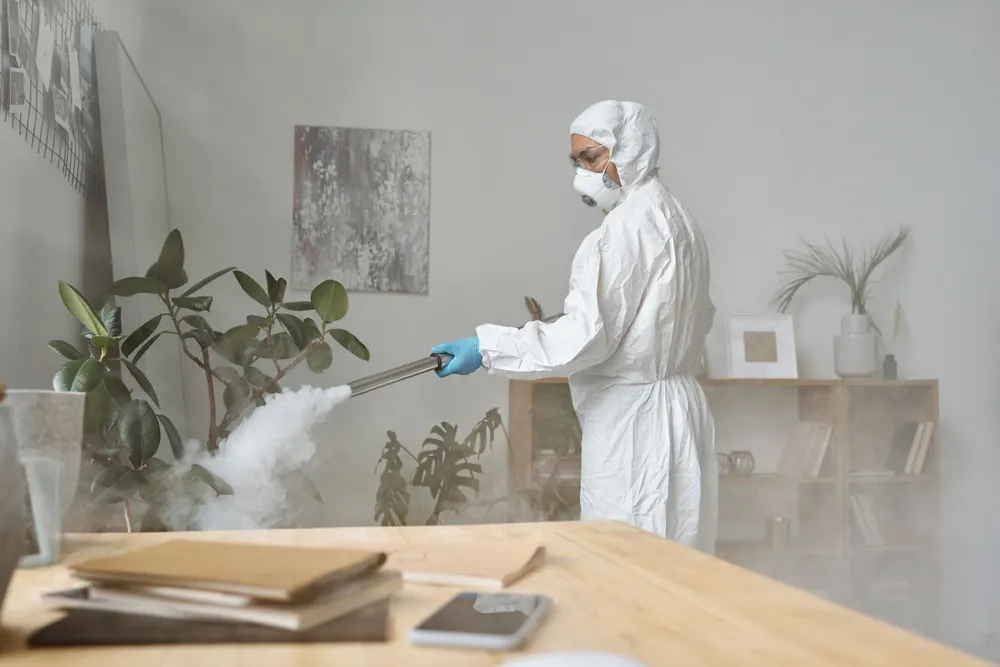
We inspect inside and out: kitchen, pantry, storeroom, garden and the paving around the house. Then we treat each pest at its source, using ant baits, gel baits, bait stations, nest treatments and lawn treatments, with odourless, non-staining sprays only where they're useful. You can stay at home throughout. Keep children and pets off treated surfaces until they're dry.
A common mistake
Wiping ant trails with bleach or spraying them every day. It works for an hour. Meanwhile the nest under the paving is fine and the ants simply pick a new route. Leave the trail alone for a day after baits go down, so the workers can carry the bait home.
A tip for Laudium pantries
When you buy large bags of rice, flour or lentils, divide them into smaller sealed containers and use the oldest first. If one container does get weevils, only that one is lost, and the rest of the pantry stays clean. Bay leaves are often suggested, but sealed containers are what actually work.
What does it cost?
That depends on what we're treating and how much of the house and garden is involved. Ants or cockroaches in one kitchen are a small job. A full pantry clean-up plus treatment, mice in the roof or a large lawn with harvester termites cost more. We'll quote after looking, and if clearing out and sealing containers is all you need, we'll tell you.
Laudium is covered from our Centurion area, so see the Centurion pest control page for everything else we treat nearby. We've been at this for 25 years, we're SAPCA registered, and a 3-month guarantee covers the work. Call 012 012 5526, or WhatsApp us a photo of the ants, beetles or lawn damage.
Questions we get asked
Why do ants keep coming back to my kitchen?
Because the nest is still alive, usually under paving or in a garden bed. Baits that the workers carry back to the nest are what stop them for good.
Do I have to throw out my whole pantry if I find weevils?
No. Throw out what's infested, check everything else, clean the shelves and store the rest in sealed containers. Most of the pantry can usually be saved.
Are your treatments safe around food?
Yes. We don't spray food or food-preparation surfaces. Gel and ant baits go into cracks and hidden spots, and we'll tell you what to cover or put away.
What are the little moths in my kitchen?
Small moths flying out of the pantry are usually stored-product moths breeding in grains, nuts or dried fruit. Find the infested packet first.
Can you treat my lawn and my kitchen on the same visit?
Yes. We often treat ants indoors and harvester termites in the lawn at the same time.
How soon after an ant treatment will I see a difference?
Often within a few days, as the bait reaches the nest. You may see more ants on the bait at first, which is a good sign.