
Crawling insects get into Centurion homes and buildings along the same routes: gaps under doors, cracks at the base of walls, plumbing and cable entries, weep holes and the damp strip of garden against the house. The most effective treatment works on two levels. It deals with the insects already living inside, using the right bait or crack treatment for each, and it puts a barrier on the routes in so new ones don't follow.
The crawling insects we treat here
- Cockroaches: small German cockroaches in kitchens and the larger American cockroach from drains.
- Ants: trails to the kitchen, nests in paving and lawns, ants in wall cavities.
- Fishmoths: in cupboards, books, garages and archive rooms.
- Crickets: calling from the garage or behind the washing machine at night.
- Centipedes and millipedes: after rain, under doors and in bathrooms.
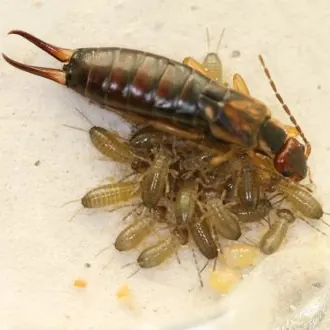
- Beetles and earwigs: seasonal visitors from the garden and mulch.
- Spiders and scorpions: technically not insects, but they use the same routes and hiding places.
Why the perimeter matters so much in Centurion
Much of Centurion is newer housing built on former grassland, often with large paved areas, irrigated beds and gardens that back onto open ground or green belts. Insects that live in that soil and grass don't stay out of the house just because a wall went up. They come in along the base of the building, especially after summer storms when their shelters flood, and in dry spells when they're looking for moisture.
Older homes in the established suburbs have a different weak point: age. Cracks in old plaster, gaps under doors that no longer close properly, loose skirting and old built-in cupboards give crawling insects plenty of places to shelter inside.
How a crawling insect treatment works
Inside
We bait cockroach harbourages with gel, place ant bait on active trails and apply residual treatment into cracks, voids, behind kickplates, along skirting and around plumbing. These are the places insects hide and move; open surfaces such as counters and floors where you prepare food or children play aren't sprayed.
Outside
We apply a non-staining barrier treatment around the foundations, door thresholds, garage entrances, weep holes and paving edges, and treat specific nests and harbourage sites in the garden. This is what stops the steady trickle of insects from outdoors.
Follow-up
Where cockroaches or heavy ant activity are involved, a follow-up visit catches insects that hatch after the first treatment. Cockroach egg cases in particular are protected from most products, so that second visit is part of the job rather than an extra.
Where people go wrong
Treating each insect separately with a different supermarket product: an ant spray, a cockroach bomb, a powder for the crickets. The products often work against each other, sprays ruin baits, and the insects simply move. One coordinated treatment, with a barrier on the routes in, is cheaper and works better.
A practical tip
Walk around your house after dark with a torch on a warm evening in summer. Watch where insects gather and where they disappear into the building: under the kitchen door, at the weep holes, behind the garage door seal. Those are your entry points, and sealing them with brush strips, sealant or mesh is the best long-term defence. Then move mulch and pot plants away from the walls to let the foundations dry out.
Complexes, schools and businesses
In complexes, crawling insects travel between units through shared walls and plumbing, so we often recommend treating the shared areas and the affected units together. Schools, restaurants, offices and warehouses benefit from scheduled visits, where the perimeter barrier is renewed and bait points are checked regularly, with records for each visit.
What does it cost?
Pricing here depends on the size of the building, the length of the perimeter, the number of insects involved and whether a follow-up visit is needed. A flat with a cockroach problem costs much less than a large home with a long boundary, outbuildings and several insects. A business on a schedule is priced by site and frequency. If you're only seeing the odd cricket or beetle, sealing the door gaps may be enough.
For the two pests that cause most crawling insect calls, see cockroaches in Centurion homes and Centurion ant treatments. There's also our Pretoria crawling insect service, crawling insect control in Garsfontein, and the Centurion pest control hub.
As a SAPCA-registered company we stand behind the work: any crawling insect we've treated that returns within three months gets a return visit. Book on 012 012 5526, or use WhatsApp to send a photo of the insect for a quick identification.
Questions we get asked
What counts as a crawling insect?
Cockroaches, ants, fishmoths, crickets, beetles and earwigs, plus centipedes, millipedes, spiders and scorpions, which aren't technically insects but are treated in a similar way.
Do you spray inside cupboards and on counters?
No. We treat cracks, voids, hinges and hiding places, not the open surfaces where you prepare food.
How long does a perimeter barrier last?
It depends on rain, irrigation and how much the area is disturbed. Heavy summer storms and frequent watering shorten it, which is why businesses often have it renewed regularly.
Why do crickets get into my garage?
They're attracted by light, moisture and shelter. Gaps under the garage door and damp corners are the usual reasons.
Can you treat the whole complex at once?
Yes. Treating shared areas, the perimeter and affected units together stops insects moving back and forth between units.
What should I avoid doing after treatment?
Don't mop or wipe the treated cracks and skirting, and don't spray household insecticides over bait. We'll give you clear instructions.