
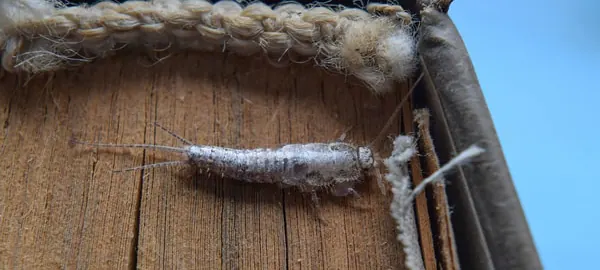
Fishmoths are a sign of three things: somewhere dark, something starchy to eat and a bit of moisture. Fix those, treat the cracks and voids where they hide, and the problem goes away. In Centurion we see them most in older built-in cupboards, garages full of boxes, bookshelves against outside walls and the paper archives of office parks and small businesses.
What fishmoths actually eat
Fishmoths, also called silverfish, are small, carrot-shaped, silvery insects that move like a fish when they run. They don't bite and they don't spread disease. What they do is graze on starch, glue and cellulose: book bindings, wallpaper paste, cardboard boxes, photographs, cotton and linen, stored documents, cereal and flour. The damage is slow, but over a year or two in a storeroom it adds up to ruined photo albums, spotted linen and archive boxes that fall apart.
Where they hide in Centurion buildings
Older homes and built-in cupboards
In established suburbs such as Lyttelton and Wierdapark, many homes have built-in cupboards with gaps behind the back boards and along the top of the skirting. Those voids are dark, undisturbed and slightly cooler and damper than the room, which is ideal for fishmoths.
Garages and storerooms
Cardboard boxes stacked on a concrete garage floor are probably the single most common place we find them. The cardboard is food and shelter, and the floor holds a little moisture after summer storms.
Office parks and businesses
Centurion's office parks hold a lot of paper: archives, filing rooms, stationery stock. Basement or ground-floor store rooms with little ventilation are classic fishmoth territory, and they often go unnoticed until someone opens an old box.
Signs you have fishmoths
- Small, silver insects darting away when you lift a box or open a cupboard
- Irregular holes or scraped patches on paper, wallpaper and book covers
- Yellowish stains or tiny pepper-like droppings on stored fabric and paper
- Shed scales or skins in drawers and on shelves
How we deal with them
We start by finding where they're living, which is rarely where you see them run. We check behind and above built-in cupboards, along skirting boards, around plumbing in bathrooms and kitchens, in roof spaces and in stored goods. Then we apply an odourless, non-staining residual treatment into the cracks, voids and hiding places, rather than spraying open shelves and clothing. For businesses with large archives, we can include regular checks in a scheduled monitoring contract.
You'll be told what to do about moisture and storage, because those decide whether fishmoths come back.
Is it fishmoths or something else?
A few other small insects get mistaken for fishmoths. Booklice are tiny, pale and soft, and they also live on mould in damp paper, but they don't have the silvery, scaled body or the three tail bristles. Firebrats look similar but prefer hot spots around geysers and ovens. Small beetle larvae in a pantry are usually a stored product pest. If you're not sure, catch one on a piece of sticky tape and send us a photo; identifying it correctly decides how it's treated.
What people get wrong
Putting mothballs or lavender bags in the cupboard and leaving it there. Neither deals with the population in the wall void behind the cupboard, and mothballs are not something you want near children or food. The fix is drier, better-sealed storage and a proper treatment of the voids.
A Centurion tip
After the summer thunderstorm season, check what's stored on the garage floor. Lift boxes onto shelves or pallets, and swap cardboard for sealed plastic tubs for anything you care about: photos, documents, linen and books. A dehumidifier or simply better airflow in an internal storeroom also helps a lot. Fishmoths struggle in dry air, which is one advantage the Highveld winter gives you.
What does it cost?
A fishmoth treatment depends on the size of the property, how many rooms and storage areas are involved and whether a large paper archive or stockroom is part of the job. A few cupboards in a townhouse is a short visit. A warehouse or an office archive is quoted to the site. Only a couple in the bathroom? Fixing a leak and improving ventilation may be all it takes.
Fishmoths are often found with pantry pests in stored food; see pantry and stored product pests in Centurion. For more, read fishmoth control in Pretoria, our Waterkloof fishmoth service, or the Centurion pest control page.
We've worked in Pretoria and Centurion for a quarter of a century as a SAPCA-registered company, and fishmoths that return to treated areas within three months bring us back too. To book a visit, ring 012 012 5526; a WhatsApp photo of the damage helps us prepare.
Questions we get asked
Are fishmoths harmful to people?
No. They don't bite, sting or spread disease. The damage they do is to paper, fabric, wallpaper and stored food.
Why do I see fishmoths in the bath?
They come out at night looking for moisture and can't climb back up the smooth sides of the bath. A leak or poor ventilation in the bathroom often attracts them.
Do I need to empty my cupboards for treatment?
For heavily affected cupboards, yes, so we can treat the cracks and voids behind and under them. We'll tell you which ones before the visit.
Will the treatment mark my clothes or books?
No. We use odourless, non-staining products and apply them into cracks and voids rather than onto your belongings.
Can fishmoths damage important documents?
Yes, over time. They graze on paper and glue, so archives, photo albums and books in damp storage are at real risk.
Do you treat office archives and storerooms?
Yes. We treat commercial storerooms and archives, and can include regular inspections in a business monitoring contract.