
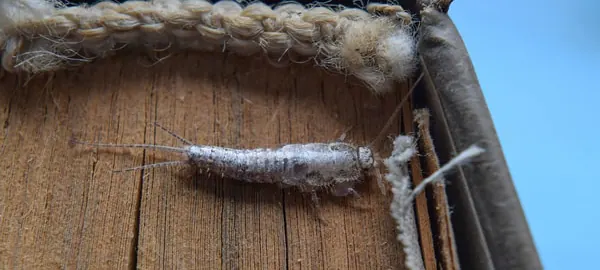
Fishmoths, also called silverfish, are controlled by treating the dark, undisturbed spaces where they live and by changing the conditions that suit them. A spray in the middle of the room won't reach them. In Faerie Glen we're often called to homes with long-established book collections, family archives and built-in cupboards, and to retirement village units where a lifetime of papers and photographs has been packed into a smaller space.
What fishmoths are and what they eat
They're small, wingless, silvery insects with a tapered body and three bristly tails, and they move with a quick, wriggling run. They avoid light and come out at night. Their diet is starch and cellulose: book bindings and glue, paper, wallpaper paste, cardboard, photographs, cotton, linen and rayon, and food crumbs like flour and cereal. A few fishmoths cause little harm. A large population left alone for years in a bookcase or a box of documents can do real, permanent damage.
Where they hide in Faerie Glen homes
- Built-in wardrobes and linen cupboards, especially against outside walls
- Bookshelves, particularly the back of shelves against the wall
- Boxes of papers, photographs and documents in garages and storerooms
- Roof spaces, where insulation, dust and old cardboard collect
- Bathrooms and under-sink cupboards, where it's a bit damp
- Behind skirting boards and in cracks around cupboard backs
Signs you have more than a few
You might see one dart away when you lift a box or open a book, but the damage is usually the giveaway. Look for irregular, scraped-looking holes in paper, thinned patches on wallpaper, notches along book spines, yellowish stains, and tiny pepper-like droppings on shelves. Fine, scaly debris at the back of a drawer is another clue.
The retirement village connection
When people downsize into one of Faerie Glen's retirement villages, the boxes of letters, albums, recipe books and linen often move with them and go straight into a cupboard or the top of a wardrobe. Packed tightly and rarely opened, those boxes are exactly what fishmoths are looking for. Families helping a parent settle in can do a lot by unpacking keepsakes into sealed plastic containers rather than leaving them in old cardboard.
How we treat fishmoths
We start by finding where the population is concentrated, usually by checking the backs of cupboards, the rear of bookshelves, the roof void and stored boxes. Then we apply odourless, non-staining residual treatments into cracks, crevices, cupboard corners and the voids where fishmoths shelter. In the roof we use a treatment suited to that space. Treatments are applied carefully around books, clothing and stored items, so nothing is soaked or marked.
You can stay home while we work. Keep children and pets out of treated cupboards until they've dried, then put your things back.
What people commonly get wrong
Many people put mothballs in cupboards and think the job is done. Mothballs are aimed at clothes moths, and they're not a reliable fishmoth treatment. They also leave a strong smell that sticks to linen. The other mistake is treating only the cupboard where you saw the fishmoth. If they're in the roof or the garage boxes, they'll come back from there.
Reducing fishmoths over time
- Swap cardboard storage boxes for sealed plastic containers.
- Keep cupboards dry. Fix plumbing leaks and run extractor fans in bathrooms.
- Leave a small gap between bookshelves and the wall so air can move.
- Take books off the shelf and flip through them once in a while. Fishmoths hate disturbance.
- Clear old cardboard, newspapers and magazines out of the roof space and garage.
A Highveld tip
Our dry winters actually work against fishmoths, but summer rain and humid bathrooms work for them. If you can, open up and air built-in cupboards on a dry, sunny winter's day, especially the ones on cooler south-facing walls. It's a simple habit that makes those spaces less comfortable for them.
What does it cost?
Three things drive the price: how many rooms and cupboards need treating, whether the roof void is involved, and how much stored material there is. A few fishmoths in a bathroom cupboard might just need drying out and a store-bought product. A house where they're in every wardrobe, the bookshelves and the roof is a bigger job. We'll tell you which it is after a look.
Fishmoths often share pantry space with weevils and pantry moths, which our page on stored product pests in Faerie Glen deals with. For the wider service, see fishmoth treatment across Pretoria, and residents just south of here can look at fishmoths in Moreleta Park. The other pests we treat locally are on our Faerie Glen page.
One Stop Pest Control is SAPCA registered, with 25 years of experience. If fishmoths reappear within three months of treatment, we'll be back. Ring 012 012 5526, or send a snap of the chewed pages or fabric on WhatsApp.
Questions we get asked
Are fishmoths harmful to people?
No. They don't bite or sting and aren't known to spread disease. The problem is the damage they do to books, paper, photographs and fabrics.
Why do I find fishmoths in the bath?
They wander at night looking for moisture and food, and they fall into the bath and can't climb the smooth sides. It usually means they're living nearby.
Can fishmoths ruin old photographs?
Yes. They feed on the coatings and paper of prints and the glue in albums. Store precious photos in sealed containers.
Do mothballs keep fishmoths away?
Not reliably. Mothballs target clothes moths, and fishmoths often ignore them.
How long does a fishmoth treatment last?
A residual treatment keeps working for a good while, but long-term results depend on dealing with damp, clutter and cardboard storage.
Do you treat fishmoths in retirement village units?
Yes. We work carefully around residents' belongings and use odourless treatments, which matters in smaller living spaces.